Week 8
How are we being persuaded
through the media and how do we
cope with this?
Literature questions:
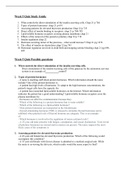
8.1. With their Elaboration Likelihood Model, Petty and Cacioppo (1986) tried to
explain how persuasive messages such as advertisements, public service
announcements, or political campaign messages can influence the attitudes
of recipients. The ELM distinguishes two routes of information processing that
can lead to attitude change. Which two routes of information processing are
these?
8.2. Which of the two routes of information processing is taken depends on the
receiver. For example, different receivers may follow different routes of
information processing when processing exactly the same message.
According to ELM, which two factors (related to the receiver) determine the
information processing route?
8.3. Both routes of information processing distinguished by the ELM can lead to
attitude change and thus can be effective. However, what is the difference in
the attitudes that emerge after following the different routes?
8.4. The ELM thus evolves around the receiver and the personal and situational
factors that influence the route of information processing that a receiver takes.
Nevertheless, elements of a message (advertisement, information campaign,
political campaign) do play a role. Depending on the route taken, the attitude
change will take place on the basis of different aspects of a message. Which
elements of a message play a role in attitude change via the different routes?
,Literature
Theories of media cognition and information processing:
Elaboration likelihood model
Psychologists Richard Petty and John Cacioppo (1986) developed a model of
persuasion, the elaboration likelihood model (ELM), which acknowledges that
when presented with a persuasive message, people will sometimes put a lot of effort
into their cognition; sometimes, though, they rely on less demanding simple analysis.
• The peripheral route of information processing does not rely on elaboration
(scrutiny) of the message as much as it does on cues unrelated to the
information exactly as dissonance theory and social categories suggest.
o These cues serve as heuristics, simple decision rules that substitute
for more careful analysis of persuasive messages.
• When motivated by the relevance of the information, a need for cognition, or a
sense of responsibility, people will use the central route of information
processing, in which they bring as much scrutiny to the information as
possible.
o They engage in “issue-relevant thinking,” and the “elaboration
likelihood” is high.
ELM sees the likelihood of elaboration as running along a continuum from no though
about the information at hand to “complete elaboration of every argument, and
complete integration of the elaborations into the person’s attitude schemas.”
• Attitudes that are the product of this more stringent elaboration tend to be
more deeply held, more enduring, and more predictive of subsequent
behavior.
Motivation: audience members who want to consume persuasive media messages.
Ability: the ability to process these media messages.
,The heuristic-systematic model of information processing, much like ELM, argues
that people process information systematically and heuristically, but it sees these two
processes as working together.
• It is a dual-process model in that it recognizes concurrent, parallel modes of
information processing that are qualitatively different.
• As economy-minded information processors, we want to minimize effort while
satisfying whatever motivations led us to that processing. The heuristic-
systematic model, therefore, says we accomplish this by holding to the
sufficiency principle—we will exercise only as much systematic processing
as is necessary (sufficient) to meet that need.
• If the two processes produce a judgment that is congruent—that is, similar—
the outcome is additive. It produces more stable change that is a better
predictor of later behavior.
, • When the information or arguments under consideration are ambiguous,
heuristics tend to bias the information processing, even biasing people’s
systematic processing.
“If the goal of mass media influence attempt is to produce long-lasting changes in
attitudes with behavioral consequences, the central route to persuasion appears to
be the preferred persuasion strategy. If the goal is immediate formation of a new
attitude, even if it is relatively ephemeral, the peripheral route could prove
acceptable… We now know that media influence, like other forms of influence, is a
complex, though explicable process.”
Legacy media, are push media; they push information toward audience members,
who either accept it or don’t accept it.
Internet-based media are pull media; audience members pull from media the
information they seek.
If advertising won’t die, what will it be? Toward a working definition
of advertising
Today’s advertising is quite different from that of 20 years ago. In spite of these
changes, the definition of advertising has not been discussed at any significant
extent during this period.
• Advertising (2002 definition) = a paid, mediated form of communication from
an identifiable source, designed to persuade the receiver to take some action,
now or in the future.”
• Advertising (new definition) = branded-initiated communication intent on
impacting people.
Dynamics that drive the progress of redefining advertising:
• (new) media and formats
Advertising evolves with technology and new media.
o In light of the growth of digital and hybrid advertising, and the
accelerated development and fragmentation into new formats, the
media and formats dynamic seems particularly important in guiding a
future definition of advertising.
• (new) “consumer” behaviors
As technology and media evolve, so do consumer behaviors.
o Replacing audience with receiver in the definition of advertising is an
illustration of this change.
How are we being persuaded
through the media and how do we
cope with this?
Literature questions:
8.1. With their Elaboration Likelihood Model, Petty and Cacioppo (1986) tried to
explain how persuasive messages such as advertisements, public service
announcements, or political campaign messages can influence the attitudes
of recipients. The ELM distinguishes two routes of information processing that
can lead to attitude change. Which two routes of information processing are
these?
8.2. Which of the two routes of information processing is taken depends on the
receiver. For example, different receivers may follow different routes of
information processing when processing exactly the same message.
According to ELM, which two factors (related to the receiver) determine the
information processing route?
8.3. Both routes of information processing distinguished by the ELM can lead to
attitude change and thus can be effective. However, what is the difference in
the attitudes that emerge after following the different routes?
8.4. The ELM thus evolves around the receiver and the personal and situational
factors that influence the route of information processing that a receiver takes.
Nevertheless, elements of a message (advertisement, information campaign,
political campaign) do play a role. Depending on the route taken, the attitude
change will take place on the basis of different aspects of a message. Which
elements of a message play a role in attitude change via the different routes?
,Literature
Theories of media cognition and information processing:
Elaboration likelihood model
Psychologists Richard Petty and John Cacioppo (1986) developed a model of
persuasion, the elaboration likelihood model (ELM), which acknowledges that
when presented with a persuasive message, people will sometimes put a lot of effort
into their cognition; sometimes, though, they rely on less demanding simple analysis.
• The peripheral route of information processing does not rely on elaboration
(scrutiny) of the message as much as it does on cues unrelated to the
information exactly as dissonance theory and social categories suggest.
o These cues serve as heuristics, simple decision rules that substitute
for more careful analysis of persuasive messages.
• When motivated by the relevance of the information, a need for cognition, or a
sense of responsibility, people will use the central route of information
processing, in which they bring as much scrutiny to the information as
possible.
o They engage in “issue-relevant thinking,” and the “elaboration
likelihood” is high.
ELM sees the likelihood of elaboration as running along a continuum from no though
about the information at hand to “complete elaboration of every argument, and
complete integration of the elaborations into the person’s attitude schemas.”
• Attitudes that are the product of this more stringent elaboration tend to be
more deeply held, more enduring, and more predictive of subsequent
behavior.
Motivation: audience members who want to consume persuasive media messages.
Ability: the ability to process these media messages.
,The heuristic-systematic model of information processing, much like ELM, argues
that people process information systematically and heuristically, but it sees these two
processes as working together.
• It is a dual-process model in that it recognizes concurrent, parallel modes of
information processing that are qualitatively different.
• As economy-minded information processors, we want to minimize effort while
satisfying whatever motivations led us to that processing. The heuristic-
systematic model, therefore, says we accomplish this by holding to the
sufficiency principle—we will exercise only as much systematic processing
as is necessary (sufficient) to meet that need.
• If the two processes produce a judgment that is congruent—that is, similar—
the outcome is additive. It produces more stable change that is a better
predictor of later behavior.
, • When the information or arguments under consideration are ambiguous,
heuristics tend to bias the information processing, even biasing people’s
systematic processing.
“If the goal of mass media influence attempt is to produce long-lasting changes in
attitudes with behavioral consequences, the central route to persuasion appears to
be the preferred persuasion strategy. If the goal is immediate formation of a new
attitude, even if it is relatively ephemeral, the peripheral route could prove
acceptable… We now know that media influence, like other forms of influence, is a
complex, though explicable process.”
Legacy media, are push media; they push information toward audience members,
who either accept it or don’t accept it.
Internet-based media are pull media; audience members pull from media the
information they seek.
If advertising won’t die, what will it be? Toward a working definition
of advertising
Today’s advertising is quite different from that of 20 years ago. In spite of these
changes, the definition of advertising has not been discussed at any significant
extent during this period.
• Advertising (2002 definition) = a paid, mediated form of communication from
an identifiable source, designed to persuade the receiver to take some action,
now or in the future.”
• Advertising (new definition) = branded-initiated communication intent on
impacting people.
Dynamics that drive the progress of redefining advertising:
• (new) media and formats
Advertising evolves with technology and new media.
o In light of the growth of digital and hybrid advertising, and the
accelerated development and fragmentation into new formats, the
media and formats dynamic seems particularly important in guiding a
future definition of advertising.
• (new) “consumer” behaviors
As technology and media evolve, so do consumer behaviors.
o Replacing audience with receiver in the definition of advertising is an
illustration of this change.