

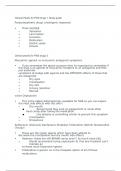
Clinical Pearls for PNS drugs 1 Study guide
Clinical Pearls for PNS drugs 1 Study guide Parasympathetic drugs (cholingeric response) • Think SLUDGE o Salivation o Lacrimation o Urination o Defecation o Gastric upset o Emesis Clinical pearls for PNS drugs 2 Muscarinic agonist vs muscarinic antagonist symptoms • If you remember the above acronym then its important to remember if the drug is an agonist of muscarine receptors or an antagonist and then just associate symptoms of sludge with agonist and the OPPOSITE effects of those that are antagonist o Dry eyes o Constipation o Dry skin o Urinary retention o Blurred vision Oxybutynin • This is the oldest anticholinergic available for OAB so you can expect the most side effects with this one!! o Dry mouth: ▪ Recommend they suck on peppermint or some other hard candy after taking the medication ▪ Use biotene or something similar to prevent this symptom o Constipation o Drowsiness Solifenacin (Vesicare) Darifenacin (Enablex) Tolterodine (Detrol) fesoterodine (Toviaz) • These are the newer agents which have been altered to decrease the constipation and dry mouth side effects • However, these are still BRAND name only!!! So much more $$$ o Would recommend trying oxybutynin XL first and if patient can’t tolerate go to these more expensive options • Tolterodine is generic so is the cheapest option of all of these medications Scope patches (Scopolamine) • Comes in patches that are to be placed behind the ear every 3 days • These are most commonly prescribed before cruises or other boating adventures for motion sickness Dicyclomine • Very commonly prescribed for IBS. • This drug has been on backorder for at least a year. o Its very hard to get in Clinical pearls for PNS 3 • Beta blockers are no longer considered first line therapy for hypertension o Now calcium channel blockers, thiazide diuretics and ACE- Inhibitors/ARBS o But still considered first line in those with heart disease (angina or hx of MI) • When used for stage fright or migraine prophylaxis most commonly seen in my clinical experience is propranolol • Cardio selective beta blockers : should be used in patients with asthma so not to cause bronchoconstriction – “A-BEAM” o Atenolol o Bisoprolol o Esmolol o Acebutolol o Metoprolol • Nonselective beta blockers o Propranolol o Nadolol • Nonselective bb with additional alpha1 blocking activity o Carvedilol o Labetalol • Always counsel your patients to not stop taking beta blockers abruptly! Always wean them off slowly o This prevents rebound cardiac excitation! • Beta blockers with Nondihydropyridines is dangerous, can drop heart rate very rapidly! Cloninine can make patients very dizzy/drowsy • Make sure they are sitting down in a chair or bed when taking first dose • This is will decrease after a few days of taking medication Beta Atenolol (Tenormin) Bisoprolol (Zebeta) Metoprolol tartarate 25-100 mg BID 2.5-10 mg daily 100-200 mg BID · Reduces HR and myocardial contractility (avoid if HR60) · Not recommended as 1st line unless pt has IHD or HF · Preferred in pts with Blockers:cardioselective (Lopressor) bronchospastic airway (1) Beta Blockers:nonselective (1 and 2) Metoprolol succinate (Toprol XL) Nebivolol (Bystolic) Nadolol (Corgard) Propranolol IR (Inderal) 50-200 mg daily 5-40 mg daily 40-120 mg daily 80-160 mg BID disease · Avoid abrupt cessation · Nebivolol also causes NO production · No renal dose adjustment: Atenolol, Bisoprolol, Nadolol · Avoid in patients with reactive airway disease · Avoid abrupt cessation (can induce angina pectoris/MI) · Class wide: may cause sedation, bradycardia, and mask symptoms of hypoglycemia induced tachycardia · Carvedilol is preferred Beta Blockers:mixed / Carvedilol (Coreg) 12.5-50 mg BID in pts with HFrEF · Avoid abrupt cessation
Document information
- Uploaded on
- January 5, 2024
- Number of pages
- 16
- Written in
- 2023/2024
- Type
- Exam (elaborations)
- Contains
- Questions & answers


