A Level Psychology 171 Review Questions And Answers|100% Verified And Correct
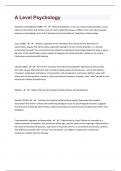
Rosenhan and Seligman (1989) - ️️Abnormal behavior is seen as vivid and unpredictable, causes observer discomfort and violates moral or ideal standards because it differs from most other people's behavior and standards. Part of the "Deviation from Social Norms" definition of abnormality. Szasz (1960) - ️️Another supporter of the "Deviation from Social Norms" definition of abnormality. Argues that abnormality, especially relating to certain mental disorders, is a socially constructed concept. This construction then allows for labeling of psychological patients. Szasz is also a big critic of the classification system utilized in diagnosis of mental disorders, based on the ethical implications associated with labeling. Jahoda (1958) - ️️Part of the "deviation from ideal mental health" definition of abnormality. Describes several characteristics that mentally healthy people should possess, such as the ability to introspect, integration and balance of personality, self-actualization, autonomy, ability to cope with stress and see the world as it really is, and environmental mastery. However, even "sane" people do not achieve all of these characteristics. Maslow - ️️Argues that very few people actually achieve self-actualization. Heather (1976) - ️️Criticizes the medical model of abnormality. Represents this model's assumption that there is always and underlying biological cause for psychological disorders. Suggests that the basis of defining abnormality is often governed by social and moral considerations rather than biological. Psychoanalytic Approach to Abnormality - ️️Popularized by Freud. Notion of normality is a balance between id impulses, the conscience of the ego, and the values of the superego. Abnormality is the result of thwarted id impulses, repression of traumatic events, or unresolved unconscious conflicts. The difference between the "normal" and "abnormal" is in degree of expression of abnormal tendencies. Utilizes directive therapy.
Written for
- Institution
- Psychology
- Course
- Psychology
Document information
- Uploaded on
- January 5, 2024
- Number of pages
- 22
- Written in
- 2023/2024
- Type
- Exam (elaborations)
- Contains
- Questions & answers
Subjects
Also available in package deal