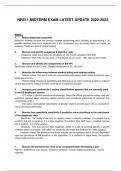
NR511 MIDTERM EXAM LATEST UPDATE WEEK 1
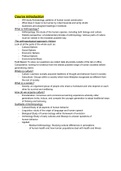
NR511 MIDTERM EXAM LATEST UPDATE WEEK 1 1. Define diagnostic reasoning Reflective thinking because the process involves questioning one’s thinking to determining if all possible avenues have been explored and if the conclusions that are being drawn are based on evidence. *Seen as a kind of critical thinking. 2. Discuss and identify subjective & objective data - Subjective: What the pt tells you, complains of, etc. *Chief complaint, HPI, ROS - Objective: What YOU can see, hear, or feel as part of your exam. *lab, data, dx test results. 3. Discuss and identify the components of the HPI Specifically related to the CC only. Detailed breakdown of CC. OLDCART. 4. Describe the differences between medical billing and medical coding - Medical coding: The use of codes to communicate with payers about which procedures were performed and why - Medical billing: Process of submitting and following up on claims made to a payer in order to receive payment for medical services rendered by a healthcare provider. 5. Compare and contrast the 2 coding classification systems that are currently used in the US healthcare system - CPT codes: Common procedural terminology. Offers the official procedural coding rules and guidelines required when reporting medical services and procedures performed by physician and nonphysician orders. - ICD codes: International classification of disease. Used to provide payer info on necessity of visit or procedure performed. 6. Discuss how specificity, sensitivity & predictive value contribute to the usefulness of the diagnostic data - Specificity: The ability of the test to correctly detect a specific condition. If a patient has a condition but test is negative, it is a false negative. If a patient does NOT have a condition but the test is positive , it is a false positive. - Sensitivity: Test that has few false negatives. Ability of a test to correctly identify a specific condition when it is present. The higher the sensitivity, the lesser the likelihood of a false negative. - Predictive Value: The likelihood that the pt actually has the condition and is, in part, dependent upon the prevalence of the condition in the population. If a condition is highly likely, the positive result would be more accurate. 7. Discuss the elements that need to be considered when developing a plan Patient’s preferences and actions. Research evidence. Clinical state/circumstances. Clinical expertise. 8. Describe the components of Medical Decision Making in E&M coding Risk – data – diagnosis. The more time and consideration involved in dealing with a pt, the higher the reimbursement from the payer. Documentation must reflect the MDM! 9. Correctly order the E&M office visit codes based on complexity from least to most complex New patient: 1. Minimal/RN visit: 99201 2. Problem focused: 99202 3. Expanded problem focused: 99203 4. Detailed: 99204 5. Comprehensive: 99205 Established patient: 6. Minimal/RN patient: 99211 7. Problem focused: 99212 8. Expanded problem focused: 99213 9. Detailed: 99214 10. Comprehensive: 99215
Written for
- Institution
-
Chamberlain College Of Nursing
- Course
-
NR511
Document information
- Uploaded on
- January 1, 2024
- Number of pages
- 23
- Written in
- 2023/2024
- Type
- Exam (elaborations)
- Contains
- Questions & answers

Also available in package deal