

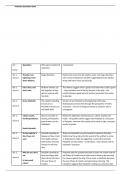
Macbeth Quotation Bank
Act Quotation Who says it/context of Commentary
quotation
Scene
Act 1, Thunder and Stage directions Notice how every time the witches enter, the stage directions
Scene 1 Lightning. Enter refer to the tempestuous weather suggesting that the witches
three Witches. bring with them chaos and disorder
Act 1, Fair is foul, and All three witches say The witches suggest what is good is bad and what is bad is good
Scene 1 foul is fair; this together as they – they introduce one of the key themes of the play – the
plot to meet up with conflict between good and evil and the movement from order
Macbeth to disorder
Act 1, brave Macbeth The captain reporting We do not see Macbeth at the beginning of the play.
to Duncan on Shakespeare presents him through the perspective of other
Scene 2 Macbeth’s bravery on characters. Here he is being presented as someone who is
the battle field courageous
Act 1, valiant cousin, Duncan says this on Notice the adjectives used by Duncan, valiant, worthy and
worthy gentleman hearing of Macbeth’s noble – all qualities which suggest that Macbeth is a character
Scene 2 great bravery on the of integrity, someone who stands up for what is right, someone
battlefield worthy of praise
Noble Macbeth
Act 1, So foul and fair a Macbeth speaking to These are Macbeth’s very first words he speaks in the play.
day I have not Banquo as they return Notice how the words echo the words of the witches in scene
Scene 3 seen. from battle and just 1. Shakespeare might be suggesting a connection between
before they meet the Macbeth and the withes – it introduces a more sinister side to
witches for the first Macbeth’s character
time
Act 1, Why do you dress Macbeth speaking to Macbeth asks the question because he does not realise that the
me Ross and Angus after old Thane of Cawdor was a traitor and is about to be executed
Scene 3 they tell him that he is for treason against the king. This is ironic as Macbeth becomes
In borrowed the new Thane of the new Thane of Cawdor and also betrays the king. This
robes? Cawdor metaphor suggests that Macbeth is taking on a role that does
, not belong to him – later when he takes the crown from
Duncan, the repeated motif of wearing an ill-fitting costume is
repeated to suggest that Macbeth is playing a part that does
not belong to him.
Act 1, why do I yield to Macbeth thinking to The first of the witches’ predictions have come true – Macbeth
that suggestion himself is now the Thane of Cawdor. The second prediction is that he
Scene 3 will be King. Thoughts go through his mind of how he might
Whose horrid become the new king. Macbeth uses euphemisms like
image doth unfix “suggestion” and “horrid image” to talk about killing the king. Is
my hair he so horrified with the thought that he can’t bring himself to
say the word murder?
And make my
seated heart knock
at my ribs
Act 1, There’s no art Duncan says this about This metaphor introduces the motif of masks – hiding your true
scene 4 the old thane of identity, something that Macbeth later does. The face you
To find the mind’s Cawdor who has just show to the world is a façade, not your true identity.
construction in the been executed
face.
Act 1, Let not light see Macbeth says this to Macbeth is further away than ever from being the next King –
scene 4 my black and deep himself. He has just he not only has Duncan in his way, now Malcolm stands in his
desires. learnt that Duncan’s way too. He is clearly frustrated. He needs to hide this
son Malcolm is going frustration from the world reminding us that Macbeth realises
to be the next King of he needs to wear a mask to cover up how he is feeling. The
Scotland ‘desire’ he refers to is to become the next king. He knows this
desire is evil and refers to it as, ‘black’ reinforcing the
suggestion that what he desires is evil.
Act 1, I fear thy nature; Lady Macbeth having This is a strange metaphor to describe a man. Milk is associated
scene 5 read the letter from with a woman’s nurturing of baby and is a symbol of their
It is too full o’ th’ her husband about maternal love. Lady Macbeth suggests that her husband is full
milk of human meeting the witches of this nurturing quality, too soft to be able to kill a king. This
kindness thinks aloud contrasts with the knowledge we have of him that he is a blood
thirsty soldier.
Act 1, unsex me Lady Macbeth speaks Lady Macbeth does not believe that Macbeth has it in him to
scene 5 to imaginary evil spirits kill the king so she prays to dark forces to give her the power to
be able to carry out the task herself. She asks the spirts to
“unsex” her. This might mean get rid of her femininity, ie
take my milk for
become more like a man; or it can mean she does not want to
gall
have any gender, she does not want to be a man or a woman –
she wants to be inhuman. Again, the image of milk is used as
something which reflects goodness and she want this removed
from her breasts and replaced by a foul, bitter substance
instead
Act 1, Look like th’ Lady Macbeth gives Lady Macbeth tells Macbeth to hide his evil intentions from the
scene 5 innocent Macbeth advice world. Again, we have the motif of hiding behind a mask. The
image the serpent also recalls the way Satan deceived Adam
flower, and Eve in the garden – Lady Macbeth is like the serpent,
tempting Macbeth into evil – like Adam and Eve, both will lose
But be the serpent
their peace of mind and their paradise later in the play.
under ’t.
Act 1, When you durst do Lady Macbeth speaks Lady Macbeth in this speech, manipulates Macbeth through a
scene 7 it, then you were a to Macbeth after he number of strategies including attacking his masculinity – she
Act Quotation Who says it/context of Commentary
quotation
Scene
Act 1, Thunder and Stage directions Notice how every time the witches enter, the stage directions
Scene 1 Lightning. Enter refer to the tempestuous weather suggesting that the witches
three Witches. bring with them chaos and disorder
Act 1, Fair is foul, and All three witches say The witches suggest what is good is bad and what is bad is good
Scene 1 foul is fair; this together as they – they introduce one of the key themes of the play – the
plot to meet up with conflict between good and evil and the movement from order
Macbeth to disorder
Act 1, brave Macbeth The captain reporting We do not see Macbeth at the beginning of the play.
to Duncan on Shakespeare presents him through the perspective of other
Scene 2 Macbeth’s bravery on characters. Here he is being presented as someone who is
the battle field courageous
Act 1, valiant cousin, Duncan says this on Notice the adjectives used by Duncan, valiant, worthy and
worthy gentleman hearing of Macbeth’s noble – all qualities which suggest that Macbeth is a character
Scene 2 great bravery on the of integrity, someone who stands up for what is right, someone
battlefield worthy of praise
Noble Macbeth
Act 1, So foul and fair a Macbeth speaking to These are Macbeth’s very first words he speaks in the play.
day I have not Banquo as they return Notice how the words echo the words of the witches in scene
Scene 3 seen. from battle and just 1. Shakespeare might be suggesting a connection between
before they meet the Macbeth and the withes – it introduces a more sinister side to
witches for the first Macbeth’s character
time
Act 1, Why do you dress Macbeth speaking to Macbeth asks the question because he does not realise that the
me Ross and Angus after old Thane of Cawdor was a traitor and is about to be executed
Scene 3 they tell him that he is for treason against the king. This is ironic as Macbeth becomes
In borrowed the new Thane of the new Thane of Cawdor and also betrays the king. This
robes? Cawdor metaphor suggests that Macbeth is taking on a role that does
, not belong to him – later when he takes the crown from
Duncan, the repeated motif of wearing an ill-fitting costume is
repeated to suggest that Macbeth is playing a part that does
not belong to him.
Act 1, why do I yield to Macbeth thinking to The first of the witches’ predictions have come true – Macbeth
that suggestion himself is now the Thane of Cawdor. The second prediction is that he
Scene 3 will be King. Thoughts go through his mind of how he might
Whose horrid become the new king. Macbeth uses euphemisms like
image doth unfix “suggestion” and “horrid image” to talk about killing the king. Is
my hair he so horrified with the thought that he can’t bring himself to
say the word murder?
And make my
seated heart knock
at my ribs
Act 1, There’s no art Duncan says this about This metaphor introduces the motif of masks – hiding your true
scene 4 the old thane of identity, something that Macbeth later does. The face you
To find the mind’s Cawdor who has just show to the world is a façade, not your true identity.
construction in the been executed
face.
Act 1, Let not light see Macbeth says this to Macbeth is further away than ever from being the next King –
scene 4 my black and deep himself. He has just he not only has Duncan in his way, now Malcolm stands in his
desires. learnt that Duncan’s way too. He is clearly frustrated. He needs to hide this
son Malcolm is going frustration from the world reminding us that Macbeth realises
to be the next King of he needs to wear a mask to cover up how he is feeling. The
Scotland ‘desire’ he refers to is to become the next king. He knows this
desire is evil and refers to it as, ‘black’ reinforcing the
suggestion that what he desires is evil.
Act 1, I fear thy nature; Lady Macbeth having This is a strange metaphor to describe a man. Milk is associated
scene 5 read the letter from with a woman’s nurturing of baby and is a symbol of their
It is too full o’ th’ her husband about maternal love. Lady Macbeth suggests that her husband is full
milk of human meeting the witches of this nurturing quality, too soft to be able to kill a king. This
kindness thinks aloud contrasts with the knowledge we have of him that he is a blood
thirsty soldier.
Act 1, unsex me Lady Macbeth speaks Lady Macbeth does not believe that Macbeth has it in him to
scene 5 to imaginary evil spirits kill the king so she prays to dark forces to give her the power to
be able to carry out the task herself. She asks the spirts to
“unsex” her. This might mean get rid of her femininity, ie
take my milk for
become more like a man; or it can mean she does not want to
gall
have any gender, she does not want to be a man or a woman –
she wants to be inhuman. Again, the image of milk is used as
something which reflects goodness and she want this removed
from her breasts and replaced by a foul, bitter substance
instead
Act 1, Look like th’ Lady Macbeth gives Lady Macbeth tells Macbeth to hide his evil intentions from the
scene 5 innocent Macbeth advice world. Again, we have the motif of hiding behind a mask. The
image the serpent also recalls the way Satan deceived Adam
flower, and Eve in the garden – Lady Macbeth is like the serpent,
tempting Macbeth into evil – like Adam and Eve, both will lose
But be the serpent
their peace of mind and their paradise later in the play.
under ’t.
Act 1, When you durst do Lady Macbeth speaks Lady Macbeth in this speech, manipulates Macbeth through a
scene 7 it, then you were a to Macbeth after he number of strategies including attacking his masculinity – she


