Case 2 Governance in Health Policy Making 19-11-2022
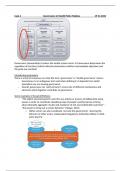
Governance (stewardship) is where the health system starts Governance determines the
regulation of functions (which indirectly determines whether intermediate objectives and
the goals are reached).
Introducing governance
There is a lack of consensus on what the term ‘governance’ or ‘health governance’ means:
- Governance is an ambiguous term and when defining it, it depends from which
specialism you are viewing governance.
- Overall, governance (as ‘catch-all term’) covers lots of different mechanisms and
elements which together contribute to governance.
Some examples of broad definitions:
- “The oldest and most generic word for any activity or process of deliberately using
power in order to coordinate sizeable groups of people’s performances to bring
about desirable aggregate results and avoidance of risk and undesirable outcomes” –
“the power to bring out a certain behavior” (Hoppe, 2010)
o (Other actors can also coordinate, not only the government –steering the
behavior of other actors, Independent Regulatory Authorities (IRAs) or third-
party payers):
, - “The process and institutions through which decision are made and authority in a
country is exercised. [...] How things are done rather than what should be done”
(Greer et al., 2016).
- “The rules of the game public policymaking” (Smith et al., 2012).
Other definitions (Barbazza & Tello, 2014)
- European Commission: The rules, processes, and behavior by which interests are
articulated, resources are managed, and power is exercised in society
- World Bank: The traditions and institutions by which authority in a country is
exercised. This includes the process by which governments are selected, monitored
and replaced; the capacity of the government to effectively formulate and implement
sound policies; and the respect of citizens and the state for the institutions that
govern economic and social interactions among them
- UNDP: The exercise of political, economic and administrative authority in the
management of a country’s affairs at all levels
- USAID: The ability of government to develop an efficient, effective, and accountable
public management process that is open to participation and that strengthens rather
than weakens a democratic system of government
- WHO: Leadership and governance involves ensuring that strategic policy frameworks
exist and are combined with effective oversight, coalition building, regulation,
attention to system-design and accountability.
Bartolini (2011)
Governance as a field: the space for norm production which is intermediate between the
legal rules according to constitutional procedures, and private dealings, traditional norms
and social routines on the other.
Governance: a system of co-production of norms (decisions, rules, policies) and public goods
where the co-producers are different kinds of actors (while the type of actors involved, the
extent of involvement of public authorities and of partners, the outcome and the
production, the decision procedures, the institutional context and the type and role of
sanctions all vary).
Our approach to governance (this course):
- Focus on actors and institutions used to coordinate their performances: ‘Process of
deliberately using power in order to coordinate sizeable groups of people’s
performance to bring about desirable aggregate results and avoidance or risk and
undesirable outcomes’
- What should be done, how it should be done, who should do it? So: co-production is
a specific mode of governance
, - “Who-question”: governance is about steering processes of social and economic
interaction among actors.
- “How-question”: steering of social and economic interactions, happens through
hierarchies, markets and networks (through hybrid forms).
Governance (stewardship) is where the health system starts Governance determines the
regulation of functions (which indirectly determines whether intermediate objectives and
the goals are reached).
Introducing governance
There is a lack of consensus on what the term ‘governance’ or ‘health governance’ means:
- Governance is an ambiguous term and when defining it, it depends from which
specialism you are viewing governance.
- Overall, governance (as ‘catch-all term’) covers lots of different mechanisms and
elements which together contribute to governance.
Some examples of broad definitions:
- “The oldest and most generic word for any activity or process of deliberately using
power in order to coordinate sizeable groups of people’s performances to bring
about desirable aggregate results and avoidance of risk and undesirable outcomes” –
“the power to bring out a certain behavior” (Hoppe, 2010)
o (Other actors can also coordinate, not only the government –steering the
behavior of other actors, Independent Regulatory Authorities (IRAs) or third-
party payers):
, - “The process and institutions through which decision are made and authority in a
country is exercised. [...] How things are done rather than what should be done”
(Greer et al., 2016).
- “The rules of the game public policymaking” (Smith et al., 2012).
Other definitions (Barbazza & Tello, 2014)
- European Commission: The rules, processes, and behavior by which interests are
articulated, resources are managed, and power is exercised in society
- World Bank: The traditions and institutions by which authority in a country is
exercised. This includes the process by which governments are selected, monitored
and replaced; the capacity of the government to effectively formulate and implement
sound policies; and the respect of citizens and the state for the institutions that
govern economic and social interactions among them
- UNDP: The exercise of political, economic and administrative authority in the
management of a country’s affairs at all levels
- USAID: The ability of government to develop an efficient, effective, and accountable
public management process that is open to participation and that strengthens rather
than weakens a democratic system of government
- WHO: Leadership and governance involves ensuring that strategic policy frameworks
exist and are combined with effective oversight, coalition building, regulation,
attention to system-design and accountability.
Bartolini (2011)
Governance as a field: the space for norm production which is intermediate between the
legal rules according to constitutional procedures, and private dealings, traditional norms
and social routines on the other.
Governance: a system of co-production of norms (decisions, rules, policies) and public goods
where the co-producers are different kinds of actors (while the type of actors involved, the
extent of involvement of public authorities and of partners, the outcome and the
production, the decision procedures, the institutional context and the type and role of
sanctions all vary).
Our approach to governance (this course):
- Focus on actors and institutions used to coordinate their performances: ‘Process of
deliberately using power in order to coordinate sizeable groups of people’s
performance to bring about desirable aggregate results and avoidance or risk and
undesirable outcomes’
- What should be done, how it should be done, who should do it? So: co-production is
a specific mode of governance
, - “Who-question”: governance is about steering processes of social and economic
interaction among actors.
- “How-question”: steering of social and economic interactions, happens through
hierarchies, markets and networks (through hybrid forms).