

LLB International & European Law – Criminal Law Part A – 2016/2017 – Jessica Appelmann
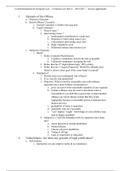
I. Elements of the Offense
a. Objective Elements
b. Result Offense? Causality
i. Factual Causation: Conditio-sine-qua-non
ii. Legal Causation :
1. Direct Cause ?
2. Intervening Cause ?
a. Insubstantial contribution to result (no)
b. Responsive intervening cause (yes)
c. Coincidental intervening cause (no)
d. High Culpability (yes)
e. Deliberate human intervention (no)
c. Subjective Elements
i. Intent?
1. Dolus eventualis/Recklessness
a. Cognitive component: foresee the risk as possible
b. Volitional component: accepting the risk
2. Dolus directus 2nd degree/Knowingly: 90% certain
3. Dolus directus 1st degree/Purposely: Would the offender have
failed to achieve their goal if the crime hadn’t occurred?
ii. Negligence?
1. Did the actor run a substantial risk of harm?
2. If so, was the risk unjustified?
3. Objective: What would the reasonable man with ordinary
capacities have done in these circumstances?
a. gross deviation from reasonable standard of care required
b. conduct offenses may be used to determine what is
reasonable (if you find that a person has violated another
offense you can be almost certain that they acted
negligently because a reasonable person would not have
broken the law)
c. probability of harm is important
d. justifiable risks are reasonable
e. “can” implies “ought”: knowledge or extra abilities may
lead to higher standards
4. Subjective: Could the defendant with his capacities have done
that?
a. Acute physical or mental disabilities
b. Mental disease
c. Chronic physical disabilities
d. Young or old age
e. Lack of experience or education
II. Unlawfulness: Are there any grounds of legal justification?
a. Self-defense
i. Imminence (no pre-emptive strike & no retaliation)
I. Elements of the Offense
a. Objective Elements
b. Result Offense? Causality
i. Factual Causation: Conditio-sine-qua-non
ii. Legal Causation :
1. Direct Cause ?
2. Intervening Cause ?
a. Insubstantial contribution to result (no)
b. Responsive intervening cause (yes)
c. Coincidental intervening cause (no)
d. High Culpability (yes)
e. Deliberate human intervention (no)
c. Subjective Elements
i. Intent?
1. Dolus eventualis/Recklessness
a. Cognitive component: foresee the risk as possible
b. Volitional component: accepting the risk
2. Dolus directus 2nd degree/Knowingly: 90% certain
3. Dolus directus 1st degree/Purposely: Would the offender have
failed to achieve their goal if the crime hadn’t occurred?
ii. Negligence?
1. Did the actor run a substantial risk of harm?
2. If so, was the risk unjustified?
3. Objective: What would the reasonable man with ordinary
capacities have done in these circumstances?
a. gross deviation from reasonable standard of care required
b. conduct offenses may be used to determine what is
reasonable (if you find that a person has violated another
offense you can be almost certain that they acted
negligently because a reasonable person would not have
broken the law)
c. probability of harm is important
d. justifiable risks are reasonable
e. “can” implies “ought”: knowledge or extra abilities may
lead to higher standards
4. Subjective: Could the defendant with his capacities have done
that?
a. Acute physical or mental disabilities
b. Mental disease
c. Chronic physical disabilities
d. Young or old age
e. Lack of experience or education
II. Unlawfulness: Are there any grounds of legal justification?
a. Self-defense
i. Imminence (no pre-emptive strike & no retaliation)


