ASCP Practice Questions - Histotechnology 2023/2024 already passed
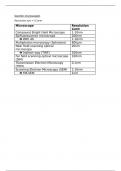
ASCP Practice Questions - Acetic acid - correct answers This fixative does not fix or destroy carbohydrates, and it does not fix lipids. It penetrates very rapidly and leaves tissue very soft. It is added to many fixative mixtures because of its ability to fix nuclei. Glutaraldehyde - correct answers Techniques using Schiff reagent, such as the periodic acid-Schiff (PAS) stain, cannot be used on __________ fixed tissues because false positive results will be obtained. Glyoxal - correct answers This fixative is the smallest dialdehyde and is used in the textile industry for imparting wrinkle resistance and permanent press creases. It has replaced formaldehyde in some histopathology laboratories because it is much less toxic. Zinc salts - correct answers Today, _________ has/have found use not only in combination with formaldehyde for routine fixation, but as a substitute for mercury in the B-5 solution commonly used for the fixation of lymph node and bone marrow tissues Michel transport medium - correct answers If unfixed tissue is to be held for several days or transported over a long distance then this transport medium is recommended. Dehydration, clearing, infiltration - correct answers Tissue processing is usually considered to include: Xylene - correct answers The most widely used clearing agent in histology today is: Ethylenediaminetetraacetic acid (EDTA) - correct answers This chelating agent binds calcium ions and is one method used for decalcifying tissues. Phase-contrast microscope - correct answers This microscope is used for the examination of unstained specimens, especially unstained living cells, and allows almost transparent objects to be seen clearly. Cryostat - correct answers This piece of equipment is a refrigerated chamber containing a microtome that is used to cut frozen sections. Hazardous chemicals - correct answers OSHA defines ____________ as chemicals that may cause acute or chronic health effects in exposed employees. Toxic dose low - correct answers The lowest dose of a substance that will produce any toxic effect in humans when introduced by any route other than inhalation is the: Reactivity - correct answers The right yellow diamond in the NFPA coded labeling system carries a chemical's ____________ information. Nucleolus - correct answers This dense, rounded, and usually intensely basophilic mass in the nucleus of a cell consists of 80% to 90% protein and produces most if not all of the ribosomal RNA. Ribosomes - correct answers These cell structures are often found attached to the endoplasmic reticulum and are the site of protein synthesis. Hematoxylin - correct answers The most widely used nuclear stain for routine histology sections is: PAS with diastase digestion - correct answers The main purpose of this stain is to demonstrate glycogen in tissue sections. Alkaline congo red method - correct answers Amyloid is best demonstrated in tissue using: Cardiac muscle - correct answers This muscle type is striated but involuntary. The cells branch and anastomose and each cell usually has only one centrally located nucleus. Sudan black B - correct answers This stain is the most sensitive of the lipid dyes and is also used in hematopathology to aid in differentiating granulocyte precursors from leukocytes committed to lymphocytic or monocytic pathways.
Written for
- Institution
- Histotechnology
- Course
- Histotechnology
Document information
- Uploaded on
- December 7, 2023
- Number of pages
- 6
- Written in
- 2023/2024
- Type
- Exam (elaborations)
- Contains
- Questions & answers
Subjects
-
ascp practice questions histotechnology

Also available in package deal