

14/11/23
Introduction to the Cognitive-behavioural School
Week 8 – Bruce
Objectives:
1. Understand the development of CBT historically and philosophically.
2. Understand the influence of behaviourism.
3. Understand the influence of Beck (CBT)
4. Understand the influence of Ellis (REBT)
5. Consider the relative merits of CBT
1.
Brief history of CBT: 1950s-1960s:
a. B.F Skinner focused on
observable behaviours and
learning principles.
b. Albert Ellis developed Rational
Emotive Behavior Therapy
(REBT), fixating the idea that
irrational beliefs influence
emotions/behaviours.
1960s-1970s:
a. Aaron T. Beck developed
cognitive therapy, he laid the
foundation.
b. initially focused on depression
and emphasized identifying
and changing patterns
1970s-1980s:
a. Beck's cognitive therapy started to
integrate, and more disorders were
addressed such as anxiety and
phobias.
1980s-1990s:
a. CBT gained widespread recognition.
The cognitive model was applied to a
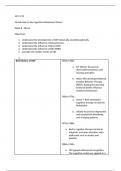
Introduction to the Cognitive-behavioural School
Week 8 – Bruce
Objectives:
1. Understand the development of CBT historically and philosophically.
2. Understand the influence of behaviourism.
3. Understand the influence of Beck (CBT)
4. Understand the influence of Ellis (REBT)
5. Consider the relative merits of CBT
1.
Brief history of CBT: 1950s-1960s:
a. B.F Skinner focused on
observable behaviours and
learning principles.
b. Albert Ellis developed Rational
Emotive Behavior Therapy
(REBT), fixating the idea that
irrational beliefs influence
emotions/behaviours.
1960s-1970s:
a. Aaron T. Beck developed
cognitive therapy, he laid the
foundation.
b. initially focused on depression
and emphasized identifying
and changing patterns
1970s-1980s:
a. Beck's cognitive therapy started to
integrate, and more disorders were
addressed such as anxiety and
phobias.
1980s-1990s:
a. CBT gained widespread recognition.
The cognitive model was applied to a


