
Reflex Action: Reflex Action:
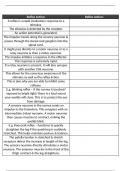
A reflex is a rapid involuntary response to a
stimulus.
The stimulus is detected by the receptor.
An action potential is generated.
The impulse travels along the sensory neurone &
passes through the dorsal root ganglion into the
spinal cord.
It might pass directly to a motor neurone or to a
relay neurone & then a motor neurone.
The impulse initiates a response in the effector.
This response is extremely rapid.
If a relay neurone is present, it will also synapse
with another CNS neurone.
This allows for the conscious awareness of the
stimulus as well as the reflex action.
This is also why you are able to inhibit some
reflexes.
E.g. blinking reflex – if the cornea is touched/
exposed to bright light/ there is a loud sound
your eyelids will close. This is to protect the eye
from damage.
A sensory neurone in the cornea sends an
impulse to the brainstem. This synapses with an
intermediate (relay) neurone. A motor neurone
then causes muscles to contract, making the
eyelids blink.
E.g. Knee jerk reflex – functions to quickly
straighten the leg if the quadricep is suddenly
stretched. This helps maintain posture & balance.
The patella tendon is stretched & stretch
receptors detect the increase in length of the leg.
The sensory neurone directly stimulates a motor
neurone. The extensor muscles in the front of the
thigh contract & the leg straightens.
A reflex is a rapid involuntary response to a
stimulus.
The stimulus is detected by the receptor.
An action potential is generated.
The impulse travels along the sensory neurone &
passes through the dorsal root ganglion into the
spinal cord.
It might pass directly to a motor neurone or to a
relay neurone & then a motor neurone.
The impulse initiates a response in the effector.
This response is extremely rapid.
If a relay neurone is present, it will also synapse
with another CNS neurone.
This allows for the conscious awareness of the
stimulus as well as the reflex action.
This is also why you are able to inhibit some
reflexes.
E.g. blinking reflex – if the cornea is touched/
exposed to bright light/ there is a loud sound
your eyelids will close. This is to protect the eye
from damage.
A sensory neurone in the cornea sends an
impulse to the brainstem. This synapses with an
intermediate (relay) neurone. A motor neurone
then causes muscles to contract, making the
eyelids blink.
E.g. Knee jerk reflex – functions to quickly
straighten the leg if the quadricep is suddenly
stretched. This helps maintain posture & balance.
The patella tendon is stretched & stretch
receptors detect the increase in length of the leg.
The sensory neurone directly stimulates a motor
neurone. The extensor muscles in the front of the
thigh contract & the leg straightens.


