TEST BANK MATERNAL AND CHILD NURSING CARE 5TH EDITION BY LONDON
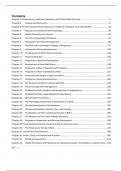
TEST BANK MATERNAL AND CHILD NURSING CARE 5TH EDITION BY LONDONContents Chapter 1 Contemporary Maternal, Newborn, and Child Health Nursing .............................................. 2 Chapter 2 Culture and the Family ................................................................................................. 17 Chapter 3 Genetic and Genomic Influences in Maternal, Newborn, and Child Health .......................... 32 Chapter 4 Reproductive Anatomy and Physiology ......................................................................... 46 Chapter 5 Health Promotion for Women ....................................................................................... 64 Chapter 6 Common Gynecologic Problems .................................................................................. 78 Chapter 7 Conception and Fetal Development ............................................................................. 98 Chapter 8 Physical and Psychologic Changes of Pregnancy ........................................................ 113 Chapter 9 Antepartum Nursing Assessment ............................................................................... 128 Chapter 10 The Expectant Family: Needs and Care ....................................................................... 145 Chapter 11 Maternal Nutrition ..................................................................................................... 162 Chapter 12 Pregnancy in Selected Populations ............................................................................. 177 Chapter 13 Assessment of Fetal Well-Being ................................................................................. 199 Chapter 14 Pregnancy at Risk: Pregestational Problems ............................................................... 214 Chapter 15 Pregnancy at Risk: Gestational Onset ......................................................................... 231 Chapter 16 Processes and Stages of Labor and Birth .................................................................... 247 Chapter 17 Intrapartum Nursing Assessment ............................................................................... 264 Chapter 18 The Family in Childbirth: Needs and Care ................................................................... 279 Chapter 19 Pharmacologic Pain Management .............................................................................. 295 Chapter 20 Childbirth at Risk: Prelabor and Intrapartum Complications ........................................ 310 Chapter 21 Childbirth at Risk: Labor-Related Complications ......................................................... 325 Chapter 22 Birth-Related Procedures ........................................................................................... 344 Chapter 23 The Physiologic Responses of the Newborn to Birth .................................................... 359 Chapter 24 Nursing Assessment of the Newborn .......................................................................... 375 Chapter 25 The Normal Newborn: Needs, Care, and Feeding ........................................................ 390 Chapter 26 The Newborn at Risk: Conditions Present at Birth ........................................................ 409 Chapter 27 The Newborn at Risk: Birth-Related Stressors ............................................................. 424 Chapter 28 Postpartum Adaptation and Nursing Assessment ....................................................... 439 Chapter 29 The Postpartum Family: Early Care Needs and Home Care ............................................. 457 Chapter 30 The Postpartum Family at Risk ................................................................................... 473 Chapter 31 Growth and Development ............................................................................................. 489 Chapter 32 Infant, Child, and Adolescent Nutrition .......................................................................... 505 Chapter 33 Pediatric Assessment ................................................................................................ 519 Chapter 34 Health Promotion and Maintenance: General Concepts, the Newborn, and the Infant ... 534 1 | P a g eChapter 35 Health Promotion and Maintenance: The Toddler and the Preschooler......................... 549 Chapter 36 Health Promotion and Maintenance: The School-Age Child and the Adolescent .............. 565 Chapter 37 Family Assessment and Concepts of Nursing Care in the Community .......................... 586 Chapter 38 Nursing Considerations for the Child and Family With a Chronic Condition .................. 600 Chapter 39 Nursing Considerations for the Hospitalized Child ......................................................... 620 Chapter 40 Pain Assessment and Management in Children.............................................................. 641 Chapter 41 The Child With a Life-Threatening Condition and End-of-Life Care ............................... 657 Chapter 42 Social and Environmental Influences on the Child ....................................................... 677 Chapter 43 Immunizations and Communicable Diseases ............................................................. 696 Chapter 44 The Child With Alterations in Fluid, Electrolyte, and Acid–Base Balance .......................... 718 Chapter 45 The Child With Alterations in Eye, Ear, Nose, and Throat Function ................................ 733 Chapter 46 The Child With Alterations in Respiratory Function ...................................................... 749 Chapter 47 The Child With Alterations in Cardiovascular Function ................................................... 763 Chapter 48 The Child With Alterations in Immune Function .............................................................. 783 Chapter 49 The Child With Alterations in Hematologic Function .................................................... 798 Chapter 50 The Child With Cancer .................................................................................................. 818 Chapter 51 The Child With Alterations in Gastrointestinal Function ............................................... 836 Chapter 52 The Child With Alterations in Genitourinary Function ................................................... 851 Chapter 53 The Child With Alterations in Endocrine Function ........................................................ 864 Chapter 54 The Child With Alterations in Neurologic Function ......................................................... 880 Chapter 55 The Child With Alterations in Mental Health and Cognitive Function ............................. 895 Chapter 56 The Child With Alterations in Musculoskeletal Function .............................................. 909 Chapter 57 The Child With Alterations in Skin Integrity .................................................................. 923 Chapter 1 Contemporary Maternal, Newborn, and Child Health Nursing 1) A nurse is examining different nursing roles. Which statement best illustrates an advanced practice nursing role? 1. A registered nurse who is the manager of a large obstetric unit 2. A clinical nurse specialist working as a staff nurse on a mother–baby unit 3. A registered nurse who is the circulating nurse at surgical deliveries (cesarean sections) 4. A clinical nurse specialist with whom other nurses consult for this nurse’s expertise in caring for high-risk infants Answer: 4 Explanation: 1. A registered nurse who is the manager of a large obstetric unit or one who is a circulating 2 | P a g enurse at surgical deliveries (cesarean sections) is defined as a professional nurse, and has graduated from an accredited program in nursing and completed the licensure examination. 2. A clinical nurse specialist working as a staff nurse on a mother–baby unit might have the qualifications for an advanced practice nursing staff but is not working in that capacity. 3. A registered nurse who is the manager of a large obstetric unit or one who is a circulating nurse at surgical deliveries (cesarean sections) is defined as a professional nurse, and has graduated from an accredited program in nursing and completed the licensure examination. 4. A clinical nurse specialist with whom other nurses consult for expertise in caring for high- risk infants would illustrate an advanced practice nursing role. This nurse has specialized knowledge and competence in a specific clinical area, and is master’s- prepared. Page Ref: 3 Cognitive Level: Remembering Client Need/Sub: Safe and Effective Care Environment/Management of Care Standards: QSEN Competencies: II.B.4. Function competently within own scope of practice as a member of the health care team │AACN Essential Competencies: VI.1. Compare/contrast the roles and perspectives of the nursing profession with other care professionals on the healthcare team (i.e. scope of discipline, education and licensure requirements) │NLN Competencies: Teamwork; Knowledge; Scope of practice, roles, and responsibilities of health care team members, including overlaps │Nursing/Integrated Concepts: Nursing Process: Assessment Learning Outcome: 1.1 Identify the nursing roles available to maternal-newborn and pediatric nurses. MNL Learning Outcome: 1.1.2. Explore the role of the nurse in maternity care delivery. 2) What is the major focus of the nurse practitioner (NP)? 1. Leadership 2. Tertiary prevention 3. Physical and psychosocial clinical assessment 4. Independent care of the high-risk, pregnant client Answer: 3 Explanation: 1. Leadership might be a quality of the NP, but it is not the major focus. 2. The NP cannot do tertiary prevention as a major focus. 3. Physical and psychosocial clinical assessment is the major focus of the NP. 4. NPs cannot provide independent care of the high-risk pregnant client, but must work under a physician’s supervision. Page Ref: 3 Cognitive Level: Remembering Client Need/Sub: Safe and Effective Care Environment/Management of Care Standards: QSEN Competencies: II.B.4. Function competently within own scope of practice as a 3 | P a g emember of the health care team │AACN Essential Competencies: VI.1. Compare/contrast the roles and perspectives of the nursing profession with other care professionals on the healthcare team (i.e. scope of discipline, education and licensure requirements) │NLN Competencies: Teamwork; Knowledge; Scope of practice, roles, and responsibilities of health care team members, including overlaps │Nursing/Integrated Concepts: Nursing Process: Assessment Learning Outcome: 1.1 Identify the nursing roles available to maternal-newborn and pediatric nurses. MNL Learning Outcome: 1.1.2. Explore the role of the nurse in maternity care delivery. 3) What is the role of the certified nurse–midwife (CNM)? Select all that apply. 1. Give primary care for healthy newborns. 2. Be educated in two disciplines of nursing. 3. Give primary care for high-risk clients who are in hospital settings. 4. Obtain a physician consultation for all technical procedures at delivery. 5. Be prepared to manage independently the care of women at low risk for complications during pregnancy and birth. Answer: 1, 2, 5 Explanation: 1. The CNM is prepared to manage independently the care of women at low risk for complications during pregnancy and birth and the care of healthy newborns. 2. The CNM is educated in the disciplines of nursing and midwifery. 3. CNMs cannot give primary care for high-risk clients who are in hospital settings. The physician provides the primary care. 4. The CNM does not need to obtain a physician consultation for all technical procedures at delivery. Situations in which the client is at risk, such as for a 4th-degree laceration or forceps delivery, would need physician consultation. 5. The CNM is prepared to manage independently the care of women at low risk for complications during pregnancy and birth and the care of healthy newborns. Page Ref: 3 Cognitive Level: Understanding Client Need/Sub: Safe and Effective Care Environment/Management of Care Standards: QSEN Competencies: II.B.4. Function competently within own scope of practice as a member of the health care team │AACN Essential Competencies: VI.1. Compare/contrast the roles and perspectives of the nursing profession with other care professionals on the healthcare team (i.e. scope of discipline, education and licensure requirements) │NLN Competencies: Teamwork; Knowledge; Scope of practice, roles, and responsibilities of health care team members, including overlaps │Nursing/Integrated Concepts: Nursing Process: Assessment Learning Outcome: 1.1 Identify the nursing roles available to maternal-newborn and pediatric nurses. MNL Learning Outcome: 1.1.2. Explore the role of the nurse in maternity care delivery. 4) During the hospital admission process, a child’s parent asks for information about family- centered care. What should the nurse explain to this parent? 4 | P a g e1. Mother is the principal caregiver in each family. 2. Father is the leader in each home; thus, all communications should include him. 3. Family serves as the constant influence and continuing support in the child’s life. 4. Child’s physician is the key person in ensuring the health of a child is maintained. Answer: 3 Explanation: 1. Culturally competent care recognizes that both matriarchal and patriarchal households exist. 2. Culturally competent care recognizes that both matriarchal and patriarchal households exist. 3. The foundation for the development of trusting relationships and partnerships with families is the recognition that the family is the principal caregiver, knows the unique nature of each individual child best, plays the vital role of meeting the child’s needs, and is responsible for ensuring each child’s health. 4. The physician is not present during the day-to-day routines in a child’s life. Page Ref: 3 Cognitive Level: Applying Client Need/Sub: Safe and Effective Care Environment/Management of Care Standards: QSEN Competencies: I.B.3. Provide patient-centered care with sensitivity and respect for the diversity of human experience │AACN Essential Competencies: IX.5. Deliver compassionate, patient-centered, evidence-based care that respects patient and family preferences │NLN Competencies: Relationship Centered Care; Knowledge; The role of family, culture, and community in a person's development │Nursing/Integrated Concepts: Nursing Process: Planning Learning Outcome: 1.2 Summarize the use of community-based nursing care in meeting the needs of childbearing and childrearing families. MNL Learning Outcome: 1.1.1. Relate the effect of culture and family to the childbearing experience. 5) A child is not enrolled in the Children’s Health Insurance Program (CHIP). What should the nurse do to encourage the family to consider enrolling the child in this program? 1. Assessment of the details of the family’s income and expenditures 2. Case management to limit costly, unnecessary duplication of services 3. Advocacy for the child by encouraging the family to investigate its CHIP eligibility 4. Education of the family about the need for keeping regular well-child visit appointments Answer: 3 Explanation: 1. Financial assessment is more commonly the function of a social worker. 2. The case management activity mentioned will not provide a source of funding. 3. In the role of an advocate, a nurse will advance the interests of another by suggesting the family investigate its CHIP eligibility. 4. The educational effort described will not provide a source of funding. Page Ref: 6 5 | P a g eCognitive Level: Applying Client Need/Sub: Safe and Effective Care Environment/Management of Care Standards: QSEN Competencies: I.A.1. Integrate understanding of multiple dimensions of patient centered care: information, communication, and education │ AACN Essential Competencies: V.12. Advocate for consumers and the nursing profession │ NLN Competencies: Relationship Centered Care; Practice; Communicate information effectively; listen openly and cooperatively │ Nursing/Integrated Concepts: Nursing Process: Implementation Learning Outcome: 1.3 Summarize the current status of factors related to health insurance and access to health care. MNL Learning Outcome: 1.1.4. Examine the legal and ethical influences on the delivery of nursing care to the childbearing family. 6) The nurse is evaluating telephone calls made by the mothers of newborns in a community clinic. Which calls should the nurse make a priority? Select all that apply. 1. Mother who is 16 years old 2. Mother who is breastfeeding 3. Mother who is a single parent 4. Mother who gave birth to twins 2 weeks ago 5. Mother whose baby was born at 30 weeks’ gestation Answer: 1, 3, 4, 5 Explanation: 1. Infant mortality rates are higher for infants of teen mothers. 2. There are no data to support the mortality rate of infants who are being breastfed. 3. Infant mortality rates are higher among unmarried mothers. 4. Infant mortality rates are higher among infants born in multiple births. 5. Infant mortality rates are higher among infants born prematurely. Page Ref: 8 Cognitive Level: Analyzing Client Need/Sub: Health Promotion and Maintenance Standards: QSEN Competencies: I.A.1. Integrate understanding of multiple dimensions of patient centered care: information, communication, and education │ AACN Essential Competencies: IX.1. Conduct comprehensive and focused physical, behavioral, psychological, spiritual, socioeconomic, and environmental assessments of health and illness parameters in patients, using developmentally and culturally appropriate approaches │ NLN Competencies: Context and Environment; Practice; conduct population-based transcultural health assessments and interventions │Nursing/Integrated Concepts: Nursing Process: Implementation Learning Outcome: 1.4 Relate the availability of statistical data to the formulation of further research questions. MNL Learning Outcome: 1.1.3. Relate various factors to their effect on pregnancy outcomes. 7) What is the maternity nurse’s best defense against an accusation of malpractice or negligence? 6 | P a g e1. Follows the physician’s written orders 2. Acts on the advice of the nurse manager 3. Becomes certified as a nurse–midwife or nurse practitioner 4. Meets the Association of Women’s Health, Obstetric and Neonatal Nurses (AWHONN) standards of practice Answer: 4 Explanation: 1. Following the physician’s written orders is not enough to defend the nurse from accusations because the orders and/or advice might be wrong or unethical. 2. Acting on the advice of the nurse manager is not enough to defend the nurse from accusations because the orders and/or advice might be wrong or unethical. 3. Being a certified nurse–midwife or nurse practitioner does not defend the nurse against these accusations if she does not follow the AWHONN standards of practice. 4. Meeting the AWHONN standards of practice would cover the maternity nurse against an accusation of malpractice or negligence because the standards are rigorous and cover all bases of excellent nursing practice. Page Ref: 9 Cognitive Level: Applying Client Need/Sub: Safe and Effective Care Environment/Management of Care Standards: QSEN Competencies: I.A.7. Explore ethical and legal implications of patient-centered care │ AACN Essential Competencies: VIII.1. Demonstrate the professional standards of moral, ethical, and legal conduct │ NLN Competencies: Context and Environment; Ethical Comportment; Act in accordance with legal and regulatory requirements, including HIPAA, for faculty, students, patients, and families │ Nursing/Integrated Concepts: Nursing Process: Planning Learning Outcome: 1.5 Delineate significant legal and ethical issues that influence the practice of maternal-child nursing. MNL Learning Outcome: 1.1.4. Examine the legal and ethical influences on the delivery of nursing care to the childbearing family. 8) The nurse is coordinating a clinical research trial with pediatric clients. From which clients should the nurse seek assent to participate in the research? Select all that apply. 1. A 9-year-old client who qualifies to test a medication for muscular dystrophy 2. A precocious 4-year-old starting as a participant in a cystic fibrosis research study 3. A 10-year-old starting in an investigative study for clients with precocious puberty 4. A 7-year-old client with leukemia who has elected to receive a newly developed trial medication 5. A 13-year-old client beginning participation in a research program for attention deficit/hyperactivity disorder (ADHD) treatments Answer: 1, 3, 4, 5 Explanation: 7 | P a g e1. Federal guidelines mandate that research participants 7 years old and older must receive developmentally appropriate information about healthcare procedures and treatments, and give assent. 2. The 4-year-old patient would qualify since the age of assent is 7 years old. 3. Federal guidelines mandate that research participants 7 years old and older must receive developmentally appropriate information about healthcare procedures and treatments, and give assent. 4. Federal guidelines mandate that research participants 7 years old and older must receive developmentally appropriate information about healthcare procedures and treatments, and give assent. 5. Federal guidelines mandate that research participants 7 years old and older must receive developmentally appropriate information about healthcare procedures and treatments, and give assent. Page Ref: 11 Cognitive Level: Applying Client Need/Sub: Safe and Effective Care Environment/Management of Care Standards: QSEN Competencies: I.A.7. Explore ethical and legal implications of patient-centered care │ AACN Essential Competencies: VIII.1. Demonstrate the professional standards of moral, ethical, and legal conduct │ NLN Competencies: Context and Environment; Ethical Comportment; Act in accordance with legal and regulatory requirements, including HIPAA, for faculty, students, patients, and families │ Nursing/Integrated Concepts: Nursing Process: Planning Learning Outcome: 1.5 Delineate significant legal and ethical issues that influence the practice of maternal-child nursing. MNL Learning Outcome: 1.1.4. Examine the legal and ethical influences on the delivery of nursing care to the childbearing family. 9) A 12-year-old pediatric client is in need of surgery. Which healthcare member is legally responsible for obtaining informed consent for an invasive procedure? 1. The nurse 2. The physician 3. The social worker 4. The unit secretary Answer: 2 Explanation: 1. The nurse is not legally responsible for obtaining informed consent for an invasive procedure. 2. Informed consent is legal preauthorization for an invasive procedure. It is the physician’s legal responsibility to obtain this because it consists of an explanation about the medical condition, a detailed description of treatment plans, the expected benefits and risks related to the proposed treatment plan, alternative treatment options, the client’s questions, and the client’s or guardian’s right to refuse treatment. 3. It is beyond the social worker’s scope of practice to obtain informed consent for an 8 | P a g einvasive procedure. 4. It is beyond the unit secretary’s scope of practice to obtain informed consent for an invasive procedure. Page Ref: 10 Cognitive Level: Understanding Client Need/Sub: Safe and Effective Care Environment/Management of Care Standards: QSEN Competencies: I.A.7. Explore ethical and legal implications of patient-centered care │ AACN Essential Competencies: VIII.1. Demonstrate the professional standards of moral, ethical, and legal conduct │ NLN Competencies: Context and Environment; Ethical Comportment; Act in accordance with legal and regulatory requirements, including HIPAA, for faculty, students, patients, and families │ Nursing/Integrated Concepts: Nursing Process: Planning Learning Outcome: 1.5 Delineate significant legal and ethical issues that influence the practice of maternal-child nursing. MNL Learning Outcome: 1.1.4. Examine the legal and ethical influences on the delivery of nursing care to the childbearing family. 10) The nurse tells family members the sex of a newborn baby without first consulting the parents. Which act did this nurse commit? 1. Negligence 2. Malpractice 3. A breach of ethics 4. Breach of privacy Answer: 4 Explanation: 1. Any nurse who fails to meet appropriate standards of care invites allegations of negligence. 2. Any nurse who fails to meet appropriate standards of care invites allegations of malpractice. 3. A breach of ethics would not apply to this situation. 4. A breach of privacy would have been committed in this situation, because it violates the right to privacy of this family. The right to privacy is the right of a person to keep his or her person and property free from public scrutiny (of even other family members). Page Ref: 11 Cognitive Level: Analyzing Client Need/Sub: Safe and Effective Care Environment/Management of Care Standards: QSEN Competencies: I.A.7. Explore ethical and legal implications of patient-centered care │ AACN Essential Competencies: VIII.1. Demonstrate the professional standards of moral, ethical, and legal conduct │ NLN Competencies: Context and Environment; Ethical Comportment; Act in accordance with legal and regulatory requirements, including HIPAA, for faculty, students, patients, and families │Nursing/Integrated Concepts: Nursing Process: Implementation Learning Outcome: 1.5 Delineate significant legal and ethical issues that influence the practice 9 | P a g eof maternal-child nursing. MNL Learning Outcome: 1.1.4. Examine the legal and ethical influences on the delivery of nursing care to the childbearing family. 11) The nurse is reviewing the 1973 Supreme Court decision in Roe v. Wade for a patient asking about an abortion. What should the nurse explain about the induction of a legal abortion? 1. It must be performed at a federally funded clinic. 2. It must be performed before the period of viability. 3. It must be performed at a military hospital overseas. 4. It must be performed to provide tissue for therapeutic research. Answer: 2 Explanation: 1. Whether conducted at a federally funded clinic, abortion can be provided legally if under U.S. laws. 2. Abortion can be performed legally until the period of viability; after viability, the rights of the fetus take precedence. 3. Whether or not conducted at a military hospital overseas, abortion can be provided legally if under U.S. laws. 4. Abortion cannot be used to provide tissue for therapeutic research. Page Ref: 12 Cognitive Level: Applying Client Need/Sub: Safe and Effective Care Environment/Management of Care Standards: QSEN Competencies: I.A.7. Explore ethical and legal implications of patient- centered care │ AACN Essential Competencies: VIII.1. Demonstrate the professional standards of moral, ethical, and legal conduct │NLN Competencies: Context and Environment; Ethical Comportment; Act in accordance with legal and regulatory requirements, including HIPAA, for faculty, students, patients, and families │ Nursing/Integrated Concepts: Nursing Process: Implementation Learning Outcome: 1.5 Delineate significant legal and ethical issues that influence the practice of maternal-child nursing. MNL Learning Outcome: 1.1.4. Examine the legal and ethical influences on the delivery of nursing care to the childbearing family. 12) Which family might find cord blood banking to be especially useful? 1. A family with a history of leukemia 2. A family with a history of infertility 3. A family that wishes to select the sex of a future child 4. A family that wishes to avoid a future intrauterine fetal surgery Answer: 1 Explanation: 1. Families with a history of leukemia might find cord blood banking useful because cord 10 | P a g eblood, like bone marrow and embryonic tissue, contains regenerative stem cells, which can replace diseased cells in the affected individual. 2. A family with a history of infertility would not be helped by cord blood banking. 3. A family that wishes to select the sex of a future child would not be helped by cord blood banking. 4. A family that wishes to avoid a future intrauterine surgery would not be helped by cord blood banking. Page Ref: 13 Cognitive Level: Analyzing Client Need/Sub: Safe and Effective Care Environment/Management of Care Standards: QSEN Competencies: I.A.7. Explore ethical and legal implications of patient-centered care │ AACN Essential Competencies: VIII.1. Demonstrate the professional standards of moral, ethical, and legal conduct │ NLN Competencies: Context and Environment; Ethical Comportment; Act in accordance with legal and regulatory requirements, including HIPAA, for faculty, students, patients, and families │Nursing/Integrated Concepts: Nursing Process: Planning Learning Outcome: 1.5 Delineate significant legal and ethical issues that influence the practice of maternal-child nursing. MNL Learning Outcome: 1.1.4. Examine the legal and ethical influences on the delivery of nursing care to the childbearing family. 13) A nurse is providing guidance to a group of parents of children in the infant-to-preschool age group. After reviewing statistics on the most common cause of death in this age group, what information should the nurse include about prevention? 1. Reduce the use of pesticides in the home to prevent cancer. 2. Review swimming pool and traffic accidents to prevent accidental injury. 3. Incorporate heart-healthy foods into the child’s diet to prevent heart disease. 4. Provide a diet high in vitamin C from fruits and vegetables to prevent pneumonia. Answer: 2 Explanation: 1. Cancer is not a common cause of death for this age group. 2. Unintentional injuries are the most common cause of death for children between 1 and 19 years old. In children 1 to 4 years old, this is followed by drowning; fire and burns; suffocation; and pedestrian-related injuries. 3. Heart disease is not a common cause of death for this age group. 4. Pneumonia is not a common cause of death for this age group. Page Ref: 8 Cognitive Level: Applying Client Need/Sub: Health Promotion and Maintenance Standards: QSEN Competencies: III.C.3. Value the concept of EBP as integral to determining best clinical practice │ AACN Essential Competencies: III.6. Integrate evidence, clinical judgment, interprofessional perspectives and patient preferences in planning, implementing, and evaluating outcomes of care │NLN Competencies: Knowledge and Science; Practice; evaluate the strength of 11 | P a g eevidence for application of research findings to clinical practice │ Nursing/Integrated Concepts: Nursing Process: Implementation Learning Outcome: 1.6 Discuss the role of evidence-based practice in improving the quality of nursing care for childbearing families. MNL Learning Outcome: 1.1.3. Relate various factors to their effect on pregnancy outcomes. 14) Which practices characterize the basic competencies related to evidence-based practice? Select all that apply. 1. Clinical practice supported by data 2. Clinical practice that promotes quality 3. Clinical practice supported by good evidence 4. Clinical practice supported by intuitive evidence 5. Clinical practice that provides a useful approach to problem solving Answer: 1, 2, 3, 5 Explanation: 1. Supported by data is a hallmark characteristic of the basic competencies related to evidence- based practice. 2. Promoting quality is a hallmark characteristic of the basic competencies related to evidence- based practice. 3. Supported by good evidence is a hallmark characteristic of the basic competencies related to evidence-based practice. 4. Clinical practice supported by intuitive evidence does not provide valid evidence and data for the proper actions. 5. Providing a useful approach to problem solving is a hallmark characteristic of the basic competencies related to evidence-based practice. Page Ref: 14 Cognitive Level: Analyzing Client Need/Sub: Safe and Effective Care Environment/Management of Care Standards: QSEN Competencies: III.C.3. Value the concept of EBP as integral to determining best clinical practice │ AACN Essential Competencies: III.6. Integrate evidence, clinical judgment, interprofessional perspectives and patient preferences in planning, implementing, and evaluating outcomes of care │ NLN Competencies: Knowledge and Science; Practice; evaluate the strength of evidence for application of research findings to clinical practice │ Nursing/Integrated Concepts: Nursing Process: Assessment Learning Outcome: 1.6 Discuss the role of evidence-based practice in improving the quality of nursing care for childbearing families. MNL Learning Outcome: 1.1.3. Relate various factors to their effect on pregnancy outcomes. 15) The maternal-child nurse is caring for a teenager who is 16 weeks pregnant. What actions should the nurse perform when advocating for this client? Select all that apply. 1. Understand what the client needs. 2. Know the needs of the client’s family. 3. Compile a list of community resources. 12 | P a g e4. Coordinate services to meet quality measures. 5. Examine policies to ensure meeting the client’s needs. Answer: 1, 2, 3, 5 Explanation: 1. To be an effective advocate, the nurse must be aware of the individual’s needs. 2. To be an effective advocate, the nurse must be aware of the family’s needs. 3. To be an effective advocate, the nurse must be aware of the healthcare services available in the hospital and the community. The nurse can then assist the family to make informed choices about these services and to act in their best interests. 4. Case management is a process of coordinating the delivery of healthcare services in a manner that focuses on quality outcomes. 5. To be an effective advocate, nurses must also ensure that the policies and resources of healthcare agencies meet the psychosocial needs of childbearing women and of children and their families. Page Ref: 2 Cognitive Level: Applying Client Need/Sub: Safe and Effective Care Environment/Management of Care Standards: QSEN Competencies: II.B.4. Function competently within own scope of practice as a member of the health care team │ AACN Essential Competencies: VI.1. Compare/contrast the roles and perspectives of the nursing profession with other care professionals on the healthcare team (i.e. scope of discipline, education and licensure requirements) │NLN Competencies: Teamwork; Knowledge; Scope of practice, roles, and responsibilities of health care team members, including overlaps │Nursing/Integrated Concepts: Nursing Process: Implementation Learning Outcome: 1.1 Identify the nursing roles available to maternal-newborn and pediatric nurses. MNL Learning Outcome: 1.1.2. Explore the role of the nurse in maternity care delivery. 16) The nurse is establishing criteria for a medical or healthcare home for children. What should the nurse include when planning this approach to care? Select all that apply. 1. Providers partner with the family. 2. Children are known by the provider. 3. Home visits are made when necessary. 4. Specialty care can be accessed if necessary. 5. Communication with family occurs routinely. Answer: 1, 2, 4, 5 Explanation: 1. Criteria for a medical or healthcare home for children include partnering with the family in the child’s care. 2. Criteria for a medical or healthcare home for children include being well known by a physician or nurse who provides the usual source of sick care. 3. Home visits are a part of home care. 4. Criteria for a medical or healthcare home for children include having access to specialty care. 13 | P a g e5. Criteria for a medical or healthcare home for children include spending adequate time communicating clearly with the family. Page Ref: 5 Cognitive Level: Applying Client Need/Sub: Safe and Effective Care Environment/Management of Care Standards: QSEN Competencies: I.B.3. Provide patient-centered care with sensitivity and respect for the diversity of human experience │AACN Essential Competencies: IX.5. Deliver compassionate, patient-centered, evidence-based care that respects patient and family preferences │NLN Competencies: Relationship Centered Care; Knowledge; The role of family, culture, and community in a person's development │Nursing/Integrated Concepts: Nursing Process: Planning Learning Outcome: 1.2 Summarize
Document information
- Uploaded on
- December 1, 2023
- Number of pages
- 941
- Written in
- 2023/2024
- Type
- Exam (elaborations)
- Contains
- Unknown