Lifeguarding Chapter 11 Review 2023/2024 updated to pass
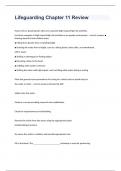
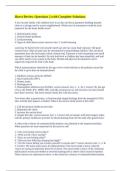
Lifeguarding Chapter 11 ReviewHead, neck or spinal injuries often are caused by high-impact/high-risk activities. List three examples of high-impact/high-risk activities in an aquatic environment. - correct answers ■ Entering head-first into shallow water ■ Falling from greater than a standing height ■ Entering the water from a height, such as a diving board, water slide, an embankment, cliff or tower ■ Striking a submerged or floating object ■ Receiving a blow to the head ■ Colliding with another swimmer ■ Striking the water with high impact, such as falling while water skiing or surfing Place the general rescue procedures for caring for a head, neck or spinal injury in the water in order: - correct answers Activate the EAP. Safely enter the water. Perform a rescue providing manual in-line stabilization. Check for responsiveness and breathing. Remove the victim from the water using the appropriate spinal backboarding procedure. Re-assess the victim's condition and provide appropriate care. Fill in the blank. The ________________________ technique is used for performing manual in-line stabilization for victims in the water. - correct answers head splint Backboards are a standard piece of rescue equipment used at aquatic facilities for immobilizing and removing the victim from the water. Backboards work best when they are equipped with: - correct answers A chest strap to secure the victim to the board A head-immobilizer device that can be attached to the top, or head-end, of the board. You enter the water to rescue a victim with a suspected spinal injury. You determine that the victim is not breathing. What should you do next? - correct answers Remove the victim from the water using the Passive Victim Extrication technique. The following statements describe appropriate rescue techniques for a victim with a suspected spinal injury, EXCEPT: - correct answers If the victim is small and is in shallow water, you do not need to use a backboard to extricate the victim. When rescuing a victim of a suspected head, neck or spinal injury using the spinal backboarding procedure, communication with the victim is important. What should lifeguards tell the victim? - correct answers ■ Let the victim know what you are doing. ■ Reassure the victim along the way. ■ Tell the victim not to nod or shake their head but instead say "yes" or "no" to answer questions. Describe four ways that additional lifeguards can help during spinal backboarding and extrication from the water. - correct answers ■ Helping to submerge, position, and stabilize the backboard on deck ■ Supporting the in-water rescuer in deep water
Written for
- Institution
- Ellis Lifeguard
- Course
- Ellis Lifeguard
Document information
- Uploaded on
- November 29, 2023
- Number of pages
- 4
- Written in
- 2023/2024
- Type
- Exam (elaborations)
- Contains
- Questions & answers
Subjects
-
lifeguarding chapter 11 review

Also available in package deal