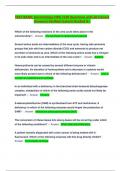
Test Bank Transcultural Nursing Assessment and Intervention 6th Edition Giger
Test Bank Transcultural Nursing Assessment and Intervention 6th Edition GigerTable of Contents Chapter 1: Introduction to Transcultural Nursing ........................................................................................... 1 Chapter 2: Communication .......................................................................................................................... 6 Chapter 3: Space ......................................................................................................................................... 11 Chapter 4: Social Organization .................................................................................................................... 14 Chapter 5: Time ......................................................................................................................................... 22 Chapter 6: Environmental Control ............................................................................................................. 25 Chapter 7: Biological Variations ................................................................................................................. 27 Chapter 8: African-Americans ...................................................................................................................... 31 Chapter 9: Mexican Americans ................................................................................................................... 34 Chapter 10: Navajos ................................................................................................................................... 37 Chapter 12: American Eskimos: The Yup'ik and Inupiat ............................................................................... 39 Chapter 13: Japanese Americans .................................................................................................................. 41 Chapter 14: Afghans and Afghan Americans ................................................................................................ 43 Chapter 15: Russian Americans ................................................................................................................... 45 Chapter 16: Chinese Americans ................................................................................................................... 47 Chapter 17: Filipino Americans ................................................................................................................... 49 Chapter 18: Vietnamese Americans .............................................................................................................. 51 Chapter 19: East Indian Hindu Americans ................................................................................................... 54 Chapter 21: Jewish Americans ..................................................................................................................... 56 Chapter 22: Korean Americans ................................................................................................................... 58 Chapter 24: Puerto Rican Americans........................................................................................................... 59 Chapter 25: Nigerian Americans .................................................................................................................. 61 Chapter 26: Ugandan Americans ................................................................................................................ 63 Chapter 27: Jordanian Americans ............................................................................................................... 65 Chapter 28: Cuban Americans .................................................................................................................... 67 Chapter 30: Irish Americans ........................................................................................................................ 69 Chapter 1: Introduction to Transcultural Nursing MULTIPLE CHOICE 1. The use of transcultural nursing knowledge is founded on the goal of: A . 1 | P a g e Increasing client compliance to the Western medical model.B . C . D . Delivering culturally sensitive care that is free of inherent biases. Eliminating cultural differences. Establishing system-centered health policy. ANS: B DIF: Cognitive Level: Knowledge KEY: Nursing Process: Assessment MSC: NCLEX Category: Safe, Effective Care Environment 2. The major purpose of culturally congruent nursing care is to enable the nurse to: A . B . C . D . Be aware of his or her own cultural beliefs and values. Change his or her beliefs to meet the patient’s needs. Provide care in a culturally sensitive manner. Refrain from making judgments when patients are wrong. ANS: C DIF: Cognitive Level: Knowledge KEY: Nursing Process: Assessment MSC: NCLEX Category: Health Promotion and Maintenance 3. Transcultural nursing is viewed as a culturally competent practice field that is: A . B . 2 | P a g e Nurse centered and research focused. Client centered and research focused.C . D . Spiritually centered and research focused. Concerned with differences between but not within cultural groups. WWW.THENURSINGMASTERY.COM ANS: B DIF: Cognitive Level: Knowledge KEY: Nursing Process: Assessment MSC: NCLEX Category: Safe, Effective Care Environment 4. The principle that is most important to the provision of culturally competent care is the nurse’s: A . B . C . D . Awareness of personal stereotypes based on culture. Knowledge of specific behavior that is typical of persons in a given culture. Sensitivity to what the physician says about persons in the cultural group of the patient. Awareness of actions that can be expected of persons in a given culture. ANS: A DIF: Cognitive Level: Knowledge KEY: Nursing Process: Assessment MSC: NCLEX Category: Psychosocial Integrity 5. Which of these cultural phenomena are among those considered essential and are evidenced among all cultural groups? Mark all that apply. A Communication - 3 | P a g e. B . C . D . E . F . Space Social organization Time Environmental control Biological variations ANS: F DIF: Cognitive Level: Knowledge KEY: Nursing Process: Assessment MSC: NCLEX Category: Psychosocial Integrity 6. The nurse responding to patients from diverse cultures with interpersonal awareness, knowledge, skill, and sensitivity is known as having: A . B . Enculturation. Culture care preservation. WWW.THENURSINGMASTERY.COM C . D . Cultural competence. Culture care accommodation. ANS: C DIF: Cognitive Level: Knowledge KEY: Nursing Process: Implementation MSC: NCLEX Category: Health Promotion and Maintenance 4 | P a g e7. The nurse is preparing a healthy diet plan for Mrs. O. In doing so, she takes the time to include the Polish foods that Mrs. O. favors. This is an example of the nurse’s demonstrat ing: A . B . C . D . Cultural competence. Bicultural values. Ethnocentrism. Assimilation. ANS: A DIF: Cognitive Level: Application KEY: Nursing Process: Planning MSC: NCLEX Category: Health Promotion and Maintenance A . B . C . C D . M Using a lot of hand gestures. Asking questions that require a yes or no response. Repeating the message with different words. Speaking slowly and distinctly. 5 | P a g eChapter 2: Communication MULTIPLE CHOICE 1. Communication approaches the nurse can use while providing culturally appropriate nursing care for a client with limited understanding of English include all of the follow- ing except: A . Using a lot of hand gestures. B . C . D . Asking questions that require a yes or no response. Repeating the message with different words. Speaking slowly and distinctly. ANS: B DIF: Cognitive Level: Application KEY: Nursing Process: Assessment MSC: NCLEX Category: Psychosocial Integrity 2. To determine if a client with a limited English vocabulary understands the pre- operative teaching related to coughing and deep breathing, the nurse should ask the client to: A . Verbalize what was learned regarding coughing and deep breathing. B . C . D . Verbalize to an interpreter how to cough and breathe deeply. Demonstrate how to cough and breathe deeply postoperatively. Interpret the meaning of the client’s facial expressions and nonverbal cues. ANS: C DIF: Cognitive Level: Application KEY: Nursing Process: Assessment MSC: NCLEX Category: Physiological Integrity 3. While planning discharge teaching, the nurse knows the client with which of the following family backgrounds is most likely to hold to traditional values? A . Chinese B Indian 6 | P a g e. C . D . Amish African American ANS: C DIF: Cognitive Level: Knowledge KEY: Nursing Process: Planning MSC: NCLEX Category: Psychosocial Integrity 4. The nurse is working with a culturally diverse patient population in a clinic. In order to deliver culturally competent care, it is essential for the nurse to: A . Do a physical examination on each patient. B . C . D . Do a cultural assessment on each patient. Have “lived experience” with the culture of the patients served. Observe each patient for his or her unique behavior. ANS: B DIF: Cognitive Level: Knowledge KEY: Nursing Process: Assessment MSC: NCLEX Category: Health Promotion and Maintenance 5. Cultural groups vary greatly. Which of the following is false concerning these differences? A . Environmental control refers to the ability of a group to plan activities that con- trol nature. B . C . D . Social organization refers to the differences that exist within the family unit in a culture. Verbal communication differences exist among cultures, and nonverbal commu- nication differences exist between cultures. The personal space and its meaning vary from one culture to another. ANS: B DIF: Cognitive Level: Knowledge KEY: Nursing Process: Assessment MSC: NCLEX Category: Psychosocial Integrity 6. When planning nursing care for a client with a different cultural background, the nurse should: A . Identify how cultural variables affect the health problem. B Try to explain how the client can adapt to hospital routines. 7 | P a g e. C . D . Speak slowly and clearly to ensure effective communication. Allow the family to provide care during the hospital stay. ANS: C DIF: Cognitive Level: Application KEY: Nursing Process: Planning MSC: NCLEX Category: Psychosocial Integrity 7. Which of the following interventions is helpful in communicating with a client who speaks a language other than yours? A . Reassure the client that you have friends of his ethnic or racial background. B . C . D . Speak to the client using his ethnic dialect. Ask the client for clarification if you don’t understand what he is saying. At the initial meeting, address the client by his first name. ANS: C DIF: Cognitive Level: Application KEY: Nursing Process: Implementation MSC: NCLEX Category: Health Promotion and Maintenance 8. Mr. Cappelini is a 40-year-old Italian man who just arrived in the United States. His English is limited, and the nurse does not speak Italian. Which intervention would be helpful in communicating with Mr. Cappelini? A . The nurse tells him, “I have Italian friends, so I have a good idea what you mean.” B . C . D . The nurse responds, “Please explain that to me again.” Explain in Italian dialect, “I’ma not understandinga you.” The nurse greets him with, “Well, Gino, how are you today?” ANS: B DIF: Cognitive Level: Application KEY: Nursing Process: Intervention MSC: NCLEX Category: Psychosocial Integrity 9. Which of the following is an appropriate guideline for overcoming language barriers? A . Ask often if the person understands. B Avoid nouns and conjunctions. 8 | P a g e. C . D . Talk slightly louder than normal. Use gestures with the words. ANS: D DIF: Cognitive Level: Application KEY: Nursing Process: Intervention MSC: NCLEX Category: Psychosocial Integrity 10. When developing communication skills for cultural competence, the best practice for the nurse when talking with clients of another culture is to: A . Speak loudly and slowly when communicating. B . C . D . Always utilize an interpreter if a culturally appropriate interpreter is available. Use simple words, avoid use of idioms and medical terms, and assess constantly for comprehension. Always talk with the client and family together, since this will increase the chance that someone understands what is said. ANS: C DIF: Cognitive Level: Comprehension KEY: Nursing Process: Intervention MSC: NCLEX Category: Health Promotion and Maintenance 11. Which of these factors are among those essential in communication assessment? Mark all that apply. A . Dialect B . C . D . E . F . Style Volume Touch Context of speech Kinesics ANS: A DIF: Cognitive Level: Knowledge KEY: Nursing Process: Assessment MSC: NCLEX Category: Psychosocial Integrity 12. Which of these factors associated with communication differs among cultural groups and is usually most closely linked to geographic location? 9 | P a g eA . B . C . D .
Written for
- Institution
-
Chamberlian School Of Nursing
- Course
- Unknown
Document information
- Uploaded on
- November 28, 2023
- Number of pages
- 70
- Written in
- 2023/2024
- Type
- Exam (elaborations)
- Contains
- Unknown
Subjects
-
test bank transcultural nursing assessment and int