Ancient DNA Analysis
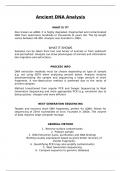
WHAT IS IT?
Also known as aDNA. It is highly degraded, fragmented and contaminated
DNA from specimens hundreds or thousands of years old. The bp length
varies between 40-400. Analysis was founded in 1984.
WHAT IT SHOWS
Samples can be taken from hair and bones of animals or from sediment
and permafrost. Analysis can show phenotypes of animals and information
like migration and extinctions.
PROCESS INFO
DNA extraction methods must be chosen depending on type of sample
e.g. not using EDTA when analysing ancient bones. Analysis involves
decontaminating the sample and sequencing a large amount of short
fragments. A non-destructive method is preferred due to the rarity of
ancient samples.
Method transitioned from regular PCR and Sanger Sequencing to Next
Generation Sequencing and more appropriate PCR (e.g. emulsion) due to
being quicker, cheaper and more efficient.
NEXT GENERATION SEQUENCING
Targets and recovers short DNA fragments, perfect for aDNA. Allows for
sequencing of 25mil nucleotides at once. Founded in 2000s. The volume
of data requires large computer storage.
GENERAL METHOD
1. Remove surface contaminants
2. Prepare sample
3. DNA Extraction (Lysis, purification and DNA binding)
Binding usually isopropanol based as gives better recovery of
shorter fragments.
4. Quantifying PCR (may also amplify contaminants)
5. Next Generation Sequencing
6. Compare sequence to genomic database
WHAT IS IT?
Also known as aDNA. It is highly degraded, fragmented and contaminated
DNA from specimens hundreds or thousands of years old. The bp length
varies between 40-400. Analysis was founded in 1984.
WHAT IT SHOWS
Samples can be taken from hair and bones of animals or from sediment
and permafrost. Analysis can show phenotypes of animals and information
like migration and extinctions.
PROCESS INFO
DNA extraction methods must be chosen depending on type of sample
e.g. not using EDTA when analysing ancient bones. Analysis involves
decontaminating the sample and sequencing a large amount of short
fragments. A non-destructive method is preferred due to the rarity of
ancient samples.
Method transitioned from regular PCR and Sanger Sequencing to Next
Generation Sequencing and more appropriate PCR (e.g. emulsion) due to
being quicker, cheaper and more efficient.
NEXT GENERATION SEQUENCING
Targets and recovers short DNA fragments, perfect for aDNA. Allows for
sequencing of 25mil nucleotides at once. Founded in 2000s. The volume
of data requires large computer storage.
GENERAL METHOD
1. Remove surface contaminants
2. Prepare sample
3. DNA Extraction (Lysis, purification and DNA binding)
Binding usually isopropanol based as gives better recovery of
shorter fragments.
4. Quantifying PCR (may also amplify contaminants)
5. Next Generation Sequencing
6. Compare sequence to genomic database