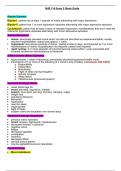
NUR 114 Exam 2 Study Guide
Bipolar Disorder
Bipolar I: patient has at least 1 episode of mania alternating with major depression
Bipolar II: patient has 1 or more hypomanic episodes alternating with major depressive episodes
Cyclothymic: patient has at least 2 years of repeated hypomanic manifestations that don’t meet the
criteria for hypomanic episodes alternating with minor depressive episodes
Bipolar Behaviors:
mania: abnormally elevated mood which can also be described as expansive/irritable; usually
requires hospitalization; mania lasts approx. 1 week
hypomania: less severe episode of mania , lasting at least 4 days, accompanied by 3 or more
manifestations of mania; hospitalization not required; patient less impaired
rapid cycling: 4 or more episodes of hypomania/acute mania within 1 year associated with
increase recurrence rate/resistance to treatment
DSM-5 Criteria (Manic Episode):
Approximately 1 week of abnormal, persistently elevated/expansive/irritable mood
Persistence of 3 or more of the following (4 if mood is only irritable): (mnemonic DIG FAST)
o Distractibility
o Indiscretion
o Grandiosity
o Flight of ideas (racing thoughts)
o Activity increase
o Sleep deficit
o Talkativeness (pressured speech)
Expected Findings: Manic
onset before age 30
mood: elevated, expansive, irritable
speech: loud-rapid, punning, rhyming, clanging, vulgar
weight loss
grandiose delusions
distracted
hyperactive
need for sleep
inappropriate
flight of ideas
sudden onset and escalates over several days
Expected Findings: Depressive
previous manic episodes
mood: anxious, depressed, hopelessness
decreased interest in pleasure
negative views
fatigue
decreased appetite
constipation
insomnia
decreased libido
suicidal preoccupation
may be agitated/movement retardation
Pharmacology:
Mood stabilizers:
, o Lithium: low therapeutic threshold (narrow therapeutic window)
0.5-1.2 mEq/L
Toxicity: N/V, diarrhea, blurred vision, tinnitus, ataxia, tremors, confusion,
dysrhythmias
o Valproate and carbamazepine (acute mania)
o Lamotrigine (Lamictal) (maintenance therapy in bipolar mania)
1st Gen Antipsychotics:
o chlorpromazine
o loxapine
2nd Gen Antipsychotics:
o olanzapine
o risperidone
o lurasidone and quetiapine (treat depression in bipolar)
Nursing Care:
based on phase of bipolar that patient is in
Acute phase
o focus is on safety and maintaining physical health
o hospitalization can be required
o goals of treatment: reduction of mania/patient safety
o determination of risk of harm to self/others
o one-to-one supervision
Continuation phase
o treatment 4-9 months long
o relapse
Depression
Seasonal Affective Disorder (SAD): occurs seasonally, usually during winter when there’s less
daylight.
Persistent Depressive Disorder: previously known as dysrhythmic disorder); mild; onset usually
childhood/adolescence; last at least 2 years for adult, 1 year for kids.
Premenstrual Dysmorphic Disorder: associated with luteal phase of menstrual cycle
Substance-Induced Depressive Disorder: clinical findings of depression associated with use
of/withdrawal from drugs/alcohol.
Major Depressive Disorder (MDD): single or recurrent episodes of unipolar depression resulting in
significant change in pt normal function accompanied by at least 5 specific clinical findings. The
following must occur almost every day for min. of 2 wks and lasts most of the day:
depressed mood
difficulty sleeping/excessive sleeping
indecisiveness
decreased ability to focus
increase/decrease in motor activity
inability to feel pleasure
increase/decrease in body weight (>5% total body weight over 1 month
Mnemonic: SIGE CAPS (DSM-5 criteria) (MUST include either depressed mood OR loss of
interest)
Sleep disorder
Interest deficit
Guilt (worthlessness, hopelessness)
Energy deficit
Concentration deficit
Appetite disorder
Psychomotor agitation/retardation
, Suicidality
Risk factors:
more common in females
family hx
previous personal hx
age >65
neurotransmitter deficiencies
stressful life events
illness (esp. chronic)
postpartum period
comorbid anxiety/personality/substance abuse disorder
trauma early in life
Expected findings:
anergia (lack of energy)
anhedonia (lack of pleasure in normal activities)
anxiety
sluggishness, or unable to sit still/relax
somatic reports: fatigue, GI changes, pain
vegetative findings: change in eating patterns, constipation, sleep disturbances, decreased
interest in sex
psychomotor retardation (slowed physical movement, slumped posture)
psychomotor agitation (restlessness, pacing, finger tapping)
** Depression in the elderly can mimic early stages of Alzheimer’s
Patient Education for all Antidepressants:
don’t discontinue suddenly
therapeutic effects not immediate (usually several weeks)
avoid driving/operating heavy machinery due to possible sedation
notify provider of suicidal thoughts
avoid ETOH
Medications:
SSRIs
o 1st line treatment
o Citalopram (Celexa)
o Fluoxetine (Proxac)
o Sertraline (Zoloft)
SSRI Patient Education:
o adverse effects include nausea, H/A, agitation, insomnia, anxiety
o NEVER mix SSRI and St. John Wort
o weight gain can occur; follow healthy diet
SSRIs and Serotonin Syndrome:
o Suicide risk increased
o Slow onset and taper off
o Sweaty and hot fever
o Rigid muscles/restlessness/agitation
o Increased HR/BP
TCAs
o Amitriptyline (Elavil)
o Education:
minimize anticholinergic effects by chewing sugarless gum, eating foods high in
fiber, and increasing fluid intake to 2 or 3 L/day
MAOIs
o Phenelzine (Nardil)
o NEVER mix with TCA, SSRI, SNRI
o Education:
Bipolar Disorder
Bipolar I: patient has at least 1 episode of mania alternating with major depression
Bipolar II: patient has 1 or more hypomanic episodes alternating with major depressive episodes
Cyclothymic: patient has at least 2 years of repeated hypomanic manifestations that don’t meet the
criteria for hypomanic episodes alternating with minor depressive episodes
Bipolar Behaviors:
mania: abnormally elevated mood which can also be described as expansive/irritable; usually
requires hospitalization; mania lasts approx. 1 week
hypomania: less severe episode of mania , lasting at least 4 days, accompanied by 3 or more
manifestations of mania; hospitalization not required; patient less impaired
rapid cycling: 4 or more episodes of hypomania/acute mania within 1 year associated with
increase recurrence rate/resistance to treatment
DSM-5 Criteria (Manic Episode):
Approximately 1 week of abnormal, persistently elevated/expansive/irritable mood
Persistence of 3 or more of the following (4 if mood is only irritable): (mnemonic DIG FAST)
o Distractibility
o Indiscretion
o Grandiosity
o Flight of ideas (racing thoughts)
o Activity increase
o Sleep deficit
o Talkativeness (pressured speech)
Expected Findings: Manic
onset before age 30
mood: elevated, expansive, irritable
speech: loud-rapid, punning, rhyming, clanging, vulgar
weight loss
grandiose delusions
distracted
hyperactive
need for sleep
inappropriate
flight of ideas
sudden onset and escalates over several days
Expected Findings: Depressive
previous manic episodes
mood: anxious, depressed, hopelessness
decreased interest in pleasure
negative views
fatigue
decreased appetite
constipation
insomnia
decreased libido
suicidal preoccupation
may be agitated/movement retardation
Pharmacology:
Mood stabilizers:
, o Lithium: low therapeutic threshold (narrow therapeutic window)
0.5-1.2 mEq/L
Toxicity: N/V, diarrhea, blurred vision, tinnitus, ataxia, tremors, confusion,
dysrhythmias
o Valproate and carbamazepine (acute mania)
o Lamotrigine (Lamictal) (maintenance therapy in bipolar mania)
1st Gen Antipsychotics:
o chlorpromazine
o loxapine
2nd Gen Antipsychotics:
o olanzapine
o risperidone
o lurasidone and quetiapine (treat depression in bipolar)
Nursing Care:
based on phase of bipolar that patient is in
Acute phase
o focus is on safety and maintaining physical health
o hospitalization can be required
o goals of treatment: reduction of mania/patient safety
o determination of risk of harm to self/others
o one-to-one supervision
Continuation phase
o treatment 4-9 months long
o relapse
Depression
Seasonal Affective Disorder (SAD): occurs seasonally, usually during winter when there’s less
daylight.
Persistent Depressive Disorder: previously known as dysrhythmic disorder); mild; onset usually
childhood/adolescence; last at least 2 years for adult, 1 year for kids.
Premenstrual Dysmorphic Disorder: associated with luteal phase of menstrual cycle
Substance-Induced Depressive Disorder: clinical findings of depression associated with use
of/withdrawal from drugs/alcohol.
Major Depressive Disorder (MDD): single or recurrent episodes of unipolar depression resulting in
significant change in pt normal function accompanied by at least 5 specific clinical findings. The
following must occur almost every day for min. of 2 wks and lasts most of the day:
depressed mood
difficulty sleeping/excessive sleeping
indecisiveness
decreased ability to focus
increase/decrease in motor activity
inability to feel pleasure
increase/decrease in body weight (>5% total body weight over 1 month
Mnemonic: SIGE CAPS (DSM-5 criteria) (MUST include either depressed mood OR loss of
interest)
Sleep disorder
Interest deficit
Guilt (worthlessness, hopelessness)
Energy deficit
Concentration deficit
Appetite disorder
Psychomotor agitation/retardation
, Suicidality
Risk factors:
more common in females
family hx
previous personal hx
age >65
neurotransmitter deficiencies
stressful life events
illness (esp. chronic)
postpartum period
comorbid anxiety/personality/substance abuse disorder
trauma early in life
Expected findings:
anergia (lack of energy)
anhedonia (lack of pleasure in normal activities)
anxiety
sluggishness, or unable to sit still/relax
somatic reports: fatigue, GI changes, pain
vegetative findings: change in eating patterns, constipation, sleep disturbances, decreased
interest in sex
psychomotor retardation (slowed physical movement, slumped posture)
psychomotor agitation (restlessness, pacing, finger tapping)
** Depression in the elderly can mimic early stages of Alzheimer’s
Patient Education for all Antidepressants:
don’t discontinue suddenly
therapeutic effects not immediate (usually several weeks)
avoid driving/operating heavy machinery due to possible sedation
notify provider of suicidal thoughts
avoid ETOH
Medications:
SSRIs
o 1st line treatment
o Citalopram (Celexa)
o Fluoxetine (Proxac)
o Sertraline (Zoloft)
SSRI Patient Education:
o adverse effects include nausea, H/A, agitation, insomnia, anxiety
o NEVER mix SSRI and St. John Wort
o weight gain can occur; follow healthy diet
SSRIs and Serotonin Syndrome:
o Suicide risk increased
o Slow onset and taper off
o Sweaty and hot fever
o Rigid muscles/restlessness/agitation
o Increased HR/BP
TCAs
o Amitriptyline (Elavil)
o Education:
minimize anticholinergic effects by chewing sugarless gum, eating foods high in
fiber, and increasing fluid intake to 2 or 3 L/day
MAOIs
o Phenelzine (Nardil)
o NEVER mix with TCA, SSRI, SNRI
o Education: