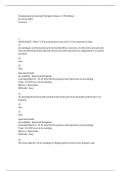
Rosh Review Family Med Questions and Answers Graded A+
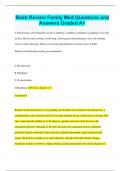
Rosh Review Family Med Questions and Answers Graded A+ A businessman, who frequently travels in airplanes, complains of painful ear popping every time he flies. He has tried yawning, swallowing, chewing gum and pinching his nose, but nothing seems to relieve the pain. He has even tried using ibuprofen two hours prior to flight. Which of the following would you recommend? A.Myringotomy B.Nifedipine C.Oxymetazoline D.Ranitidine Correct Answer ( C ) Explanation: Barotitis media, barotrauma, or ear popping, are all names for eustachian tube dysfunction, a condition that occurs when the tube does not open properly during swallowing or yawning. This tube, connecting the middle ear to the pharynx, equalizes pressure inside the ear to the atmospheric pressure. Blockage of the tube can arise from congenital stenosis, abnormal peristaltic function, abnormal ciliary function, adenoid hypertrophy, nasal congestion and tumors. Risk factors include ear or sinus infections, allergies and rapid altitude changes. Symptoms include ear fullness, otalgia, tinnitus, hearing impairment and vertigo. Diagnosis is mainly clinical, but further evaluation may involve an audiogram, tympanogam or otolaryngologist referral. Treatment includes chewing gum, multiple swallows and exhalation through closed nostrils. If refractory, medications may be necessary, and include analgesics, oral antihistamines and nasal decongestants or steroids. Oxymetazoline is an over-the-counter nasal spray decongestant. A 26-year-old woman presents for her annual exam and is inquiring about birth control. She is current on her immunizations and her last pap smear was 2 years ago. She is in a monogamous relationship with her boyfriend and does not have any immediate plans for pregnancy. She has a history of migraines with aura but does not require any prescription medication. Which of the following birth control methods is the best option for her? A. Behavioral methods such as the withdrawal method and periodic abstinence B. Etonogestrel/ethinyl estradiol vaginal C. Medroxyprogesterone acetate D. Norelgestromin/ethinyl estradiol transdermal Correct Answer ( C ) Explanation: Contraception counseling should be routinely performed in all women of child-bearing age at every annual visit. There are many options such as behavioral, barrier and pharmacological methods. However, pharmacological therapy has the highest rate of pregnancy prevention and should be recommended in all women, unless there are contraindications. This patient has a history of migraines with aura which is considered a contraindication to estrogen use. Other contraindications to estrogen are history of deep vein thrombosis, breast cancer within the past 5 years, cigarette smoking in women more than 35 years of age who smoke more than 15 cigarettes per day, ischemic heart disease, stroke, active liver disease, major surgery with prolonged immobilization and poorly controlled hypertension. In these cases, progesterone only therapy (medroxyprogesterone) should be used in the form of the intrauterine device, the injection or the subcutaneous implantation in the arm. A 24-year-old woman with no past medical history presents with left wrist pain after a fall. The left extremity is grossly deformed and the patient complains of severe pain. The patient has a blood pressure of 183/100 mm Hg. While awaiting X-rays, what management is indicated for the patients elevated blood pressure? A. Arrange admission for blood pressure control B. Start an oral beta-blocker and monitor for response C. Start intravenous beta-blocker and admit to the intensive care unit D. Treat the patient's pain and reassess the blood pressure Correct Answer ( D ) Explanation: The patient presents with a markedly elevated blood pressure in the setting of pain from a trauma and should have pain control initiated and her blood pressure rechecked. Hypertension is defined as a persistent SBP >140 mm Hg or DBP >90 mm Hg. Pain and anxiety are common causes of elevated blood pressure and heart rate in the outpatient setting. Historically, patients with elevated blood pressure and nonspecific symptoms were referred to as hypertensive urgency but this term has fallen out of use. In a patient presenting
Written for
- Institution
- Rosh
- Module
- Rosh
Document information
- Uploaded on
- November 25, 2023
- Number of pages
- 204
- Written in
- 2023/2024
- Type
- Exam (elaborations)
- Contains
- Questions & answers
Subjects
-
rosh review family med questions and answers grade

Also available in package deal