Human Resources Management IIA by ProfessorBurgerQueen
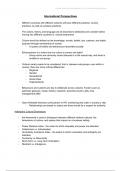
International Perspectives
- Different countries with different customs will have different practices; country
practices, as well as company practices
- The culture, history, and language are all essential to deliberate and consider before
moving into different countries ie. cultural awareness
- Culture would be defined as the knowledge, morals, beliefs, law, customs, and habits
acquired through membership of society
- A system of beliefs and behaviours transmitted socially
- Ethnocentrism is a notion that my culture is correct and right4
- Group norms are obviously correct because it is the natural way, and there is
hostility to out groups
- Cultural variety needs to be considered, that is, between sub-groups, even within a
country, there are more cultural differences:
- Regional
- Gender
- Generational
- Social class
- Organisational
- Behaviours and customs are key to deliberate across cultures. Factors such as
particular gestures, rituals, bribery, nepotism, proximity (touch), gifts, time
management differ
- Geert Hofstede theorises confucianism in HR, mentioning that order in society is vital
- Relationships are based on status and there should be a respect for authority
Hofstede’s Cultural Dimensions
- the framework is used to distinguish between different national cultures, the
dimensions of culture, and assess their impact on a business setting
- Power Distance Index - the extent to which inequality and power are tolerated
- Collectivism vs. Individualism
- Uncertainty Avoidance Index - the extent to which uncertainty and ambiguity are
tolerated
- Femininity vs. Masculinity
- Short-Term vs. Long-Term Orientation
- Restraint vs. Indulgence
International Perspectives
- Different countries with different customs will have different practices; country
practices, as well as company practices
- The culture, history, and language are all essential to deliberate and consider before
moving into different countries ie. cultural awareness
- Culture would be defined as the knowledge, morals, beliefs, law, customs, and habits
acquired through membership of society
- A system of beliefs and behaviours transmitted socially
- Ethnocentrism is a notion that my culture is correct and right4
- Group norms are obviously correct because it is the natural way, and there is
hostility to out groups
- Cultural variety needs to be considered, that is, between sub-groups, even within a
country, there are more cultural differences:
- Regional
- Gender
- Generational
- Social class
- Organisational
- Behaviours and customs are key to deliberate across cultures. Factors such as
particular gestures, rituals, bribery, nepotism, proximity (touch), gifts, time
management differ
- Geert Hofstede theorises confucianism in HR, mentioning that order in society is vital
- Relationships are based on status and there should be a respect for authority
Hofstede’s Cultural Dimensions
- the framework is used to distinguish between different national cultures, the
dimensions of culture, and assess their impact on a business setting
- Power Distance Index - the extent to which inequality and power are tolerated
- Collectivism vs. Individualism
- Uncertainty Avoidance Index - the extent to which uncertainty and ambiguity are
tolerated
- Femininity vs. Masculinity
- Short-Term vs. Long-Term Orientation
- Restraint vs. Indulgence