Therapeutics – Upper GI tract
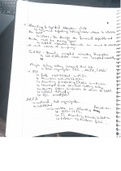
There are symptoms which overlap e.g. diarrhoea, jaundice etc. This diagram helps to
narrow down what the symptoms may be a cause of so you can investigate them and
manage appropriately.
o Therapeutics isn’t just about the drugs involved but includes the lifestyle of the person,
giving reassurance as well as investigations and managements.
o One if the things you to bare in respect to GI symptoms is an underlying malignancy – the
malignancies become more prevalent as you get older: age basis. With the upper GI the age
of 55 is used as a cut off for GI cancer – very uncommon under this age (absence of alarm
symptoms). Upper GI cancer symptoms tend to present at late stage, so prognosis is poor.
Screening of lower GI is more common so upper GI cancer hard to spot. After going to GP,
you have at least 3% chance of having cancer – refer to being investigated.
Who needs an endoscopy?
Haematemesis
Passage of black stool
GI bleeding
Iron deficiency anaemia
, Dysphagia
Persistent vomiting
Epigastric mass
Recent onset dyspepsia
Unintentional weight loss
Over 55 – regular check.
Gastro-Oesophageal Reflux disease:
Patients tend to describe a burning pain, rubbing their hands up and down their chest. To make sure
it’s a problem with the GI, you can ask whether its worse after a meal (especially fatty meals) or
when you’re lying flat. You can also check for oral hygiene, their breath and sore throat etc.
Everyone has a small amount of acid reflux but if it becomes excessive/ if lower oesophagus is more
sensitive then you start to get the symptoms. The major contributor to this is
incompetence/weakness of the gastro-oesophageal junction – comprises of the diaphragm, internal
and external lower oesophageal sphincters which separate of the squamocolumnar junction. This
junction is relatively held firm due to the angle the oesophagus goes through diaphragm, the
diaphragm itself which compresses the junction, and the sphincters which help to compress the
junction.
There are lots of reasons why you may get the reflux:
Weakness of the gastro-oesophageal junction
e.g. impaired sphincter– main cause.
Hiatal hernia (part of stomach is above the
diaphragm in your chest – weakening the
sphincter as diaphragm not at same level
anymore)
Distal oesophageal motility impaired – not able
move food as efficiently
Excess acid production
There are symptoms which overlap e.g. diarrhoea, jaundice etc. This diagram helps to
narrow down what the symptoms may be a cause of so you can investigate them and
manage appropriately.
o Therapeutics isn’t just about the drugs involved but includes the lifestyle of the person,
giving reassurance as well as investigations and managements.
o One if the things you to bare in respect to GI symptoms is an underlying malignancy – the
malignancies become more prevalent as you get older: age basis. With the upper GI the age
of 55 is used as a cut off for GI cancer – very uncommon under this age (absence of alarm
symptoms). Upper GI cancer symptoms tend to present at late stage, so prognosis is poor.
Screening of lower GI is more common so upper GI cancer hard to spot. After going to GP,
you have at least 3% chance of having cancer – refer to being investigated.
Who needs an endoscopy?
Haematemesis
Passage of black stool
GI bleeding
Iron deficiency anaemia
, Dysphagia
Persistent vomiting
Epigastric mass
Recent onset dyspepsia
Unintentional weight loss
Over 55 – regular check.
Gastro-Oesophageal Reflux disease:
Patients tend to describe a burning pain, rubbing their hands up and down their chest. To make sure
it’s a problem with the GI, you can ask whether its worse after a meal (especially fatty meals) or
when you’re lying flat. You can also check for oral hygiene, their breath and sore throat etc.
Everyone has a small amount of acid reflux but if it becomes excessive/ if lower oesophagus is more
sensitive then you start to get the symptoms. The major contributor to this is
incompetence/weakness of the gastro-oesophageal junction – comprises of the diaphragm, internal
and external lower oesophageal sphincters which separate of the squamocolumnar junction. This
junction is relatively held firm due to the angle the oesophagus goes through diaphragm, the
diaphragm itself which compresses the junction, and the sphincters which help to compress the
junction.
There are lots of reasons why you may get the reflux:
Weakness of the gastro-oesophageal junction
e.g. impaired sphincter– main cause.
Hiatal hernia (part of stomach is above the
diaphragm in your chest – weakening the
sphincter as diaphragm not at same level
anymore)
Distal oesophageal motility impaired – not able
move food as efficiently
Excess acid production