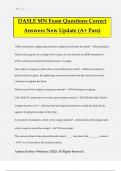
BMTCN Study questions n answers 2023/20024 verified to pass
BMTCN StudyWhat are the two types of bone marrow? - correct answer Red bone marrow = creates red blood cells, white blood cells, and platelets. Found in long and flat bones. Yellow bone marrow and fat cells = produce fat, cartilage, and bone. Found in long bones What are the components of hematopoiesis? - correct answer Hematopoietic stem cells: develop prior to birth and are produced in the long bones during childhood and the axial skeleton in adulthood. Bone marrow microenvironment: bone marrow stroma is the housing unit and hub of cellular activity. Cellular adhesion molecules Chemokines and cytokines What do myeloid progenitor cells mature into? - correct answer Megakaryocytes (produce platelets); erythrocytes; mast cells; myeloblasts. What do lymphoid progenitor cells mature into? - correct answer Small lymphocytes: which differentiate into bone marrow-derived cells (B cells) and thymus-derived cells (T cells) Natural killer cells What are the primary organs of the immune system? - correct answer Thymus gland; lymph nodes; spleen What is innate immunity? - correct answer Occurs naturally and uses phagocytes that release inflammatory mediators and NK cells What is acquired immunity? - correct answer The response it B or T cells to antigens. B cell activation can be T cell dependent or independent. What is senescence? - correct answer The loss of the cells power to divide and grow. List some hematologic malignancies that can be treated with an autologous transplant. - correct answer Hodgkin disease, Non-Hodgkin lymphoma, Multiple myeloma List some hematologic malignancies that can be treated with an allogeneic transplant. - correct answer Acute lymphocytic leukemia, acute myeloid leukemia, chronic myeloid leukemia, Myelodysplastic syndrome, Non-Hodgkin lymphoma, Juvenile myelomonocytic leukemia List some solid tumors that can be treated with autologous transplats. - correct answer Neuroblastoma, sarcoma, germ cell tumors, brain tumors, breast cancer, ovarian cancer, melanoma, lung cancer. List some nonmalignant hematologic diseases, immunodeficiency diseases, and genetic diseases that can be treated with allogeneic transplants. - correct answer Hematologic: severe aplastic anemia, Fanconi anemia, Thalassemia, sickle-cell disease, congenital neutropenia; Immunodeficiency: severe combined immunodeficiency disease, Wiskott-Aldrich syndrome, Functional T-cell deficiency; Genetic: Adrenoleukodystrophy, Metachromatic leukodystrophy, Hurler syndrome, Hunter disease, Gaucher; Misc: Osteopetrosis, Langerhans cell histiocytosis, glycogen storage diseases Which of the following is an example of a myeloid cell? a. thymus-derived cells (T cells) b. bone marrow-derived cells (B cells) c. Monocytes d. Natural killer cells - correct answer c. Monocytes Several factors affect immune reconstitution following hematopoietic stem cell transplantation (HSCT). These include all of the following EXCEPT: a recipient's response to conditioning regimen b. viral infections
Written for
- Institution
- BMTCN
- Course
- BMTCN
Document information
- Uploaded on
- November 23, 2023
- Number of pages
- 4
- Written in
- 2023/2024
- Type
- Exam (elaborations)
- Contains
- Questions & answers
Subjects

Document also available in package deal