Summary NR 565 FINAL PHARMACOLOGY REVIEW
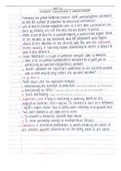
NR 565 FINAL PHARMACOLOGY REVIEW Baceriostatic: killing bacteria causing illness – clinda, macrolides, sulfa, tetracyclines Bactericidal: aminoglycosides, beta lactamas fluroquinoles, metronzaials, sterp, and vanc. Stops growth and spread of infection. First gen: kefledx, duricef – soft tissue infection, positive second gen: ceclor, cefzil, gram pos. third gen: cedax, suprax, Rocephin, spectracef, gram neg fourth gen: gram pos, cefepime Antimicrobial resistance: resistnet organisms from day care, overcrowding, travel, and antibiotics in agriculture. Exdcessive use and inappropriate use increases risk for resistance, inadequate dosing, excessive duration of therapy and increase in empirical use of abx when not required. Unknown use of recent abx usage? Susceptibility testing. Treatment of group a and b beta strep: penicillin Cross sensitivity with cephalosporins: hypersensitive reactions and are not recommended with reaction to PCN. Contraindications for topical beta blockers: AV block or bradycardia Prophylaxis for ophthalmia neonatals: abx eye medication within one hour of delivery – erythromycin .5% to each eye Glaucoma: IOP damages optic nerve. Treatment: beta blockers, andrengeric agonist, miotics, CA inhibitors, sympathomiometric, xalantan Beta blockers – reduce IOP by interference with the aqueous humor Miotic and ca inhibitor – IOP reduced from resistance to aqueous outflow = miosis and muscle contraction, increase aqueous humor outflow CA inhibitor – slows secretion and reduces sodium and fluid Sympathomimetics: vasoconstrict – reduce IOP and outflow Dosing: beta blocker – 2.8 .25 solutions, timolol, Education: take as prescribed don’t stop abruptly – BP monitoring Allergic conjunctivitis: allergens Treatment: h1 blocker ketotifen, decongestiant with antihistamine – antazoline and naphazoline Dosing:1 drop ever 8-12 hours for adults and children >3. Education: don’t share meds and take as prescribed Bacterial conjunctivitis: usuall children 3 mo to 8 years old – self-limiting. Abx can speed recovery Treatment: sulfacetamide 10% solution, erythromycin ointment, polytrim or polysporin. Dosing: 10 %, 5mg, 1000 u Education: throw away eye makeup, wash hands thoroughly, bulls eye method Viral conjunctivitis: caused by adenovirus,herpes Treatment: sulfacetamide 10% Dosing: could be ganciclovir, triflurideine, vidarbine Education: ^^ Cerumenosis: excessive accumulation of cerum which can lead to impaction Treatment: mineral oil – cabamide peroxide Dosing: 1-5 gtt. Twice day for four days. Education: irrigate with warm water. UTI first line abx: TMP/ smx, batrim, septra. Trimethoprim/sulfa, nitrofurantonin children 10 day courses. Fluroquine if prego. Upper: cipro, TMP/Sulfa Lower: Uncompliated - TMX/sulfa, nitro, cipro. Complicated – Tmx/sulfa, cipro Drug selection based off of h&p:short term therapy isn’t a candidate for patients with symptoms >7 days, shaking chills, flank pain, Hx of diabetes, prego, immunosuppression, renal insufficiency, discharged from hospital in two weeks, 4 or more UTI in year, failure of tx last 4 months, long term care facility UTI organisms: E. coli most prevelant, saphroyticus, klebsiella, enteric bacilli. Complicated UTI tx: recurrent, >2 in 6 mo, >3 in 12 mo. Fluroquinines. 7-14 days. Doxycycline. Cipro second line. Febrile – IV abx. Uncomplicated UTI tx: urine sample. Recommended nitrofluriquine for uti in women. Trimethoprim./sulfa. Eradication of organisms, relief of pain, prevention of recurrence. UTI prevention: avoid spermicide and diagphrams – voiding 10-15 min after intercourse. Injestion of cranberry juice, maintain 2l fluid intake, not resisting urge to voide, don’t douche Risk factors UTI: pregnancy, HLA-A2, estrogen deficiency, BPH, bladder obstruction, incontinence, DM, abd f=x for other infections. Catheter cystoscopy Referral to urology: complicating factors or longer treatment, failure of sterile urine in children after 14 days, gross hematuria, persistent microscopic hematuria between episodes of infection or obstruction, persistent rather than recurrent UTI, infection with uria specific bacteria, pregnant and high fever or dehydration.
Written for
- Institution
- NR 565
- Course
- NR 565
Document information
- Uploaded on
- November 22, 2023
- Number of pages
- 11
- Written in
- 2023/2024
- Type
- Summary
Subjects
-
nr 565 final pharmacology review