HUMAN CAPITAL
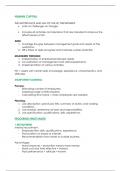
THE IMPORTANCE AND AIM OF THE HC DEPARTMENT
Look at challenges on Google.
Includes all activities and decisions that are intended to improve the
effectiveness of HC.
AIMS:
1. To bridge the gap between management goals and needs of the
workforce.
2. HR is there to help recognise and maximise worker potential.
MAXIMISED THROUGH:
1. Interpretation of employer/employee needs.
2. Co-ordination of management and staff requirements.
3. Implementation of various activities.
HC = assets with certain skills, knowledge, experience, characteristics, and
attitudes.
MANPOWER PLANNING:
Process:
- Estimating number of employees.
- Assessing range of skills required.
- Calculating time frame = when employees are needed.
Planning:
1. Job description: specify job title, summary of duties, and working
conditions.
2. Job analysis: determine all tasks and responsibilities.
3. Job specification: qualifications, skills, experience.
PROCURING FINEST TALENT:
1 RECRUITMENT
Internal recruitment:
- Employee files: skills, qualifications, experience.
- Post position on board or internet.
- Recommendation from inside or outside business.
Advantages:
- Moral improves = promotion means more money.
- More cost and time effective = trained.
- Past performance + attitude = known.
, External recruitment:
- Employment agency
- Newspapers, trade journals.
- Schools, trade journals.
- Schools, colleges, universities.
- Walk-ins.
- Head hunted.
Advantages:
- New ideas + skills.
- Opportunity – affirmative action = employment equity targets.
- Insight into operations of competitors.
- No infighting.
2 SELECTION
Steps:
1. Receive CVs
2. Screening: candidates not meeting prescribed criteria.
3. Shortlist
4. Background and reference check.
5. Interview: obtain additional info, allow candidates to ask questions
about the position + business.
6. Test [work sample test, psychometric test, medical examination (only
needed for certain positions like pilot)].
7. Letter of appointment.
8. Employment contract
- Details of employer
- Details of employee
- Details of position, BCEA, retirement age, medical and pension details.
1. Application Forms
Vacant post advertised = HR manager answer questions on the post.
Receive applications = draw up documentation for short listing.
2. Initial Screening
- It identifies those candidates that obviously don’t meet criteria.
- Predetermined criteria = skills, knowledge, experience, characteristics,
attitudes.
- The applicant is then told they haven’t made it = telephonically /
email.
- Or the company informs them that should no contact be made they
can assume they have not got it too.
3. CV evaluation
- A selection panel evaluates the remaining CVs.
- Short list is then drawn up from ranking.
THE IMPORTANCE AND AIM OF THE HC DEPARTMENT
Look at challenges on Google.
Includes all activities and decisions that are intended to improve the
effectiveness of HC.
AIMS:
1. To bridge the gap between management goals and needs of the
workforce.
2. HR is there to help recognise and maximise worker potential.
MAXIMISED THROUGH:
1. Interpretation of employer/employee needs.
2. Co-ordination of management and staff requirements.
3. Implementation of various activities.
HC = assets with certain skills, knowledge, experience, characteristics, and
attitudes.
MANPOWER PLANNING:
Process:
- Estimating number of employees.
- Assessing range of skills required.
- Calculating time frame = when employees are needed.
Planning:
1. Job description: specify job title, summary of duties, and working
conditions.
2. Job analysis: determine all tasks and responsibilities.
3. Job specification: qualifications, skills, experience.
PROCURING FINEST TALENT:
1 RECRUITMENT
Internal recruitment:
- Employee files: skills, qualifications, experience.
- Post position on board or internet.
- Recommendation from inside or outside business.
Advantages:
- Moral improves = promotion means more money.
- More cost and time effective = trained.
- Past performance + attitude = known.
, External recruitment:
- Employment agency
- Newspapers, trade journals.
- Schools, trade journals.
- Schools, colleges, universities.
- Walk-ins.
- Head hunted.
Advantages:
- New ideas + skills.
- Opportunity – affirmative action = employment equity targets.
- Insight into operations of competitors.
- No infighting.
2 SELECTION
Steps:
1. Receive CVs
2. Screening: candidates not meeting prescribed criteria.
3. Shortlist
4. Background and reference check.
5. Interview: obtain additional info, allow candidates to ask questions
about the position + business.
6. Test [work sample test, psychometric test, medical examination (only
needed for certain positions like pilot)].
7. Letter of appointment.
8. Employment contract
- Details of employer
- Details of employee
- Details of position, BCEA, retirement age, medical and pension details.
1. Application Forms
Vacant post advertised = HR manager answer questions on the post.
Receive applications = draw up documentation for short listing.
2. Initial Screening
- It identifies those candidates that obviously don’t meet criteria.
- Predetermined criteria = skills, knowledge, experience, characteristics,
attitudes.
- The applicant is then told they haven’t made it = telephonically /
email.
- Or the company informs them that should no contact be made they
can assume they have not got it too.
3. CV evaluation
- A selection panel evaluates the remaining CVs.
- Short list is then drawn up from ranking.