Introduction to ERP
ERP stands for Enterprise Resource Planning . ERP systems are the kind of software tools which are used to
manage the data of an enterprise. ERP system helps different organizations to deal with different departments of
an enterprise. Different departments like receiving, inventory management, customer order management,
production planning, shipping, accounting, human resource management, and other business functions. Basically,
it is the practice of consolidating an enterprise’s planning, its manufacturing, its sales and marketing efforts into
one management system. It combines all databases across different departments into a single database which can
be easily accessible to all employees of that enterprise. It helps in automation of the tasks involved in performing
a business process.
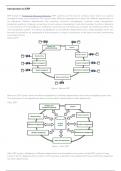
Before ERP:
Figure – Before ERP
Before an ERP system, there are different databases of different departments which they managed by their own.
The employees of one department does not know about anything about other department.
After ERP :
Figure – After ERP
After ERP system, databases of different departments are managed by one system called ERP system. It keep
tracks of all the database within system. In this scenario, employee of one department have information regarding
the other departments.
,Need for Enterprise Resource Planning
Organizations today face twin challenges of globalization and shortened product life cycle. Globalization has led to unprecedented
levels of competition. To face such competitions, successful corporations should follow the best business practices in the industry.
Shortened life cycles call for continuous design improvements, manufacturing flexibility, super-efficient logistics control and
better management of the entire supply chain. All these need faster access to accurate information, both inside the organization
and the entire supply chain outside. The organizational units such as finance, marketing, production, human resource development
etc. need to operate with a very high level of integration without losing flexibility. ERP system with an organization-wide view of
business processes, business need of information and flexibility meet these demands perfectly. One of the developments in
computing and communication channels is providing right integration among them.
Vendors of ERP:
Baan
JD Edwards
Oracle
PeopleSoft
SAP
Evolution of ERP System
Enterprise Resource Planning (ERP) is made to automate any task. With ERP, it is easy to manage every
department under one single database. This consumes not much time and is easy and fast way to do work with.
Example :
Any enterprise’s planning, manufacturing, sales and marketing efforts are put under one management system and
then it combines to one single database system.
Evolution of ERP System :
1. Material Requirement Planning (MRP) –Developed in 1970s, Material Requirement Planning is widely
used approach for production planning and scheduling in industry. It is the approach embedded in many
commercially available software applications.
,The function of MRP is to provide material availability i.e, it is used to produce requirement quantities on time. This
process involves monitoring of stocks and demand, leading to automatic creation of procurement proposals for
purchasing or production. The main objective of MRP is to determine which material is required, quantity required
and by when it is required.
2. Manufacturing Resource Planning (MRP II) –
Developed in 1980s, Manufacturing Resource Planning is an expansion of closed loop MRP for managing an entire
manufacturing company. This system provides an information that is useful to all functional areas and encourages
cross-functional interactions.
It supports sales and marketing by providing and orders promising capability. It is a broad-based resource co-
ordination system involving other areas of a firm in planning processes, such as marketing, finance and HR.
3. Enterprise Resource Planning (ERP) –
Developed in 1990s, Enterprise Resource Planning is foundation system for domestic and global operations,
supporting most or all functional areas in their daily operations. is one of more common categories of business
software, especially with large-scale businesses.
It is a business strategy and a set of industry-domain-specific applications that build customer and shareholder
communities value network system by enabling and optimizing enterprise and inter-enterprise collaborative
operational and financial processes. ERP at its core is an effective way of centralizing information and workflow
processes through data management. Because ERP keeps all of your workflow data in one place.
4. Enterprise Resource Planning(ERP II) –
Developed in 2000s, ERP II is name now use to describe ERP. Basically, it is successor of ERP. It is a business
strategy and set of collaborative operational and financial processes internally and beyond enterprise.
These new business models reflect an increased business focus on internal integration. It’s domain is in all sectors
and segments. Data in this is internally and externally published and subscribed. It includes departmental
modules, CRM, SCM and other stakeholders modules. It emphasis on intangible assists.
, Benefi ts of ERP:
1. This system helps in improving integration.
2. It is the flexible system.
3. There are fewer errors in this system.
4. This system improved speed and efficiency.
5. There is a complete access to information.
6. Lower total costs in complete supply chain.
7. This system helps in Shortening the throughput times.
8. There is sustained involvement and commitment of the top management.
9. Enhanced Decision-Making: ERP provides real-time access to critical business data, enabling decision-
makers to quickly identify and respond to issues, make informed decisions, and improve business
outcomes.
10. Improved Collaboration: ERP facilitates collaboration and communication between different
departments and stakeholders, enabling them to work together effectively towards common business
goals.
11. Standardization of Processes: ERP ensures that business processes are standardized across the
organization, reducing the risk of errors and inconsistencies and improving efficiency.
12. Effective Resource Management: ERP enables efficient management of resources such as personnel,
equipment, and inventory, ensuring optimal utilization and reducing wastage.
13. Scalability: ERP is highly scalable and can be customized to meet the evolving needs of the business,
ensuring that the system remains relevant and effective over the long term.
14. Regulatory Compliance: ERP systems can help businesses comply with regulatory requirements by
providing accurate and timely reporting, ensuring data privacy and security, and facilitating audits.
Limitations of ERP:
ERP system has 3 significant limitations:
1. Managers generate custom reports or queries only with the help from a programmer and this will
create a problem that they did not receive information quickly, which is essential for making a
competitive advantage.
2. There is no proper decision-making scenario i.e. this systems provide only the current status, such as
open orders. Whenever there is need to look for past status to find trends and patterns it become
difficult. That aid better decision-making.
3. No doubt that data is integrated within the system, but there is no integration of data with other
enterprise or division systems and it does not include external intelligence.
4. High implementation costs: Implementing an ERP system can be expensive and time-consuming. It
requires significant investment in hardware, software, and personnel, as well as training and
consulting costs.
5. Complex customization: Customizing an ERP system to meet the specific needs of an organization can
be complex and require specialized knowledge. This can lead to delays and additional costs.
6. Resistance to change: ERP systems often require significant changes to an organization’s processes
and workflows, which can be met with resistance from employees who are comfortable with existing
practices.
ERP stands for Enterprise Resource Planning . ERP systems are the kind of software tools which are used to
manage the data of an enterprise. ERP system helps different organizations to deal with different departments of
an enterprise. Different departments like receiving, inventory management, customer order management,
production planning, shipping, accounting, human resource management, and other business functions. Basically,
it is the practice of consolidating an enterprise’s planning, its manufacturing, its sales and marketing efforts into
one management system. It combines all databases across different departments into a single database which can
be easily accessible to all employees of that enterprise. It helps in automation of the tasks involved in performing
a business process.
Before ERP:
Figure – Before ERP
Before an ERP system, there are different databases of different departments which they managed by their own.
The employees of one department does not know about anything about other department.
After ERP :
Figure – After ERP
After ERP system, databases of different departments are managed by one system called ERP system. It keep
tracks of all the database within system. In this scenario, employee of one department have information regarding
the other departments.
,Need for Enterprise Resource Planning
Organizations today face twin challenges of globalization and shortened product life cycle. Globalization has led to unprecedented
levels of competition. To face such competitions, successful corporations should follow the best business practices in the industry.
Shortened life cycles call for continuous design improvements, manufacturing flexibility, super-efficient logistics control and
better management of the entire supply chain. All these need faster access to accurate information, both inside the organization
and the entire supply chain outside. The organizational units such as finance, marketing, production, human resource development
etc. need to operate with a very high level of integration without losing flexibility. ERP system with an organization-wide view of
business processes, business need of information and flexibility meet these demands perfectly. One of the developments in
computing and communication channels is providing right integration among them.
Vendors of ERP:
Baan
JD Edwards
Oracle
PeopleSoft
SAP
Evolution of ERP System
Enterprise Resource Planning (ERP) is made to automate any task. With ERP, it is easy to manage every
department under one single database. This consumes not much time and is easy and fast way to do work with.
Example :
Any enterprise’s planning, manufacturing, sales and marketing efforts are put under one management system and
then it combines to one single database system.
Evolution of ERP System :
1. Material Requirement Planning (MRP) –Developed in 1970s, Material Requirement Planning is widely
used approach for production planning and scheduling in industry. It is the approach embedded in many
commercially available software applications.
,The function of MRP is to provide material availability i.e, it is used to produce requirement quantities on time. This
process involves monitoring of stocks and demand, leading to automatic creation of procurement proposals for
purchasing or production. The main objective of MRP is to determine which material is required, quantity required
and by when it is required.
2. Manufacturing Resource Planning (MRP II) –
Developed in 1980s, Manufacturing Resource Planning is an expansion of closed loop MRP for managing an entire
manufacturing company. This system provides an information that is useful to all functional areas and encourages
cross-functional interactions.
It supports sales and marketing by providing and orders promising capability. It is a broad-based resource co-
ordination system involving other areas of a firm in planning processes, such as marketing, finance and HR.
3. Enterprise Resource Planning (ERP) –
Developed in 1990s, Enterprise Resource Planning is foundation system for domestic and global operations,
supporting most or all functional areas in their daily operations. is one of more common categories of business
software, especially with large-scale businesses.
It is a business strategy and a set of industry-domain-specific applications that build customer and shareholder
communities value network system by enabling and optimizing enterprise and inter-enterprise collaborative
operational and financial processes. ERP at its core is an effective way of centralizing information and workflow
processes through data management. Because ERP keeps all of your workflow data in one place.
4. Enterprise Resource Planning(ERP II) –
Developed in 2000s, ERP II is name now use to describe ERP. Basically, it is successor of ERP. It is a business
strategy and set of collaborative operational and financial processes internally and beyond enterprise.
These new business models reflect an increased business focus on internal integration. It’s domain is in all sectors
and segments. Data in this is internally and externally published and subscribed. It includes departmental
modules, CRM, SCM and other stakeholders modules. It emphasis on intangible assists.
, Benefi ts of ERP:
1. This system helps in improving integration.
2. It is the flexible system.
3. There are fewer errors in this system.
4. This system improved speed and efficiency.
5. There is a complete access to information.
6. Lower total costs in complete supply chain.
7. This system helps in Shortening the throughput times.
8. There is sustained involvement and commitment of the top management.
9. Enhanced Decision-Making: ERP provides real-time access to critical business data, enabling decision-
makers to quickly identify and respond to issues, make informed decisions, and improve business
outcomes.
10. Improved Collaboration: ERP facilitates collaboration and communication between different
departments and stakeholders, enabling them to work together effectively towards common business
goals.
11. Standardization of Processes: ERP ensures that business processes are standardized across the
organization, reducing the risk of errors and inconsistencies and improving efficiency.
12. Effective Resource Management: ERP enables efficient management of resources such as personnel,
equipment, and inventory, ensuring optimal utilization and reducing wastage.
13. Scalability: ERP is highly scalable and can be customized to meet the evolving needs of the business,
ensuring that the system remains relevant and effective over the long term.
14. Regulatory Compliance: ERP systems can help businesses comply with regulatory requirements by
providing accurate and timely reporting, ensuring data privacy and security, and facilitating audits.
Limitations of ERP:
ERP system has 3 significant limitations:
1. Managers generate custom reports or queries only with the help from a programmer and this will
create a problem that they did not receive information quickly, which is essential for making a
competitive advantage.
2. There is no proper decision-making scenario i.e. this systems provide only the current status, such as
open orders. Whenever there is need to look for past status to find trends and patterns it become
difficult. That aid better decision-making.
3. No doubt that data is integrated within the system, but there is no integration of data with other
enterprise or division systems and it does not include external intelligence.
4. High implementation costs: Implementing an ERP system can be expensive and time-consuming. It
requires significant investment in hardware, software, and personnel, as well as training and
consulting costs.
5. Complex customization: Customizing an ERP system to meet the specific needs of an organization can
be complex and require specialized knowledge. This can lead to delays and additional costs.
6. Resistance to change: ERP systems often require significant changes to an organization’s processes
and workflows, which can be met with resistance from employees who are comfortable with existing
practices.