

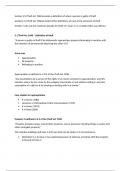
Section 1(1) Theft Act 1968 provides a definition of when a person is guilty of theft
Sections 2-6 Theft Act 1968 provide further definitions of each of the elements of theft
Section 7 sets out the maximum penalty for theft of 7 years. It is a triable either way offence
S.1 Theft Act 1968 – Definition of theft
“A person is guilty of theft if he dishonestly appropriates property belonging to another with
the intention of permanently depriving the other of it”
Actus reus
Appropriation
Of property
Belonging to another
Appropriation is defined in S.3(1) of the Theft Act 1968
“Any assumptions by a person of the rights of an owner amounts to appropriation, and this
includes, where he has come by the property (innocently or not) without selling it, any later
assumption of a right to it by keeping or dealing with it as owner”
Case studies for appropriation
R v Morris (1983)
Lawrence v Metropolitan Police Commissioner (1972)
R v Gomez (1993)
R v Hinks (2000)
Property is defined in S.4 of the Theft Act 1968
“Property includes money and all other property, real or personal, including things in action and
other intangible property”
This includes buildings and land. S.4(1) says land can be stolen in 3 circumstances:
Defendant is a trustee or has authorised power of attorney and deals with the property
in breach of trust or
Sections 2-6 Theft Act 1968 provide further definitions of each of the elements of theft
Section 7 sets out the maximum penalty for theft of 7 years. It is a triable either way offence
S.1 Theft Act 1968 – Definition of theft
“A person is guilty of theft if he dishonestly appropriates property belonging to another with
the intention of permanently depriving the other of it”
Actus reus
Appropriation
Of property
Belonging to another
Appropriation is defined in S.3(1) of the Theft Act 1968
“Any assumptions by a person of the rights of an owner amounts to appropriation, and this
includes, where he has come by the property (innocently or not) without selling it, any later
assumption of a right to it by keeping or dealing with it as owner”
Case studies for appropriation
R v Morris (1983)
Lawrence v Metropolitan Police Commissioner (1972)
R v Gomez (1993)
R v Hinks (2000)
Property is defined in S.4 of the Theft Act 1968
“Property includes money and all other property, real or personal, including things in action and
other intangible property”
This includes buildings and land. S.4(1) says land can be stolen in 3 circumstances:
Defendant is a trustee or has authorised power of attorney and deals with the property
in breach of trust or


