WEEK 1:
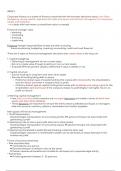
Corporate nance is a subset of nance concerned with the business decisions about cash ows
(budgeting, raising capital, objectives with debt and equity and e cient management of companies
assets and liabilities)
—> it deals with how money is raised (how value is created)
Financial manager roles:
• planning
• controlling
• directing
• organising
Financial manger responsibilities involve activities including
nancial planning, budgeting, investing, accounting, credit and cash ows etc
There are 3 types of nancial management decisions that create value in the long run:
1. Capital budgeting
• Obtaining & management of non current asses
• Aim is to create value through investing in non current assets
• Evaluate NPV (net present value) to determine if value is added or not
2. Capital structure
• Source funding for long term and short term assets
• Sources of funding being debt or equity
- Preference shares: type of capital funding that comes with dividends for the shareholders
and are always paid even if company has no pro t
- Ordinary shares: type of capital funding that comes with dividends and voting rights for the
shareholders and aren’t paid if the company makes no pro t (higher risk higher return, no
pro t no return)
3. Working capital management
• How daily activities of the company are managed (decisions are made) in terms of short term
assets and short term liabilities
• These decisions are important to ensure the entity remain pro table and liquid, so managers
take into account: inventory, debtors/ receivables and credits/ payables
Main goals of nancial management:
1. Pro t Maximisation
Disadvantages: manipulation of accounting pro ts, PM ignores timing & risk associated with
generating a pro t
2. Maximising rate of return (net pro t after tax to total assets)
Disadvantages: manipulation of accounting values, RR ignores timing & risk associated with
generating a pro t
3. Maximising shareholders wealth (forward looking unlike the other two)
Disadvantages: reduction in shareholders wealth can be attributes to sharp decrease in the
entities net pro t
Forms of business ownership:
• Sole proprietorship
➡ Controlled by one person
➡ Business lifespan is limited to that of the owner
➡ Owners receives all bene ts and is liable for all losses (not a separate legal entity)
• Partnership
➡ Private agreement between 2 - 20 partners
fi fifi fi fifi fi fi fi fi fi fifi fi fi ffi fl fl
, ➡ Business lifespan is limited to that of the owner
➡ Owners receives all bene ts and is liable for all losses (not a separate legal entity) - easier to
raise capital with more partners tho
• Company
➡ Separate legal entity
➡ Owners have limited liability
Types of companies:
- Non pro t- provides a service in the interest of the community
‣ Incorporated by three or more persons
‣ Name must be followed by NPC
- Pro t- makes money for an owner of sorts
‣ Private
➡ Established by one person
➡ General public cannot become members (no shares are o ered)
➡ Name must be followed by Pty (Ltd.)
‣ Personal liability
➡ Established by one person
➡ Shares are o ered
➡ Name must be followed Inc.
‣ Public
➡ Established by one person
➡ Shares are o ered
➡ Name must be followed Ltd
‣ State owned
➡ Owned by the municipality
➡ Shares are o ered
➡ Name must be followed by SOC Ltd
An agent is a manager (or shareholder)
An agent problem is when a manager promotes their interest above those of the entities. In other
words a manager is incentivised to increase the company’s share price (unless managers are only
paid a salary)
Agency costs is a type of internal company expense, which comes from the actions of an agent
acting on behalf of a principal.
Direct agency refer to the measurable amount spent (managers getting overpaid)
Indirect agency refers to the missed opportunity (rejected projects that appear risky)
Financial markets
• Ensure there is a ow of funds between borrowers and lenders.
• Financial markets bring together suppliers of funds and seekers of funds
• They act as mediators between sellers and buyers of nancial securities
➡ Money markets: short term debt securities (marketable securities), allow participants with extra funds
to earn interest
➡ Capital markets: long term debt securities, bonds and shares (JSE is a capital market)
➡ Primary markets: where listed companies sell their securities for the rst time.
Two types of primary market transactions:-
- private replacement: where securities are only sold to speci c buyers
- public o ering: where securities are o ered to the general public.
➡ Secondary market: where original securities bought in the primary market can be traded
- Two types of secondary markets:- auction (takes place at a physical location) and dealer
(at xed prices) markets
Financial Institutions
fi
ff
fi ff fl fi ff fi fffi fi
Corporate nance is a subset of nance concerned with the business decisions about cash ows
(budgeting, raising capital, objectives with debt and equity and e cient management of companies
assets and liabilities)
—> it deals with how money is raised (how value is created)
Financial manager roles:
• planning
• controlling
• directing
• organising
Financial manger responsibilities involve activities including
nancial planning, budgeting, investing, accounting, credit and cash ows etc
There are 3 types of nancial management decisions that create value in the long run:
1. Capital budgeting
• Obtaining & management of non current asses
• Aim is to create value through investing in non current assets
• Evaluate NPV (net present value) to determine if value is added or not
2. Capital structure
• Source funding for long term and short term assets
• Sources of funding being debt or equity
- Preference shares: type of capital funding that comes with dividends for the shareholders
and are always paid even if company has no pro t
- Ordinary shares: type of capital funding that comes with dividends and voting rights for the
shareholders and aren’t paid if the company makes no pro t (higher risk higher return, no
pro t no return)
3. Working capital management
• How daily activities of the company are managed (decisions are made) in terms of short term
assets and short term liabilities
• These decisions are important to ensure the entity remain pro table and liquid, so managers
take into account: inventory, debtors/ receivables and credits/ payables
Main goals of nancial management:
1. Pro t Maximisation
Disadvantages: manipulation of accounting pro ts, PM ignores timing & risk associated with
generating a pro t
2. Maximising rate of return (net pro t after tax to total assets)
Disadvantages: manipulation of accounting values, RR ignores timing & risk associated with
generating a pro t
3. Maximising shareholders wealth (forward looking unlike the other two)
Disadvantages: reduction in shareholders wealth can be attributes to sharp decrease in the
entities net pro t
Forms of business ownership:
• Sole proprietorship
➡ Controlled by one person
➡ Business lifespan is limited to that of the owner
➡ Owners receives all bene ts and is liable for all losses (not a separate legal entity)
• Partnership
➡ Private agreement between 2 - 20 partners
fi fifi fi fifi fi fi fi fi fi fifi fi fi ffi fl fl
, ➡ Business lifespan is limited to that of the owner
➡ Owners receives all bene ts and is liable for all losses (not a separate legal entity) - easier to
raise capital with more partners tho
• Company
➡ Separate legal entity
➡ Owners have limited liability
Types of companies:
- Non pro t- provides a service in the interest of the community
‣ Incorporated by three or more persons
‣ Name must be followed by NPC
- Pro t- makes money for an owner of sorts
‣ Private
➡ Established by one person
➡ General public cannot become members (no shares are o ered)
➡ Name must be followed by Pty (Ltd.)
‣ Personal liability
➡ Established by one person
➡ Shares are o ered
➡ Name must be followed Inc.
‣ Public
➡ Established by one person
➡ Shares are o ered
➡ Name must be followed Ltd
‣ State owned
➡ Owned by the municipality
➡ Shares are o ered
➡ Name must be followed by SOC Ltd
An agent is a manager (or shareholder)
An agent problem is when a manager promotes their interest above those of the entities. In other
words a manager is incentivised to increase the company’s share price (unless managers are only
paid a salary)
Agency costs is a type of internal company expense, which comes from the actions of an agent
acting on behalf of a principal.
Direct agency refer to the measurable amount spent (managers getting overpaid)
Indirect agency refers to the missed opportunity (rejected projects that appear risky)
Financial markets
• Ensure there is a ow of funds between borrowers and lenders.
• Financial markets bring together suppliers of funds and seekers of funds
• They act as mediators between sellers and buyers of nancial securities
➡ Money markets: short term debt securities (marketable securities), allow participants with extra funds
to earn interest
➡ Capital markets: long term debt securities, bonds and shares (JSE is a capital market)
➡ Primary markets: where listed companies sell their securities for the rst time.
Two types of primary market transactions:-
- private replacement: where securities are only sold to speci c buyers
- public o ering: where securities are o ered to the general public.
➡ Secondary market: where original securities bought in the primary market can be traded
- Two types of secondary markets:- auction (takes place at a physical location) and dealer
(at xed prices) markets
Financial Institutions
fi
ff
fi ff fl fi ff fi fffi fi