AS 2020 - Othello Specimen [Act I Scene III]
AS 2020 Extract Question
Othello – William Shakespeare Explore the significance of aspects of dramatic tragedy in the
following passage in relation to the play as a whole.
[25 marks]
Othelloʼs hamartia being that he is self-consumed.
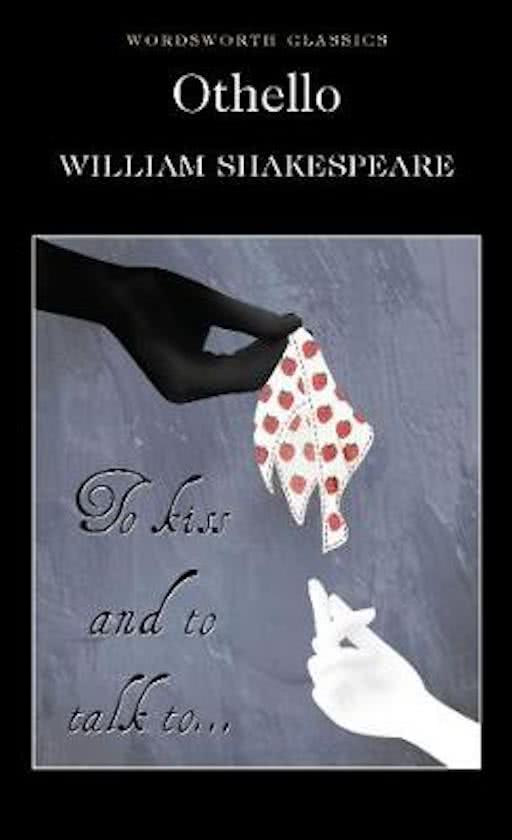
The links to the handkerchief story.
Othelloʼs egalitarian love with Desdemona.
The extract comes from Act I Scene III, right after the private matter of Desdemona and
Othelloʼs marriage is made public by Brabantio who calls upon his men in Scene I to go find
Othello. The scene presents Othelloʼs announcement of his life story, the same one that he told
both Brabantio, and then Desdemona as he wooed her. However, within his monologue and the
extract a sense of the end is created through various dramatic devices with foreshadowing of
the chaos which will soon erupt in the play. In this extract I will therefore discuss to what extent
this extract is important to the tragedy of the play as a whole.
Immediately as the extract presents us with a large monologue from Othello after his previous
admission that he was ‘rude in his speechʼ, his hamartia is presented in juxtaposition to what
makes Iago successful as a tragic villain. Othello is self-absorbed while Iago is hyper-aware,
placing both characters as foils of each other. As Othello tells the Venetian nobility of his life-
story, also telling the audience alongside them, his depiction of his “hair-breadth scapes” and
tales “rough quarries, rocks, and hills whose heads touch heaven” seems exaggerated. Othello
appears to take a multitude of ‘tales which could make another man madʼ (Bradley) , turning
them into ammunition to make himself admired and popularised amongst the Venetian elite. He
presents himself as containing a poetic imagination where he views things as much greater than
they actually are, and this will become evident as the play progresses through his fixation on
the handkerchief and in Act V where a simple candle becomes a representation of Desdemonaʼs
life similar to Macbethʼs depiction of Lady Macbethʼs life; “put out the light, and then put out the
light”, “out, out brief candle”. Therefore, the extract can be seen as foreshadowing a flaw in
Othelloʼs character which will throw him from his current position of admiration and greatness in
being “highly renowned and prosperous” (Aristotle) to his diminished “perplexed” state in which
he kills Desdemona.
Additionally, the speech can be seen as mirroring an upcoming monologue in the play in Act III
Scene IV where Othello tells the tale of his handkerchief which an “Egyptian to my mother (did)
give”. Parallels can be drawn between the redirection of the play into the “sphere of myth and
fantasy”, as stated by T S Elliot, as Othello exploits his stereotypical place as being ‘exoticʼ and
‘otherʼ to make fantastical claims about his possessions and past. However, in the extract
Othello denies that he used “charms” or sorcery on Desdemona stating that the only “witchcraft
AS 2020 Extract Question
Othello – William Shakespeare Explore the significance of aspects of dramatic tragedy in the
following passage in relation to the play as a whole.
[25 marks]
Othelloʼs hamartia being that he is self-consumed.
The links to the handkerchief story.
Othelloʼs egalitarian love with Desdemona.
The extract comes from Act I Scene III, right after the private matter of Desdemona and
Othelloʼs marriage is made public by Brabantio who calls upon his men in Scene I to go find
Othello. The scene presents Othelloʼs announcement of his life story, the same one that he told
both Brabantio, and then Desdemona as he wooed her. However, within his monologue and the
extract a sense of the end is created through various dramatic devices with foreshadowing of
the chaos which will soon erupt in the play. In this extract I will therefore discuss to what extent
this extract is important to the tragedy of the play as a whole.
Immediately as the extract presents us with a large monologue from Othello after his previous
admission that he was ‘rude in his speechʼ, his hamartia is presented in juxtaposition to what
makes Iago successful as a tragic villain. Othello is self-absorbed while Iago is hyper-aware,
placing both characters as foils of each other. As Othello tells the Venetian nobility of his life-
story, also telling the audience alongside them, his depiction of his “hair-breadth scapes” and
tales “rough quarries, rocks, and hills whose heads touch heaven” seems exaggerated. Othello
appears to take a multitude of ‘tales which could make another man madʼ (Bradley) , turning
them into ammunition to make himself admired and popularised amongst the Venetian elite. He
presents himself as containing a poetic imagination where he views things as much greater than
they actually are, and this will become evident as the play progresses through his fixation on
the handkerchief and in Act V where a simple candle becomes a representation of Desdemonaʼs
life similar to Macbethʼs depiction of Lady Macbethʼs life; “put out the light, and then put out the
light”, “out, out brief candle”. Therefore, the extract can be seen as foreshadowing a flaw in
Othelloʼs character which will throw him from his current position of admiration and greatness in
being “highly renowned and prosperous” (Aristotle) to his diminished “perplexed” state in which
he kills Desdemona.
Additionally, the speech can be seen as mirroring an upcoming monologue in the play in Act III
Scene IV where Othello tells the tale of his handkerchief which an “Egyptian to my mother (did)
give”. Parallels can be drawn between the redirection of the play into the “sphere of myth and
fantasy”, as stated by T S Elliot, as Othello exploits his stereotypical place as being ‘exoticʼ and
‘otherʼ to make fantastical claims about his possessions and past. However, in the extract
Othello denies that he used “charms” or sorcery on Desdemona stating that the only “witchcraft