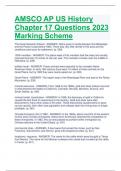
AMSCO AP US History Chapter 17 Questions 2023 Marking Scheme
AMSCO AP US History Chapter 17 Questions 2023 Marking Scheme The Great American Desert - ANSWER- Name given to lands between the Mississippi and the Pacific Coast before 1860. There was very little rainfall in this area and the conditions were poor for settlement. (p. 339) 100th meridian - ANSWER- The plains west of this meridian had few trees and usually received less than 15 inches of rain per year. This meridian crosses near the middle of Nebraska. (p. 339) buffalo herds - ANSWER- These animals were essential to the nomadic Native American tribes. In early 19th century there were 15 million of these animals on the Great Plains, but by 1900 they were nearly wiped out. (p. 339) Great Plains - ANSWER- The region west of the Mississippi River and east of the Rocky Mountains. (p. 339) mineral resources - ANSWER- From 1848 to the 1890s, gold and silver strikes occurred in what became the states of California, Colorado, Nevada, Montana, Arizona, and South Dakota. (p. 340) mining frontier, boomtowns - ANSWER- In 1848, the discovery of gold in California caused the first flood of newcomers to the territory. Gold and silver were later discovered in many other areas of the west. These discoveries caused towns to grow up very quickly, then often lose population and collapse after the mining was no longer profitable. (p. 340) Chinese Exclusion Act of 1882 - ANSWER- In the 1860s, about one-third of the western miners were Chinese immigrants. Native-born Americans resented the competition of these immigrants. In 1862, this act was passed to prohibit further immigration by Chinese laborers to the United States. (p. 341) commercial cities - ANSWER- A few towns that served the mines, such as San Francisco, Sacramento, and Denver, grew into prosperous cities. (p. 341) longhorns, vaqueros - ANSWER- The name for the cattle which were brought to Texas from Mexico. The name for the Mexican cowboys who raised and rounded up the cattle in Texas. (p. 341) cattle drives - ANSWER- Moving the cattle from Texas to railroad towns in Kansas. (p. 342) barbed wire - ANSWER- These fences became common, they cut off the cattle's access to the open range. (p. 342) Joseph Glidden - ANSWER- He invented barbed wire to help farmers fence in their lands on the plains. (p. 342) Homestead Act - ANSWER- In 1862, this act offered 160 acres of public land free to any family that settled on it for 5 years. (p. 342) dry farming - ANSWER- This technique along with deep-plowing enabled settlers to survive on the Great Plains. (p. 342) Great Plains tribes - ANSWER- These nomadic tribes, such as the Sioux, Blackfoot, Cheyenne, Crow, and Comanche, had given up farming in colonial times after the introduction of the horse by the Spanish. By the 1700s, they had become skillful horse riders and their lives centered on hunting buffalo. (p. 343) Southwest tribes - ANSWER- These tribes in the Southwest, such as Navajo and Apache adopted a settled life, raising crops and livestock, and producing arts and crafts. (p. 343) federal treaty policies - ANSWER- The Indian Appropriation Act of 1871 ended recognition of tribes as independent nations by the federal government and nullifi
Written for
- Institution
- AMSCO AP US
- Course
- AMSCO AP US
Document information
- Uploaded on
- October 27, 2023
- Number of pages
- 6
- Written in
- 2023/2024
- Type
- Exam (elaborations)
- Contains
- Questions & answers
Subjects
-
amsco ap us history chapter 17 questions 2023
-
amsco ap us history chapter 17 questions 2023 ma

Also available in package deal