Erasmus "Paraclesis" Notes
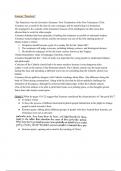
In Erasmus' Paraclesis, he advocates for the accessibility of scriptures to ordinary people, emphasizing the importance of making religious texts available to the unlearned readers. He criticizes the inadequacy of the old Latin version, the Vulgate, and champions the study of languages, literature, and history (studia humanitatis) as vital for young people to understand religion and philosophy. Erasmus promotes the idea that scriptures should be integrated into everyday life for everyone, including women and children, and he calls for translating the Bible into vernacular languages. He defends the basic principle of allowing common folk to have access to religious knowledge, believing that the scriptures should be a fundamental part of shaping a good life and a good society. Erasmus also understands the power of printed books, being one of the first authors to benefit from the printing press. He challenges the traditional teachings of the Catholic Church without openly opposing doctrines like the Mass or the papacy. He believes that classical learning, represented by ancient texts from Egypt and the works of Paul, aligns with Christian teachings, emphasizing the compatibility between pagan and Christian wisdom. Erasmus sees classical education as a tool for spiritual enlightenment, fostering a society where religious and philosophical knowledge is available to everyone, regardless of their social status or background.
Written for
- Institution
-
Auburn University
- Course
-
ENGL 2200 (014)
Document information
- Uploaded on
- October 24, 2023
- Number of pages
- 3
- Written in
- 2023/2024
- Type
- Class notes
- Professor(s)
- Barbara brumbaugh
- Contains
- All classes

Also available in package deal