CFP: Fundamentals questions with correct answers
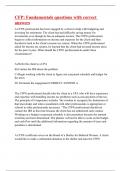
A CFP® professional has been engaged by a client to help with budgeting and investing for retirement. The client has had difficulty saving money for investments even though he has an adequate income. The CFP® professional began to collect information on income and expenses for the client and then decided to look at the client's income tax returns. When the CFP® professional asked for income tax returns, he learned that the client had not paid income taxes for the past 4 years. What should the CFP® professional do under these circumstances? A) Refer the client to a CPA B) Contact the IRS about the problem C) Begin working with the client to figure out a payment schedule and budget for the taxes D) Terminate the engagement CORRECT ANSWER A The CFP® professional should refer the client to a CPA who will have experience and expertise with handling income tax problems such as non-payment of the tax. The principle of Competence includes "the wisdom to recognize the limitations of that knowledge and when consultation with other professionals is appropriate or referral to other professionals necessary. "The CFP® professional should not contact the IRS at this time because the client has not authorized such contact. Working on a budget or payment schedule is also premature because the amount owed has not been determined. The planner will not be able to work on the budget and cash flow until the additional information regarding the amount of taxes and penalties is determined. A CFP® certificant serves on the Board of a Shelter for Battered Women. A client would like to make a substantia
Written for
- Institution
- CFP - Certified Financial Planner
- Course
- CFP - Certified Financial Planner
Document information
- Uploaded on
- October 19, 2023
- Number of pages
- 32
- Written in
- 2023/2024
- Type
- Exam (elaborations)
- Contains
- Questions & answers
Subjects
-
cfp fundamentals questions with correct answers

Also available in package deal