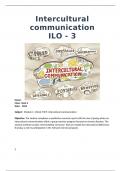
Intercultural
communication
ILO - 3
Name:
Class: Next 4
Date: 2023
Subject: Module 4 - Week 7/8/9: Intercultural communication
Objective: The student completes a qualitative research report with the aim of giving advice on
intercultural communication within a group exercise program focused on chronic diseases. The
analysis method consists of formulating "personas" that are models for intercultural differences
that play a role in participation in the relevant exercise program.
2
,Table of contents
Summary.................................................................................................................................4
Introduction............................................................................................................................5
Problem definition.............................................................................................................................5
Objective............................................................................................................................................5
Question............................................................................................................................................5
Method...................................................................................................................................6
Design................................................................................................................................................6
Study population................................................................................................................................6
Sampling............................................................................................................................................6
Permission.........................................................................................................................................6
Topic list.............................................................................................................................................7
Data-analysis......................................................................................................................................8
Results....................................................................................................................................8
Discussion...............................................................................................................................9
Conclusion.............................................................................................................................11
Sources..................................................................................................................................12
Appendices............................................................................................................................14
Appendix 1. Semi-structured interview questions............................................................................14
Appendix 2. Interview transcriptions...............................................................................................15
Appendix 3. Coding transcriptions (Inductive and deductive analysis).............................................30
Appendix 4. Persona........................................................................................................................43
Appendix 5. informed consent form.................................................................................................45
3
,Summary
Physiotherapist practises in Friesland treat people of many different cultures and nationalities.
However, it is still unknown what the cultural characteristics of non-western people are. As a
result of this, it is not known how to effectively make use of intercultural communication when
developing an exercise program. This study aimed to formulate advice for physiotherapists in
Friesland who deliver exercise programs to individuals who are at risk of developing obesity.
Two semi-structured interviews were conducted. To achieve this, the program should
incorporate sufficient information on healthy ageing and lifestyle choices. Striving for a
balanced lifestyle is crucial, and education on this topic should be included. Given the busy
schedules of the target group, it is recommended to offer the program multiple times per week
and limit each session to around an hour.
4
, Introduction
Obesity is a complex health issue that affects people all over the world. It can be influenced by
genetic and lifestyle factors such as diet and physical activity levels. However, cultural, and
social factors may also play a role in the risk of obesity, especially for individuals from non-
Western cultures. In the Netherlands, a multicultural society with a diverse population, it is
crucial to understand the unique challenges faced by these populations to develop effective
strategies for obesity prevention and management. According to recent statistics, almost 15%
of the Dutch population was born abroad, and nearly 12% of the population had at least one
parent who was born abroad (Centraal Bureau voor de Statistiek, 2023). To address potential
barriers and develop culturally appropriate interventions, it is essential to explore the cultural
beliefs and practices surrounding food and physical activity among these populations. Studies
have shown that individuals from ethnic minority groups in the Netherlands are at a higher risk
of obesity and are less likely to engage in regular physical activity and more likely to consume
diets high in fat and sugar (Cornelisse-Vermaat & Van Den Brink, 2007). Interventions that
promote healthy lifestyle behaviours and address cultural and social factors may be effective
strategies for reducing the risk of obesity in these populations.
Friesland, located in the northern part of The Netherlands, has a rich cultural heritage and a
unique regional identity. The people from Friesland have their own language, traditions, and
customs, which may influence their beliefs and attitudes towards exercise participation.
However, It is still unknown to physiotherapist practises in Friesland what the cultural
characteristics of non-western people are. Therefore, this research aims to investigate this and
formulate advice to colleagues in the physiotherapy practises in Friesland, The Netherlands.
Problem definition
It is still unknown to physiotherapist practises in Friesland what the cultural
characteristics of non-western people are. As a result of this, it is not known how to
effectively make use of intercultural communication when developing an exercise
program.
Objective
This qualitative research aims to gain insight into the cultural characteristics of non-Western
people living in Friesland and to develop evidence-based advice for physiotherapists in
Friesland who provide exercise programs.
Question
How do the cultural characteristics of non-Western people living in Friesland influence their
participation in an exercise program targeted at people who are at risk of obesity?
5
communication
ILO - 3
Name:
Class: Next 4
Date: 2023
Subject: Module 4 - Week 7/8/9: Intercultural communication
Objective: The student completes a qualitative research report with the aim of giving advice on
intercultural communication within a group exercise program focused on chronic diseases. The
analysis method consists of formulating "personas" that are models for intercultural differences
that play a role in participation in the relevant exercise program.
2
,Table of contents
Summary.................................................................................................................................4
Introduction............................................................................................................................5
Problem definition.............................................................................................................................5
Objective............................................................................................................................................5
Question............................................................................................................................................5
Method...................................................................................................................................6
Design................................................................................................................................................6
Study population................................................................................................................................6
Sampling............................................................................................................................................6
Permission.........................................................................................................................................6
Topic list.............................................................................................................................................7
Data-analysis......................................................................................................................................8
Results....................................................................................................................................8
Discussion...............................................................................................................................9
Conclusion.............................................................................................................................11
Sources..................................................................................................................................12
Appendices............................................................................................................................14
Appendix 1. Semi-structured interview questions............................................................................14
Appendix 2. Interview transcriptions...............................................................................................15
Appendix 3. Coding transcriptions (Inductive and deductive analysis).............................................30
Appendix 4. Persona........................................................................................................................43
Appendix 5. informed consent form.................................................................................................45
3
,Summary
Physiotherapist practises in Friesland treat people of many different cultures and nationalities.
However, it is still unknown what the cultural characteristics of non-western people are. As a
result of this, it is not known how to effectively make use of intercultural communication when
developing an exercise program. This study aimed to formulate advice for physiotherapists in
Friesland who deliver exercise programs to individuals who are at risk of developing obesity.
Two semi-structured interviews were conducted. To achieve this, the program should
incorporate sufficient information on healthy ageing and lifestyle choices. Striving for a
balanced lifestyle is crucial, and education on this topic should be included. Given the busy
schedules of the target group, it is recommended to offer the program multiple times per week
and limit each session to around an hour.
4
, Introduction
Obesity is a complex health issue that affects people all over the world. It can be influenced by
genetic and lifestyle factors such as diet and physical activity levels. However, cultural, and
social factors may also play a role in the risk of obesity, especially for individuals from non-
Western cultures. In the Netherlands, a multicultural society with a diverse population, it is
crucial to understand the unique challenges faced by these populations to develop effective
strategies for obesity prevention and management. According to recent statistics, almost 15%
of the Dutch population was born abroad, and nearly 12% of the population had at least one
parent who was born abroad (Centraal Bureau voor de Statistiek, 2023). To address potential
barriers and develop culturally appropriate interventions, it is essential to explore the cultural
beliefs and practices surrounding food and physical activity among these populations. Studies
have shown that individuals from ethnic minority groups in the Netherlands are at a higher risk
of obesity and are less likely to engage in regular physical activity and more likely to consume
diets high in fat and sugar (Cornelisse-Vermaat & Van Den Brink, 2007). Interventions that
promote healthy lifestyle behaviours and address cultural and social factors may be effective
strategies for reducing the risk of obesity in these populations.
Friesland, located in the northern part of The Netherlands, has a rich cultural heritage and a
unique regional identity. The people from Friesland have their own language, traditions, and
customs, which may influence their beliefs and attitudes towards exercise participation.
However, It is still unknown to physiotherapist practises in Friesland what the cultural
characteristics of non-western people are. Therefore, this research aims to investigate this and
formulate advice to colleagues in the physiotherapy practises in Friesland, The Netherlands.
Problem definition
It is still unknown to physiotherapist practises in Friesland what the cultural
characteristics of non-western people are. As a result of this, it is not known how to
effectively make use of intercultural communication when developing an exercise
program.
Objective
This qualitative research aims to gain insight into the cultural characteristics of non-Western
people living in Friesland and to develop evidence-based advice for physiotherapists in
Friesland who provide exercise programs.
Question
How do the cultural characteristics of non-Western people living in Friesland influence their
participation in an exercise program targeted at people who are at risk of obesity?
5