NCLEX (ATI, Evolve, ) questions and answers graded A+.
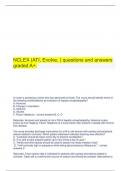
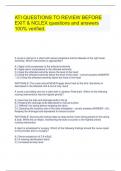
NCLEX (ATI, Evolve, ) questions and answers graded A+. A nurse is assessing a client who has advanced cirrhosis. The nurse should identify which of the following manifestations as indicators of hepatic encephalopathy? A. Anorexia B. Change in orientation C. Asterixis D. Ascites F. Fector Hepaticus - correct answers.B, C, D Rationale: Anorexia and ascetis is not a CM of hepatic encephalopathy. Asterixis known as liver flapping. Fector Hepaticus is a fruity breath oder present in people with chronic liver disease. The nurse provides discharge instructions for a 64-yr-old woman with ascites and peripheral edema related to cirrhosis. Which patient statement indicates teaching was effective? A. "Lactulose should be taken every day to prevent constipation." B. "It is safe to take acetaminophen up to four times a day for pain." C. "Herbs and other spices should be used to season my foods instead of salt." D. "I will eat foods high in potassium while taking spironolactone (Aldactone)." - correct answers.C Rationale: A low-sodium diet is indicated for patients with ascites and edema related to cirrhosis. Table salt is a well-known source of sodium and should be avoided. Alternatives to salt to season foods include the use of seasonings such as garlic, parsley, onion, lemon juice, and spices. Pain medications such as acetaminophen, aspirin, and ibuprofen should be avoided because these medications may be toxic to the liver. The patient should avoid potentially hepatotoxic over-the-counter drugs (e.g., acetaminophen) because the diseased liver is unable to metabolize these drugs. Spironolactone is a potassium-sparing diuretic. Lactulose results in the acidification of feces in bowel and trapping of ammonia, causing its elimination in feces. When planning care for a patient with cirrhosis, the nurse will give highest priority to which nursing diagnosis? A. Impaired skin integrity related to edema, ascites, and pruritus B. Imbalanced nutrition: less than body requirements related to anorexia C. Excess fluid volume related to portal hypertension and hyperaldosteronism D. Ineffective breathing pattern related to pressure on diaphragm and reduced lung volume - correct answers.D Rationale: Although all of these nursing diagnoses are appropriate and important in the care of a patient with cirrhosis, airway and breathing are always the highest priorities. The patient with cirrhosis is being taught self-care. Which statement indicates the patient needs more teaching? A. "If I notice a fast heart rate or irregular beats, this is normal for cirrhosis." B. "I need to take good care of my belly and ankle skin where it is swollen." C,"A scrotal support may be more comfortable when I have scrotal edema." D. "I can use pillow to support my head to help me breathe when I am in bed." - correct answers.A Rationale: If the patient with cirrhosis experiences a fast or irregular heart rate, it may be indicative of hypokalemia and should be reported to the health care provider because this is not normal for cirrhosis. Edematous tissue is subject to breakdown and needs meticulous skin care. Pillows and a semi-Fowler's or Fowler's position increase respiratory efficiency. A scrotal support may improve comfort if there is scrotal edema. The nurse is aware of potential complications related to cirrhosis. Which interventions would be included in a safe plan of care (select all that apply.)? A. Provide a high-protein, low-carbohydrate diet. B. Teach the patient to use soft-bristle toothbrush and electric razor. C. Teach the patient to avoid vigorous blowing of nose and coughing. D. Apply gentle pressure for the shortest possible time after venipuncture. E. Use the smallest gauge needle possible when giving injections or drawing blood. F. Instruct the patient to avoid aspirin and nonsteroidal antiinflammatory (NSAIDs). - correct answers.B, C, E, F Rationale: Provide a high-protein, low-carbohydrate diet. Teach the patient to use soft-bristle toothbrush and electric razor. Correct Teach the patient to avoid vigorous blowing of nose and coughing. Correct Apply gentle pressure for the shortest possible time after venipuncture. Use the smallest gauge needle possible when giving injections or drawing blood. Correct Instruct the patient to avoid aspirin and nonsteroidal antiinflammatory (NSAIDs). A patient with cirrhosis has increased abdominal girth from ascites. Which items identify the pathophysiology related to ascites (select all that apply.)? A. Hepatocytes are unable to convert ammonia to urea. B. Osmoreceptors in the hypothalamus stimulate thirst.
Geschreven voor
- Instelling
- NCLEX
- Vak
- NCLEX
Documentinformatie
- Geüpload op
- 12 oktober 2023
- Aantal pagina's
- 4
- Geschreven in
- 2023/2024
- Type
- Tentamen (uitwerkingen)
- Bevat
- Vragen en antwoorden
Onderwerpen
-
nclex ati evolve questions

Ook beschikbaar in voordeelbundel