Micro-economie
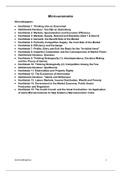
Inhoudsopgave:
Hoofdstuk 1: Thinking Like an Economist
Additionele literatuur: Van Dijk en Zeelenberg
Hoofdstuk 2: Markets, Specialisation and Economic Efficiency
Hoofdstuk 3: Markets, Supply, Demand and Elasticity (Deel 1 & Deel 2)
Hoofdstuk 4: Demand: the Benefit Side of the Market
Hoofdstuk 5: Perfectly Competitive Supply: the Cost Side of the Market
Hoofdstuk 6: Efficiency and Exchange
Hoofdstuk 7: Profits, Entry and Exit: the Basis for the ‘’Invisible Hand’’
Hoofdstuk 8: Imperfect Competition and the Consequences of Market Power
Additionele literatuur: Baarsma
Hoofdstuk 9: Thinking Strategically (1): Interdependence, Decision Making
and the Theory of Games
Hoofdstuk 10: Thinking Strategically (2): Competition Among the Few
Additionele literatuur: Speltheorie
Hoofdstuk 11: Externalities and Property Rights
Hoofdstuk 12: The Economics of Information
Additionele literatuur: Tadelis and Williamson
Hoofdstuk 13: Labour Markets, Income Distribution, Wealth and Poverty
Hoofdstuk 14: Government in the Market Economy: Public Sector
Production and Regulation
Hoofdstuk 15: The Credit Crunch and the Great Contraction: An Application
of some Microeconomics to Help Explain a Macroeconomic Crisis
SamenvattingenUL 1
, Hoofdstuk 1: Thinking Like an Economist
Wat is economie eigenlijk?
Hoe maken mensen keuzes?
Onder schaarste
Gevolgen voor de samenleving
Schaarste - twee aspecten:
1. Middelen alternatief aanwendbaar
2. Ze zijn niet onbeperkt aanwezig
Daarom: kiezen
Meer van het één betekent minder van het ander
The cost-benefit principle:
Je doet iets alleen als de extra baten hoger zijn dan de extra kosten
Dus: denken in termen van veranderingen
Marginale baten en marginale kosten
Valkuil 1: kosten en baten proportioneel nemen:
Voorbeeld: 3 km lopen voor spelletjes van 15 euro i.p.v. 25 euro
Voorbeeld: 3 km lopen voor laptop van 990 euro i.p.v. 1000 euro
Precies dezelfde situatie (verschil is bij beide voorbeelden 10 euro)
Valkuil 2: opportunity costs vergeten:
Zijn de kosten van een economische keuze, uitgedrukt in termen van de beste
“gemiste kans”: het waardeert de (niet gerealiseerde) opbrengst van het best
mogelijke alternatief ten opzichte van de uiteindelijk genomen beslissing
Voorbeeld: de ZZP’er en zijn eigen pand. Het pand had bijvoorbeeld ook verhuurd
kunnen worden
Valkuil 3: verzonken kosten meenemen:
Zijn de economie kosten die al gemaakt zijn en niet meer ongedaan te maken zijn
Voorbeeld: doorgaan met de Noord-zuidlijn?
SamenvattingenUL 2
,Valkuil 4: gemiddeld i.p.v. marginaal:
Produceer tot het punt MO = MK
Soorten economie:
Micro-economie: individuen en afzonderlijke markten
Macro-economie: nationale economie (of nog groter)
Positief en normatief:
Positieve economie: hoe werkt het en waarom werkt het zo?
Dus: waardenvrij
Normatieve economie: uitspraken o.b.v. normen en waarden
Wij proberen het bij positieve economie te houden!
SamenvattingenUL 3
, Additionele literatuur: Van Dijk en Zeelenberg
Rationele keuzetheorie:
Primaat eigen opbrengsten
Maximalisatie resultaat
Maximaal gebruik informatie
Perfect calculeren onzekerheid
Rationeel verdisconteren toekomst
Stabiele voorkeuren
Emotie speelt geen rol in de keuze
Rationeel gedrag:
Pas op: niet per definitie foutloos
En: wel emotie in de voorkeuren
Maar: er is nog meer
Is het wel (altijd) zo rationeel?
Kritiek op rationele keuzetheorie
Gedragseconomie (Behavioral Economics)
Primaat eigen opbrengsten?
Bijvoorbeeld ook:
- Giften goede doelen
- Bloeddonatie
- Vrijwilligerswerk
- Eigen belang én belang van anderen
Maximalisatie resultaat?
Choice overload
Vaak voldoende i.p.v. maximaal
Satisficing i.p.v. optimizing
Maximaal gebruik informatie?
Vaak keuzestrategie, bijvoorbeeld:
- Alternatieven één voor één bekijken; eerste dat voldoet wordt gekozen
- Gewoonte
Perfect calculeren onzekerheid?
We zijn overmatig optimistisch
Vuistregels
(Overmatige) waardering zekerheid
Consequenties onzekerheid slecht doordacht
SamenvattingenUL 4
Inhoudsopgave:
Hoofdstuk 1: Thinking Like an Economist
Additionele literatuur: Van Dijk en Zeelenberg
Hoofdstuk 2: Markets, Specialisation and Economic Efficiency
Hoofdstuk 3: Markets, Supply, Demand and Elasticity (Deel 1 & Deel 2)
Hoofdstuk 4: Demand: the Benefit Side of the Market
Hoofdstuk 5: Perfectly Competitive Supply: the Cost Side of the Market
Hoofdstuk 6: Efficiency and Exchange
Hoofdstuk 7: Profits, Entry and Exit: the Basis for the ‘’Invisible Hand’’
Hoofdstuk 8: Imperfect Competition and the Consequences of Market Power
Additionele literatuur: Baarsma
Hoofdstuk 9: Thinking Strategically (1): Interdependence, Decision Making
and the Theory of Games
Hoofdstuk 10: Thinking Strategically (2): Competition Among the Few
Additionele literatuur: Speltheorie
Hoofdstuk 11: Externalities and Property Rights
Hoofdstuk 12: The Economics of Information
Additionele literatuur: Tadelis and Williamson
Hoofdstuk 13: Labour Markets, Income Distribution, Wealth and Poverty
Hoofdstuk 14: Government in the Market Economy: Public Sector
Production and Regulation
Hoofdstuk 15: The Credit Crunch and the Great Contraction: An Application
of some Microeconomics to Help Explain a Macroeconomic Crisis
SamenvattingenUL 1
, Hoofdstuk 1: Thinking Like an Economist
Wat is economie eigenlijk?
Hoe maken mensen keuzes?
Onder schaarste
Gevolgen voor de samenleving
Schaarste - twee aspecten:
1. Middelen alternatief aanwendbaar
2. Ze zijn niet onbeperkt aanwezig
Daarom: kiezen
Meer van het één betekent minder van het ander
The cost-benefit principle:
Je doet iets alleen als de extra baten hoger zijn dan de extra kosten
Dus: denken in termen van veranderingen
Marginale baten en marginale kosten
Valkuil 1: kosten en baten proportioneel nemen:
Voorbeeld: 3 km lopen voor spelletjes van 15 euro i.p.v. 25 euro
Voorbeeld: 3 km lopen voor laptop van 990 euro i.p.v. 1000 euro
Precies dezelfde situatie (verschil is bij beide voorbeelden 10 euro)
Valkuil 2: opportunity costs vergeten:
Zijn de kosten van een economische keuze, uitgedrukt in termen van de beste
“gemiste kans”: het waardeert de (niet gerealiseerde) opbrengst van het best
mogelijke alternatief ten opzichte van de uiteindelijk genomen beslissing
Voorbeeld: de ZZP’er en zijn eigen pand. Het pand had bijvoorbeeld ook verhuurd
kunnen worden
Valkuil 3: verzonken kosten meenemen:
Zijn de economie kosten die al gemaakt zijn en niet meer ongedaan te maken zijn
Voorbeeld: doorgaan met de Noord-zuidlijn?
SamenvattingenUL 2
,Valkuil 4: gemiddeld i.p.v. marginaal:
Produceer tot het punt MO = MK
Soorten economie:
Micro-economie: individuen en afzonderlijke markten
Macro-economie: nationale economie (of nog groter)
Positief en normatief:
Positieve economie: hoe werkt het en waarom werkt het zo?
Dus: waardenvrij
Normatieve economie: uitspraken o.b.v. normen en waarden
Wij proberen het bij positieve economie te houden!
SamenvattingenUL 3
, Additionele literatuur: Van Dijk en Zeelenberg
Rationele keuzetheorie:
Primaat eigen opbrengsten
Maximalisatie resultaat
Maximaal gebruik informatie
Perfect calculeren onzekerheid
Rationeel verdisconteren toekomst
Stabiele voorkeuren
Emotie speelt geen rol in de keuze
Rationeel gedrag:
Pas op: niet per definitie foutloos
En: wel emotie in de voorkeuren
Maar: er is nog meer
Is het wel (altijd) zo rationeel?
Kritiek op rationele keuzetheorie
Gedragseconomie (Behavioral Economics)
Primaat eigen opbrengsten?
Bijvoorbeeld ook:
- Giften goede doelen
- Bloeddonatie
- Vrijwilligerswerk
- Eigen belang én belang van anderen
Maximalisatie resultaat?
Choice overload
Vaak voldoende i.p.v. maximaal
Satisficing i.p.v. optimizing
Maximaal gebruik informatie?
Vaak keuzestrategie, bijvoorbeeld:
- Alternatieven één voor één bekijken; eerste dat voldoet wordt gekozen
- Gewoonte
Perfect calculeren onzekerheid?
We zijn overmatig optimistisch
Vuistregels
(Overmatige) waardering zekerheid
Consequenties onzekerheid slecht doordacht
SamenvattingenUL 4