CLEP Principles of Management - Behavioral questions with 100 % correct answers | verified
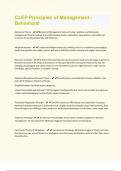
Behavioral Theory - Behavioral Management looks at human relations, and behavioral management theorists believe that understanding worker motivation, expectations, and conflict are crucial to increasing productivity and efficiency. Abraham Maslow - Created the Maslow Hierarchy of Needs, which is a model for psychological health that predicts the needs a person will aim to fulfill first, before moving onto higher level needs. Hierarchy of Needs - A theory that describes the needs a person requires to be happy. A person is theorized to want to fill needs at the bottom of the pyramid before striving for those at the top. For example, physiological and safety needs are met first before a person might strive for needs such as friendship, high self-esteem, or problem solving. Existence/Relatedness/Growth Theory - The ERG theory was defined by Clayton Alderfer, and built off of Maslow's Hierarch of Needs. Simplified needs into three larger categories. -States that peoplle will attempt to fill the highest need (growth) first, and if not possible will regress to a lower need (relatedness) and finally the lowest (existence). Frustration-Regression Principle - The FRP is based on ERG theory, and states that if a person becomes frustrated with lack of achievement of a higher need (for example career advancement), then they will regress to fulfilling a lower need (such as family relationships) in order have 'some needs' met. Frederick Herzberg - An American Psychologist whose work is widely recognized in business management. He introduced the Motivator-Hygeine two factor theory of motivation. Two-Factor Theory of Motivation - also know as Herzberg's Motivation-Hygiene Theory and stats that there are two sets of factors in a workplace: one that causes satisfaction, and the other that causes dissatisfaction.Motivator Factors - These factors, such as recognition or a more impressive title, give workers happiness or motivation. However, in the absence of these motivating factors, the worker does not result in dissatisfaction. In other words, they're nice to have, but don't affect the worker if they're not present. Hygiene Factors - Hygiene Factors, such as salary or job security may not produce satisfaction or happiness, but they are crucial for job satisfaction. Merely having a salary is no guarantee of employee happiness, but taking away that salary is sure-fire recipe for unhappiness and disgruntlement
Geschreven voor
- Instelling
- CLEP Principles of Management - Behavioral
- Vak
- CLEP Principles of Management - Behavioral
Documentinformatie
- Geüpload op
- 10 oktober 2023
- Aantal pagina's
- 3
- Geschreven in
- 2023/2024
- Type
- Tentamen (uitwerkingen)
- Bevat
- Vragen en antwoorden
Onderwerpen
-
clep principles of management behavioral

Ook beschikbaar in voordeelbundel