

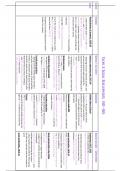
Theme 4: Social Developments, 1917-1985
Leader Housing Women & the family Education Health/welfare + Employment
Lenin Redistribution of property, 1918-28 playing a supporting role, 1917-40 Unified Labour Schools Employment 1917-1918
In 1918, he published the Declaration of the
- under the NEP, btwn 60-80% of urban - depicting manners industrial workers and - Oct 1918 à issued reform which: Rights of Toiling and Exploited people.
housing was denationalized women as peasants gave people the established ULSs to provide free
- in 1923-24, large townhouses were impression that men are the leading role in polytechnic education to all children aged - abolished private ownership of land
socialized, property owners were forced to society 8-17, banned religious instruction and - introduced Universal Labor Duty
live in a single room, while working class - from 1917-40 women much less visible in abolished corporal punishment, homework, - 500 -700 industrial enterprises closed
moved into other rooms propaganda and exams between March and August 1917
- during the civil war posters dominated by
rent reintroduced in 1921, house building male soldiers Expansion under NEP work and benefits, 1919-21
restarted Financial issues meant cuts in educational From September 1918, able men from 16 to
Working in towns provision 50 lost the right to refuse employment
under NEP, 89% of house building taken in 1928 only 3 million women worked in - scrapped plans to open children's homes Compulsory labor was unsustainable under
over by private companies Soviet industry. Rose to 13 million by 1940 for 7mn civil war conditions
20% of places in higher education allocated - In the first 18 months of the NEP, # of - by July 1920 factories were being forced
one of the main ones created was called to women in 1929 rose to 40% in 1940 children in education halved, As did the to close due to fuel shortages
the Zuev club and the Rusakov club which number of schools
were built from 1927-29 working in the countryside Work and benefits in the 1920s
- during the NEP there was only 8 female Secondary education In 1921 5.5% of labour force = unemployed.
designed as socialist educational cultural
tractor drivers in the whole of the USSR - schools tended to be dominated by 18% in 1924
centers for workers
- the figure increased to 50,000 by 1940 children of the wealthy à 97% of students unemployment surged because:
paid fees - soldiers from the Red Army demobilized +
Female party workers - around 90% of middle-class students unemployed
- During civil war female party members started secondary school and only 3% - government sacked 225,000 admins who
worked in commissariat of social welfare, finished had been administering the system
health, or education (male party members - urban workers who left the cities during
worked in government departments who literacy the civil war returned and were unable to
dealt with the economy or military) - The Decree on Illiteracy produced in 1919 work
- only 5% of delegates in the party Congress required all illiterate people between the
of 1918 were women ages of 8-50 to learn to read and write work and benefits, 1919-21
- 10% women were party members
, - by 1928 that was 12% - literacy rates increased from 50% in 1918 People in work issued a work card and
Women + family to 86% in 1921 given rations
- Contraception legal during the 1920s - by 1925 100% of soldiers in the Red Army - rationing organized by the Prodraspred
- during the 1920s postcard divorce was could read and write - At the height of the rationing system 22
legal - Lunacharsky created six-week courses in million people were entitled to ration cards
- from 1917-28, 70% of divorces initiated by reading and writing designed to “liquidate” Workers had access to benefits
men illiteracy - communal dining halls set up in factories
à left woman without a home war economy could not produce or to feed the workers
distribute educational products - government claimed that 93% of the
- many schools had one pencil for every 60 people living in Moscow in 1920 were
students by 1920 regularly fed in communal halls
war communism never provided more than
50% of the food and fuel that people
needed to survive (between 1917-21, pop.
of Petrograd fell by 50%)
Work and benefits in the 1920s
some benefits administered
- 1922 Labour Law gave unions rights to
negotiate binding agreements about pay
and conditions with employers
- social insurance paid disability, maternity,
and unemployment benefits (covered 9 mn
workers but not peasants)
urban workers paid around 10% more
before the revolution and had access to
more meats and fish
Stalin urban population trebled between 1929 playing a supporting role, 1917-40 Expansion in the mid 1920s Employment and benefits in the 1930s
and 1940. ∴ D for housing increased - from 1927 fees for primary schools
- tended to play supporting role in art abolished In 1940 workers lost the right to switch jobs
Kommunalka
Leader Housing Women & the family Education Health/welfare + Employment
Lenin Redistribution of property, 1918-28 playing a supporting role, 1917-40 Unified Labour Schools Employment 1917-1918
In 1918, he published the Declaration of the
- under the NEP, btwn 60-80% of urban - depicting manners industrial workers and - Oct 1918 à issued reform which: Rights of Toiling and Exploited people.
housing was denationalized women as peasants gave people the established ULSs to provide free
- in 1923-24, large townhouses were impression that men are the leading role in polytechnic education to all children aged - abolished private ownership of land
socialized, property owners were forced to society 8-17, banned religious instruction and - introduced Universal Labor Duty
live in a single room, while working class - from 1917-40 women much less visible in abolished corporal punishment, homework, - 500 -700 industrial enterprises closed
moved into other rooms propaganda and exams between March and August 1917
- during the civil war posters dominated by
rent reintroduced in 1921, house building male soldiers Expansion under NEP work and benefits, 1919-21
restarted Financial issues meant cuts in educational From September 1918, able men from 16 to
Working in towns provision 50 lost the right to refuse employment
under NEP, 89% of house building taken in 1928 only 3 million women worked in - scrapped plans to open children's homes Compulsory labor was unsustainable under
over by private companies Soviet industry. Rose to 13 million by 1940 for 7mn civil war conditions
20% of places in higher education allocated - In the first 18 months of the NEP, # of - by July 1920 factories were being forced
one of the main ones created was called to women in 1929 rose to 40% in 1940 children in education halved, As did the to close due to fuel shortages
the Zuev club and the Rusakov club which number of schools
were built from 1927-29 working in the countryside Work and benefits in the 1920s
- during the NEP there was only 8 female Secondary education In 1921 5.5% of labour force = unemployed.
designed as socialist educational cultural
tractor drivers in the whole of the USSR - schools tended to be dominated by 18% in 1924
centers for workers
- the figure increased to 50,000 by 1940 children of the wealthy à 97% of students unemployment surged because:
paid fees - soldiers from the Red Army demobilized +
Female party workers - around 90% of middle-class students unemployed
- During civil war female party members started secondary school and only 3% - government sacked 225,000 admins who
worked in commissariat of social welfare, finished had been administering the system
health, or education (male party members - urban workers who left the cities during
worked in government departments who literacy the civil war returned and were unable to
dealt with the economy or military) - The Decree on Illiteracy produced in 1919 work
- only 5% of delegates in the party Congress required all illiterate people between the
of 1918 were women ages of 8-50 to learn to read and write work and benefits, 1919-21
- 10% women were party members
, - by 1928 that was 12% - literacy rates increased from 50% in 1918 People in work issued a work card and
Women + family to 86% in 1921 given rations
- Contraception legal during the 1920s - by 1925 100% of soldiers in the Red Army - rationing organized by the Prodraspred
- during the 1920s postcard divorce was could read and write - At the height of the rationing system 22
legal - Lunacharsky created six-week courses in million people were entitled to ration cards
- from 1917-28, 70% of divorces initiated by reading and writing designed to “liquidate” Workers had access to benefits
men illiteracy - communal dining halls set up in factories
à left woman without a home war economy could not produce or to feed the workers
distribute educational products - government claimed that 93% of the
- many schools had one pencil for every 60 people living in Moscow in 1920 were
students by 1920 regularly fed in communal halls
war communism never provided more than
50% of the food and fuel that people
needed to survive (between 1917-21, pop.
of Petrograd fell by 50%)
Work and benefits in the 1920s
some benefits administered
- 1922 Labour Law gave unions rights to
negotiate binding agreements about pay
and conditions with employers
- social insurance paid disability, maternity,
and unemployment benefits (covered 9 mn
workers but not peasants)
urban workers paid around 10% more
before the revolution and had access to
more meats and fish
Stalin urban population trebled between 1929 playing a supporting role, 1917-40 Expansion in the mid 1920s Employment and benefits in the 1930s
and 1940. ∴ D for housing increased - from 1927 fees for primary schools
- tended to play supporting role in art abolished In 1940 workers lost the right to switch jobs
Kommunalka

