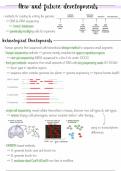
New and future developments
- methods for reading & writing the genome:
=> DNA & RNA sequencing
=> ‘omics’ databases
=> genetically modifying cells & organisms
Technological Developments
- human genome first sequenced with hierarchical shotgun method to sequence small segments
- Sanger sequencing methods => genome mostly complete but gaps in repetitive regions
=> next gen sequencing (NGS): sequenced in a few h for under £1000
- third gen methods: sequence from small amounts of DNA with long sequencing reads (10-100kb)
=> fewer gaps in repetitive regions
=> sequence other complex genomes (ex: plants => genome engineering => improve human health)
- single cell sequencing: reveal cellular hierarchies in tissues, discover new cell types & sub-types...
=> tumour biopsy: cells phenotypes, tumour evolution before/ after therapy...
/RNA-seq W
using co transcriptome
differences
-
each all
gene-expression
- CRISPR-based methods:
=> A: generate knock-outs and knock-ins
=> B: generate knock-ins
=> C: nuclease-dead Cas9 (dCas9) can fuse to modifiers
, 2 active sites 1 active site 0 active site
=> limitations:
1) specificity (some off-target sites => DSBs)
=> find gRNA that detect the fewest similar sequences elsewhere in the genome
part of the
gRNA
binding las 4
y the 20nt)
=> scaffold RNA, chromatin status, mismatches position, GC bases: influence off-target sites
2) safety (on-target damage: large insertions/ deletions, translocations caused by alt-NHEJ)
=> temporarily suppress alternative NHEJ-based pathway (alt-NHEJ): align broken strands
=> avoid DSBs by fusing dCas9 to a base-editor (ex: Cytidine deaminase)
3) efficiency (some NHEJ-based edits)
=> temporarily suppress NHEJ
4) versatility (restricted to PAM loci)
=> CRISPR-Cas from ≠ bacterial systems
- methods for reading & writing the genome:
=> DNA & RNA sequencing
=> ‘omics’ databases
=> genetically modifying cells & organisms
Technological Developments
- human genome first sequenced with hierarchical shotgun method to sequence small segments
- Sanger sequencing methods => genome mostly complete but gaps in repetitive regions
=> next gen sequencing (NGS): sequenced in a few h for under £1000
- third gen methods: sequence from small amounts of DNA with long sequencing reads (10-100kb)
=> fewer gaps in repetitive regions
=> sequence other complex genomes (ex: plants => genome engineering => improve human health)
- single cell sequencing: reveal cellular hierarchies in tissues, discover new cell types & sub-types...
=> tumour biopsy: cells phenotypes, tumour evolution before/ after therapy...
/RNA-seq W
using co transcriptome
differences
-
each all
gene-expression
- CRISPR-based methods:
=> A: generate knock-outs and knock-ins
=> B: generate knock-ins
=> C: nuclease-dead Cas9 (dCas9) can fuse to modifiers
, 2 active sites 1 active site 0 active site
=> limitations:
1) specificity (some off-target sites => DSBs)
=> find gRNA that detect the fewest similar sequences elsewhere in the genome
part of the
gRNA
binding las 4
y the 20nt)
=> scaffold RNA, chromatin status, mismatches position, GC bases: influence off-target sites
2) safety (on-target damage: large insertions/ deletions, translocations caused by alt-NHEJ)
=> temporarily suppress alternative NHEJ-based pathway (alt-NHEJ): align broken strands
=> avoid DSBs by fusing dCas9 to a base-editor (ex: Cytidine deaminase)
3) efficiency (some NHEJ-based edits)
=> temporarily suppress NHEJ
4) versatility (restricted to PAM loci)
=> CRISPR-Cas from ≠ bacterial systems