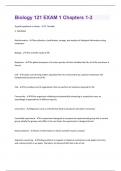
WGU C715 Objective Assessmen t Organizational Behavior Exam | Gra de A Questions and Verified A nswers (Latest 2023/ 2024) 100% Correct Q: The processes that account for an individual's intensity, direction, and persistence of effort toward attaining a goal. Answer: Motivation Q: 1. Physiological 2.Safety 3. Social 4. Esteem 5. Self -actualization Answer: Maslow's hierarchy of needs. Q: Needs that are satisfied externally, such as physiological and safety needs. Answer: lower -order needs Q: The drive to become what a pe rson is capable of becoming. Answer: self-actualization Q: Needs that are satisfied internally, such as social, esteem, and self -actualization needs. Answer: higher -order needs Q: The assumption that employees dislike work, are lazy, dislike responsibility, and must be coerced to perform Answer: Theory X Q: The assumption that employees like work, are creative, seek responsibility, and can exercise self-direction. Answer: Theory Y Q: Herzberg's theory describing factors that impact work satisfaction and dissatisfaction. Answer: two-factor theory Q: Characteristics of the workplace, such as company policies, working conditions, pay, and supervision, that can make people satisfied or dissatisfied. Answer: hygiene factors Q: A theory that states achievement, power, and affiliation are three impo rtant needs that help explain motivation. Answer: McClelland's theory of needs Q: 1. Need for achievement (nAch) 2. Need for power (nPow) 3. Need for affiliation (nAff); explain motivation Answer: McClelland's 3 needs Q: The desire for friendly a nd close interpersonal relationships. Answer: Need for affiliation (nAff) Q: The need to make others behave in a way in which they would not have behaved otherwise. Answer: Need for power (nPow) Q: The drive to excel, to achieve in relationship to a set of standards, and to strive to succeed. Answer: Need for achievement (nAch) Q: A theory that is concerned with the motivation behind choices people make without external influence and interference. Answer: self-determination theory Q: A version of self -determination theory which holds that allocating extrinsic rewards for behavior that had been previously intrinsically rewarding tends to decrease the overall level of motivation if the rewards are seen as controlling. Answer: cognit ive evaluation theory Q: The degree to which peoples' reasons for pursuing goals are consistent with their interests and core values. Answer: self-concordance Q: The investment of an employee's physical, cognitive, and emotional energies into job performance. Answer: job engagement Q: A theory that says that specific and difficult goals, with feedback, lead to higher performance. Answer: goal-setting theory
Exam (elaborations)
WGU C715 Objective Assessment Organizational Behavior Exam | Grade A Questions and Verified Answers (Latest 2023/ 2024) 100% Correct
WGU C715 Objective Assessment Organizational Behavior Exam | Grade A Questions and Verified Answers (Latest 2023/ 2024) 100% Correct Q: The processes that account for an individual's intensity, direction, and persistence of effort toward attaining a goal. Answer: Motivation Q: 1. Physiological 2.Safety 3. Social 4. Esteem 5. Self-actualization Answer: Maslow's hierarchy of needs. Q: Needs that are satisfied externally, such as physiological and safety needs. Answer: lower-order needs Q: The drive to become what a person is capable of becoming. Answer: self-actualization Q: Needs that are satisfied internally, such as social, esteem, and self-actualization needs. Answer: higher-order needs Q: The assumption that employees dislike work, are lazy, dislike responsibility, and must be coerced to perform Answer: Theory X Q: The assumption that employees like work, are creative, seek responsibility, and can exercise self-direction. Answer: Theory Y Q: Herzberg's theory describing factors that impact work satisfaction and dissatisfaction. Answer: two-factor theory Q: Characteristics of the workplace, such as company policies, working conditions, pay, and supervision, that can make people satisfied or dissatisfied. Answer: hygiene factors Q: A theory that states achievement, power, and affiliation are three important needs that help explain motivation. Answer: McClelland's theory of needs Q: 1. Need for achievement (nAch) 2. Need for power (nPow) 3. Need for affiliation (nAff); explain motivation Answer: McClelland's 3 needs Q: The desire for friendly and close interpersonal relationships. Answer: Need for affiliation (nAff) Q: The need to make others behave in a way in which they would not have behaved otherwise. Answer: Need for power (nPow) Q: The drive to excel, to achieve in relationship to a set of standards, and to strive to succeed. Answer: Need for achievement (nAch) Q: A theory that is concerned with the motivation behind choices people make without external influence and interference. Answer: self-determination theory Q: A version of self-determination theory which holds that allocating extrinsic rewards for behavior that had been previously intrinsically rewarding tends to decrease the overall level of motivation if the rewards are seen as controlling. Answer: cognitive evaluation theory Q: The degree to which peoples' reasons for pursuing goals are consistent with their interests and core values. Answer: self-concordance Q: The investment of an employee's physical, cognitive, and emotional energies into job performance. Answer: job engagement Q: A theory that says that specific and difficult goals, with feedback, lead to higher performance. Answer: goal-setting theory
Show more
Read less
Institution
Western Governors University
Course
WGU C715 (C715)
Whoops! We can’t load your doc right now. Try again or contact support.
Written for
- Institution
-
Western Governors University
- Course
-
WGU C715 (C715)
Document information
- Uploaded on
- October 2, 2023
- Number of pages
- 53
- Written in
- 2023/2024
- Type
- Exam (elaborations)
- Contains
- Questions & answers
Subjects
-
wgu c715 objective assessmentc715 pre assessment
-
c715 objective assessmentwgu c715 pre assessment
-
wgu c715 objective assessment organizational behav
-
the processes that account for an individuals int
-
m
Content preview
$11.49
Get access to the full document:

100% satisfaction guarantee
Immediately available after payment
Both online and in PDF
No strings attached

Also available in package deal
Package deal
WGU C715 Organizational Behavior/WGU C715 Objective Assessment /WGU C715 Pre-Assessment Exam s| Grade A Questions and Verified Answers (Latest 2023/ 2024 UPDATES STUDY BUNDLE) 100% Correct
7
4
2023
$ 44.96
More info