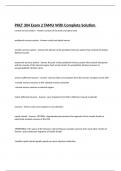
PHLT 304 Exam 2 TAMU With Complete Solution
central nervous system - Answer consists of the brain and spinal cord peripheral nervous system - Answer cranial and spinal nerves somatic nervous system - Answer the division of the peripheral nervous system that controls the body's skeletal muscles autonomic nervous system - Answer the part of the peripheral nervous system that controls the glands and the muscles of the internal organs (such as the heart). Its sympathetic division arouses; its parasympathetic division calms. sensory (afferent) neurons - Answer -neurons that carry impulses from the sensory receptors to the CNS -somatic sensory neurons in skin, skeletal muscles and joints -visceral sensory neurons in internal organs motor (efferent) neurons - Answer -carry impulses from CNS to effectors (muscle or glands) neurons - Answer only carry impulses in one direction myelin sheath - Answer -CENTRAL: oligodendrocytes produce the segments of the myelin sheath to electrically insulate neurons of the CNS -PERIPHERAL: MS- layers of the Schwann cell membrane; insulates neurons from each other- Nodes of Ranvier- spaces between segments of myelin sheath -healthy myelin sheath greatly speeds up nerve impulse conduction Epilepsy - Answer -broad term for a brain disorder that causes seizures (short change in normal brain activity) -many causes: stroke, brain tumor, traumatic brain injury, CNS infection, not contagious -almost 10% of people will have a seizure during their lives -over 500 genes are associated with epilepsy multiple sclerosis - Answer -autoimmune disorder -affects CNS -destroys oligodendrocytes (form myelin) -plaques of scar tissue deterioration of the myelin sheath and damage and death of axons -risk factors: epstein-barr virus infection and vitamin D deficiency -symptoms: muscle weakness or paralysis, numbness - no cure; remissions and disease progression are unpredictable bacterial meningitis - Answer -caused by several types of bacteria; in the US these include: streptococcus pneumoniae, Group B streptococcus, neisseria meningitidis, haemophilus influenzae, listeria monocytogenes -risk factors (depend on type of bacteria): college campuses-outbreaks may be caused by N. meningitidis -symptoms: acute onset fever, headache, neck stiffness, confusion, seizures. continuing neurological complications can include brain damage and learning disabilities tetanus - Answer -occurs due to exposure to spores of the bacterium Clostridium tetani (present everywhere in soil) -caused by neurotoxin produced by C. tetani -Global neonatal tetanus deaths reduced from approx. 787000 deaths to 213000: immunize women, improve hygiene of delivery conditions -in texas- a notifiable condition rabies - Answer -caused by rhabdoviruses of the genus lyssavirus -animal reservoir species include dogs, foxes, mongooses, raccoons, skunks, many species of bat - >99.9% of human rabies deaths worldwide are from the bites of rabid dogs -approx. 50,000 people die of rabies each year, mostly in Africa and Asia -infection occurs through bite wounds, open cuts in skin or mucous membranes -virus travels up to CNS, replicates there then travels down nerves to salivary glands and then further replicates changes in global demographics - Answer -for the first time in recorded history, adults age 65+ are now estimated to outnumber children <5 yrs -health of the aging population affects everyone: effects on loved ones, and economic costs neurodegenerative diseases - Answer -incurable debilitating conditions caused by progressive degeneration of nerve cells (loss of function and finally death) -ataxias: movement problems -dementias: impaired mental functioning Alzheimer's disease - Answer -6th leading cause of death in US -social and financial costs: nearly everyone in the final stages of alzheimer's need constant care Alzheimer's disease risk factors - Answer -age -gender -cardiovascular disease -smoking -genetics -type 2 diabetes -alcoholism -head trauma -menopause -depression -obesity/sedentary lifestyle primary and secondary prevention of alzheimers - Answer -primary: stay active, keep fit, health balanced diet, engage the brain -secondary: diagnosis, check for underlying treatable conditions (B12 deficiency), awareness, patient and caregiver support vascular dementia and vascular cognitive impairment - Answer -result from injuries to blood vessels that provide blood to brain -risk factors include: atrial fibrillation (abnormal heartbeat rhythm), high blood pressure, diabetes, high cholesterol -often occurs after stroke or series of strokes -symptoms may be similar to alzheimers disease -symptoms can start can start suddenly, and worsen or improve over time -mixed dementia: a combo of two or more types of dementia occurring in the same person Parkinson's disease - Answer -believed to be caused by a combo of genetic factors and environmental factors such as exposure to toxins -onset typically around age 60, worsens over time -brain disorder that leads to shaking, stiffness, difficulty walking, balance, coordination -can lead to difficulty talking, behavioral changes, sleep, and memory problems due to death of nerve cells, reduced production of dopamine and -nerve cells that release the neurotransmitter dopamine are lost Symptoms of Parkinson's Disease - Answer -tremor -rigidity -extreme slowness of movement -impaired balance -swallowing and speaking difficulties amyotrophic lateral sclerosis (ALS) - Answer -risk factors: age 55-75; caucasian, and non-hispanic; military vets -a group of rare neurological diseases that mainly involve the nerve cells (neurons) responsible for controlling voluntary movement -progressive -currently, no cure and no effective treatment -death usually from respiratory failure within 3-5 years -approx. 15,000 Americans affected mental health - Answer -a state of well-being in which an individual realizes his or her own abilities, can cope with the normal stresses of life, can work productively, and is able to make a contribution to his or her own community natural selection - Answer -process that favors the best reproductive success or individuals or groups -behavior is strongly influenced by natural selection kin selection - Answer self-sacrificial behavior that improves reproductive success of genetic relatives evolution of human social behavior - Answer -cooperation among humans has enhanced survival: learned behavior and skills enable rapid adaptation to new, unfavorable, or changing habits. accepted behaviors are culture-dependent, now- humans are highly interdependent -humans are generally more successful with a social network factors influencing well-being - Answer -impact of loneliness vs. connectedness -loneliness: the discrepancy between a person's desired and actual social relationships
Written for
- Institution
- PHLT 304
- Course
- PHLT 304
Document information
- Uploaded on
- October 2, 2023
- Number of pages
- 24
- Written in
- 2023/2024
- Type
- Exam (elaborations)
- Contains
- Questions & answers
Subjects
- phlt 304 stuvia
-
phlt 304 exam 2 tamu with complete solution
-
central nervous system consists of the brain and s
-
peripheral nervous system cranial and spinal nerve

Also available in package deal