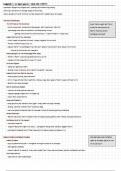
Summary Antimicrobials Part 1 Basic Principles of Antimicrobial Therapy
NURS 5334 Antimicrobials Part 1 Basic Principles of Antimicrobial Therapy Antimicrobials: Used to treat infectious diseases; 190 million doses of antibiotics are given in hospitals each day; Modern antimicrobials: 1930s and 1940s; Significantly reduced morbidity and mortality from infection Antibiotics: strictly speaking, a chemical produced by one microbe that can harm other microbes Antimicrobial agent: Any agent that can kill or suppress microorganisms Classification of Antimicrobial Drugs Classification By Susceptible Organism Narrow Spectrum ABX: active against a few species of bacteria or micro-organisms Broad Spectrum ABX: active against a wide varietyonly used when needed Classification By Mechanism Of Action: Drugs work on: Cell wall synthesis: activate enzymes that disrupt cell wall (PCN, cephalosporins) Cell membrane permeability: amphotericin B- increase membrane permeabilityleakage of material Protein synthesis (lethal): Aminoglycosides (gentamycin) Nonlethal inhibitors of protein synthesis: tetracyclines, slow growth but don’t kill bacteria Synthesis of nucleic acids: inhibit DNA/RNA by binding directly to nucleic acid or interact with enzymesRifampin, metronidazole, fluoroquinolones Antimetabolites: disrupt specific biochemical reactionsdecrease synthesis of constituentstrimethoprim or sulfonamides Viral enzyme inhibitors: suppress viral replication; inhibit specific enzymesDNA polymerase, transcriptase, integrase, neuramidinase *Bactericidal: Drugs are directly lethal to bacteria at clinically achievable concentrations *Bacteriostatic: Drugs can slow bacterial growth but do not cause cell death Acquired Resistance to Antimicrobial Drugs: acquired resistance can reder currently effective drugs totally uselessclinical crisis and constant need for new agentsOver time, organisms develop resistance; May have been highly responsive and then became less susceptible to one or more drugs Organisms with Microbial Drug Resistance: Enterococcus faecium, Staphylococcus aureus, Enterobacter species, Klebsiella species, Pseudomonas aeruginosa, Acinetobacter baumannii, Clostridium difficile Microbial Mechanisms of Drug Resistance: Four basic actions: 1) Decrease the concentration of a drug at its site of action: most drugs are intracellular 2) Inactivate a drug: Beta-lactam ring; drugs an reduce intracellular concentrationresist harm; Microbes can cease uptake of certain drugs (gent and tetra) OR microbes can increase active export of certain drugs (tetra, fluoroquinolones, macrolides) 3) Alter the structure of drug target molecules: structure of moleculealtered resistance 4) Produce a drug antagonist: RARE, microbes synthesize a compound that antagonizes a reaction Spontaneous mutation: Random changes in a microbe’s DNAgradual increase; Resistance to one drug Conjugation: Extrachromosomal DNA is transferred from one bacterium to anotherdonor organism must possess 2 unique DNA segmentsone codes for mechanisms of resistance and one for sexual apparatus or for DNA transferboth resistance factor; Gram-negative bacteria; Multiple drug resistance Antibiotic Use and Drug-Resistant Microbe Emergence How Antibiotic Use Promotes Resistance: Drugs make conditions favorable for overgrowth of microbes that have acquired mechanisms for resistancedrug resistant organism presentABX create selection pressure favoring its growth Antibiotics That Promote Resistance: Broad-spectrum agents do the most to facilitate the emergence of resistance The Extent Of Antibiotic Use Affects Resistance: The more that antibiotics are used, the faster drug-resistant organisms emerge Nosocomial infections: Health care–associated infections (HAI) hospitals are sites of intensive ABX useresident drugs more reactivemost difficult to treat Superinfection: New infection that appears during the course of treatment for a primary infection allow second incfectious agent to flourish; Because superinfections are caused by drug-resistant microbes, they often are difficult to treat Delaying Emergence of Drug Resistance: Promote adherence to appropriate prescribing guidelines; Reduce demand for antibiotics among healthy adults and parents of young children; Emphasize adherence to prescribed antibiotic regimens Public Health Action Plan to Combat Antimicrobial Resistance: infectious Disease Society of America for Healthcare Epidemiology, Pediatric Infectious Disease Society, American Board of Internal Medicinechoose wisely campaign, CDCGet Smart for Healthcare Focus Area I: Surveillance Focus Area II: Prevention and Control Focus Area III: Research Focus Area IV: Product Development Selection of Antibiotics: *Identify organismmatch drug with the bug; Drug sensitivity of organism several drugs can be effective but need BEST choice Host factor: site of infection and status of host defenses Drug may be ruled out to: Allergy, Inability to penetrate site of infection, Patient variables Empiric Therapy: optimally identify organism to determine drug sensitivitysome pts come with severe infectionsneed to treat before results come back; Antibiotic therapy for patients before causative organism is positively identified Drug selection based on: Clinical evaluation; Knowledge of microbes most likely to have caused infectionif necessary, can use broad spectrum first, then when results come backnarrow Identifying the Infectious Organism: 1) Match the drug with the bug 2) Gram-stained preparation: quickest way through sputum, urine, blood, or direct aspirates New Method: Polymerase chain reaction test/Nucleic Acid Amplificationdetect low titers of bacteria and viruses; testing done using an enzyme (RNA or DNA) to generate copies of DNA/RNA unique to infecting microbe 3) Determining drug susceptibility: Once organism identified these tests are used for susceptibilityDisk diffusion test, Serial dilution, Gradient diffusion Host Factors Host defenses: consists of immune systems, phagocytic, macrophages, neturophilswithout defenses, therapy is not successful Site of infection: ABX present at the site of infection that’s greater than the MIC (minimal inhibitory concentration) Previous allergic reactions: PCN most common reactionscan do skin testing to check for true reaction Genetic factors: Ex: sulfahemolysis in pts with G6PD Dosage Size and Duration: Antibiotics must not be discontinued prematurely; *Teach patients to complete full prescription Antibiotic must be present: At the site of infection for a sufficient length of time adjusted to produce concentrations equal to or greater than MIC; drug levels 4-8X MIC= desirable Antibiotic Combination: 2 ABX used together; multiple ABXpromotes drug resistance except TB Antimicrobial Effects Of Antibiotic Combinations Additive: antimicrobial effect of the combo=sum of effects of 2 drugs alone Potentiative: effect of the combination is greater than the sum of individual agents Antagonistic: bacteriostatic agent combined with bactericidal (tetra and PCN) Indications: Mixed infections, prevention of resistance, decreased toxicity, enhanced bacterial action Mixed Infections: multiple ABX needed Ex: brain abscesses and pelvic infections Disadvantages of combinations: increased risk for toxic and allergic reactions, antagonism of microbial effects; increase risk for superinfection, drug restant, expensive Prophylactic Use of Antimicrobials: Agents are given to prevent infection rather than to treat an established infection: Surgery: ortho, GI, appendicitis, C/S Bacterial endocarditis: congenital heart disease or prosthetic heart valvesmore susceptible to infections; Need prophylaxis in dental/medical procedures Neutropenia: increase risk of infections Other indications: recurrent UTIs, post-coital UTIs (take ABX after intercourse)
Geschreven voor
- Instelling
- NURS 5334
- Vak
- NURS 5334
Documentinformatie
- Geüpload op
- 29 september 2023
- Aantal pagina's
- 7
- Geschreven in
- 2023/2024
- Type
- SAMENVATTING
Onderwerpen