The endosymbiotic concept, however, only applies to the chloroplast and mitochondria.
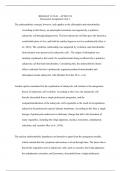
The endosymbiotic concept, however, only applies to the chloroplast and mitochondria. According to this theory, an autotrophic bacterium was ingested by a primitive eukaryotic cell through phagocytosis. The host eukaryotic cell then gave the bacteria a comfortable place to live, and both the entities began to survive symbiotically (Rye et al., 2016). The symbiotic relationship was supported by evolution, and mitochondria from bacteria were preserved in eukaryotic cells. The origin of chloroplast was similarly explained as the result of a cyanobacterium being swallowed by a primitive eukaryotic cell that had mitochondria. Considering this, the endosymbiotic theory offers a rationale for how a prokaryotic organism produced mitochondria and chloroplasts inside eukaryotic cells (Heather Scoville, M.A., n.d.).
Geschreven voor
- Instelling
- University Of The People
- Vak
- BIOL1122 (BIOL1122)
Documentinformatie
- Geüpload op
- 27 september 2023
- Aantal pagina's
- 3
- Geschreven in
- 2023/2024
- Type
- Overig
- Persoon
- Onbekend
Onderwerpen

Ook beschikbaar in voordeelbundel