FINAL EXAM NR507 / NR 507 (Latest 2023 / 2024) : Advanced Pathophysiology - Chamberlain
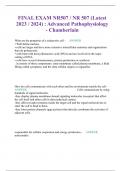
FINAL EXAM NR507 / NR 507 (Latest 2023 / 2024) : Advanced Pathophysiology - Chamberlain What are the properties of a eukaryotic cell - ANSWER • Well define nucleus. • cells are larger and have more extensive intracellular anatomy and organization than do prokaryotes. • cells bind with deoxyribonucleic acid (DNA) and are involved in the super coiling of DNA. • cells have several chromosomes, protein production or synthesis . it consists of three components: outer membrane called plasma membrane, a fluid filling called cytoplasm, and the intra cellular organs or organelles How do cells communicate with each other and the environment outside the cell - ANSWER Cells communicate by using hundreds of signal molecules. -they display plasma membrane-bound signaling molecules (receptor) that affect the cell itself and other cells in direct physical contact -they affect receptor proteins inside the target cell and the signal molecule has to enter the cell to bind to them -they form protein channels (gap juctions) that directly coordinate the activities of adjacent cells. responsable for cellular respiration and energy production - ANSWER mitocondria they provide sites for cellular protein synthesis - ANSWER ribosome is the largest membrane bound organelle and is usually found in the cell center, main function is cell division and control of genetic information - ANSWER nucleus is a small dense structure composed largely of RNA and combine it with proteins - ANSWER nucleolus are saclike structures that originate from the golgi complex and contain digestive enzymes - ANSWER lysosomes specializes in the synthesis and transport of the protein and lipid components of most of the cells organelles - ANSWER endoplasmic reticulum proteins from the endoplasmic reticulum are processed and packaged into small membrane - ANSWER Golgi apparatus or complex membrane organelles that contain several oxidative enzymes such as catalase and urate oxidase. those enzymes use oxygen to remove hydrogen in an oxidative reaction that produces hydrogen peroxide. - ANSWER peroxisomes it is the gelatinous, semiliquid portion of the cytoplasm. functions include: intermediary metabolism involving enzymatic biochemical reactions; ribosomal protein synthesis and storage of carbohydrates, fat and secretory vesicles - ANSWER cytosol maintains the cell's shape and internal organization - ANSWER cytoskeleton cells secrete local chemical mediators that are quickly absorbed, destroyed and immobilized. - ANSWER paracrine
Schule, Studium & Fach
Dokument Information
- Hochgeladen auf
- 24. september 2023
- Anzahl der Seiten
- 29
- geschrieben in
- 2023/2024
- Typ
- Prüfung
- Enthält
- Fragen & Antworten
Themen
-
advanced pathophysiology chamberlain
-
final exam nr507 nr 507 latest a
-
final exam nr507 nr 507 latest a
-
final exam nr507 nr 507 latest a

Ebenfalls erhältlich im paket-deal