Reading summaries...................................................................................................................................... 1
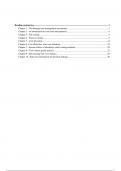
Chapter 1 - The manager and management accounting...........................................................................1
Chapter 2 - an introduction to cost terms and purposes.......................................................................... 6
Chapter 3 - Job costing............................................................................................................................ 9
Chapter 4 - Process costing....................................................................................................................11
Chapter 5 - Cost allocation.................................................................................................................... 14
Chapter 6: Cost allocation: joint cost situations.................................................................................... 18
Chapter 7 - Income effects of alternative stock-costing methods..........................................................20
Chapter 9 - Cost-volume profit analysis................................................................................................22
Chapter 9 - Determining how costs behave...........................................................................................26
Chapter 10 - Relevant information for decision-making.......................................................................30
, Reading summaries
Chapter 1 - The manager and management accounting
Accountant roles:
- Control
- Management planning
- Decision making
- Risk management
- Business strategy
- Communication and digital transformation roles
Management accounting, financial accounting and cost accounting
1. Management accounting:
- Measures, analyzes and reports financial and non-financial information primarily
intended for assisting managers in fulfilling organizational goals
- Internal use
- Combining accounting, finance and management
- Key questions: 1) How will this information help managers do their jobs better? 2) Do the
benefits of producing this information exceed the costs? 3) Does the information
recognize what is specific about the organizational context?
- Identification, generation, presentation and interpretation of information relevant to
business strategy, operations, capital structure, design reward strategies, control
operation, measurement of performance, implementation of control and corporate
government procedures, and potential for managerial and organizational value creation
- Main purpose: enhance value creation within both the private and public sector
organizations
2. Financial accounting
- Main focus is on external reporting directed by authoritative guidelines
- Guided by prescribed accounting standards and principles (liabilities, balance sheets,
revenue and cost measurement)
- Provide information on the performance and position of an organization for the past
period
- Reports are produced annually
- Broad-based, focused on the position & performance of the company
- Financial information
- External use (for investors, banks, regulators)
- Influences behavior of the company (esp. When it comes to compensation)
, 3. Cost accounting
- Measures and reports financial and non-financial information related to the organization’s
acquisition or use of resources
- Provides information for 1. & 2.
- Many think this is a part of 1., though
- Actions managers undertake in short and long-term planning and control of costs that
increase value for customers and lower the costs of products and services
- Recognition that prior management decisions often commit the organization to the
incurrence and costs
- Carried out as a key part of general management strategy and its implementation
- Questions like 1) Should we enter the new market?, 2) should we change product design?
Strategic decisions and management accounting
A company’s strategy:
- Describes how an organization creates value for its customers while distinguishing itself from its
competitors
- Product differentiation strategy vs. cost leadership strategy
- Competitive advantages
- Management accounting helps focus on strategic issues and formulate the right strategy for the
company
- Long–term value for shareholders is preferable
- Outperformers: strategic and external awareness which evolves and changes when need arises
Accounting systems and management controls
= most significant quantitative information system in every organization
- Different reporting methods for different purposes
1. The main purposes of accounting systems
- Formulating overall strategies and long-range plans
- Resource allocation decisions (pricing, customer vs. product emphasis)
- Cost planning, cost control of operation and activities
- Performance measurement and employee evaluation
- Meeting external regulatory and legal reporting requirements
2. Influences on changes in accounting information:
- Increased pace of change in the business world
- Shorter product life cycles and competitive advantage
- Requirement for more strategic action by management
- Digital transformation of companies & new business models
- Outsourcing of services
- Increased uncertainty
- New forms of reward structures
, - More complex business translation
Planning and control
Planning: choosing goals, predicting results, achieving goals and deciding how to attain new goals
Budget: quantitative expression of a plan of action and an aid to the coordination and implementation of
the plan
Control: action that implements the planning decision and the decision on performance evaluation +
related feedback for future decision making
Management by exception: practice of concentrating on areas not operating as expected. Focus on the
reasons for any difference between the actual results and budgeted results
- Important for sustainability
- Good plan includes enough flexibility
- Strongly intertwined, distinctions should not be focused on
- Individuals and groups are important in management control systems (mainly a human activity
whose focus is on individuals & them doing their job better)
Scorekeeping, attention-directing and problem-solving function
Scorekeeping: accumulation of data and reporting of reliable results to all levels of management
I.e. recording of sales
Attention-directing: making opportunities and problems which managers need to focus on visible. Focus
on all opportunities which add value, not just on cost-reduction
I.e. rapidly growing markets, customer-return rates
Problem solving: comparative analysis used to identify the best alternatives in relation to the
organization’s goals
→ comparing financial advantages of leasing vs. owning a machine
Costs, benefits and context
- Management accounting as an assessment of costs, benefits and context
- How well are alternative accounting systems perceived to help achieve organizational goals?
- Functioning of MAS is affected by behavioral and social changes
- Organizational and country contexts are important to consider
→ are the differences rooted in national cultural factors or are they industry specific?
Value creation
Key themes of planning and control:
1. Customer focus
2. Value-chain and supply chain analysis
Value chain= sequence of business functions in which utility is added to the products or services
of an organization. Business functions which add value:
Chapter 1 - The manager and management accounting...........................................................................1
Chapter 2 - an introduction to cost terms and purposes.......................................................................... 6
Chapter 3 - Job costing............................................................................................................................ 9
Chapter 4 - Process costing....................................................................................................................11
Chapter 5 - Cost allocation.................................................................................................................... 14
Chapter 6: Cost allocation: joint cost situations.................................................................................... 18
Chapter 7 - Income effects of alternative stock-costing methods..........................................................20
Chapter 9 - Cost-volume profit analysis................................................................................................22
Chapter 9 - Determining how costs behave...........................................................................................26
Chapter 10 - Relevant information for decision-making.......................................................................30
, Reading summaries
Chapter 1 - The manager and management accounting
Accountant roles:
- Control
- Management planning
- Decision making
- Risk management
- Business strategy
- Communication and digital transformation roles
Management accounting, financial accounting and cost accounting
1. Management accounting:
- Measures, analyzes and reports financial and non-financial information primarily
intended for assisting managers in fulfilling organizational goals
- Internal use
- Combining accounting, finance and management
- Key questions: 1) How will this information help managers do their jobs better? 2) Do the
benefits of producing this information exceed the costs? 3) Does the information
recognize what is specific about the organizational context?
- Identification, generation, presentation and interpretation of information relevant to
business strategy, operations, capital structure, design reward strategies, control
operation, measurement of performance, implementation of control and corporate
government procedures, and potential for managerial and organizational value creation
- Main purpose: enhance value creation within both the private and public sector
organizations
2. Financial accounting
- Main focus is on external reporting directed by authoritative guidelines
- Guided by prescribed accounting standards and principles (liabilities, balance sheets,
revenue and cost measurement)
- Provide information on the performance and position of an organization for the past
period
- Reports are produced annually
- Broad-based, focused on the position & performance of the company
- Financial information
- External use (for investors, banks, regulators)
- Influences behavior of the company (esp. When it comes to compensation)
, 3. Cost accounting
- Measures and reports financial and non-financial information related to the organization’s
acquisition or use of resources
- Provides information for 1. & 2.
- Many think this is a part of 1., though
- Actions managers undertake in short and long-term planning and control of costs that
increase value for customers and lower the costs of products and services
- Recognition that prior management decisions often commit the organization to the
incurrence and costs
- Carried out as a key part of general management strategy and its implementation
- Questions like 1) Should we enter the new market?, 2) should we change product design?
Strategic decisions and management accounting
A company’s strategy:
- Describes how an organization creates value for its customers while distinguishing itself from its
competitors
- Product differentiation strategy vs. cost leadership strategy
- Competitive advantages
- Management accounting helps focus on strategic issues and formulate the right strategy for the
company
- Long–term value for shareholders is preferable
- Outperformers: strategic and external awareness which evolves and changes when need arises
Accounting systems and management controls
= most significant quantitative information system in every organization
- Different reporting methods for different purposes
1. The main purposes of accounting systems
- Formulating overall strategies and long-range plans
- Resource allocation decisions (pricing, customer vs. product emphasis)
- Cost planning, cost control of operation and activities
- Performance measurement and employee evaluation
- Meeting external regulatory and legal reporting requirements
2. Influences on changes in accounting information:
- Increased pace of change in the business world
- Shorter product life cycles and competitive advantage
- Requirement for more strategic action by management
- Digital transformation of companies & new business models
- Outsourcing of services
- Increased uncertainty
- New forms of reward structures
, - More complex business translation
Planning and control
Planning: choosing goals, predicting results, achieving goals and deciding how to attain new goals
Budget: quantitative expression of a plan of action and an aid to the coordination and implementation of
the plan
Control: action that implements the planning decision and the decision on performance evaluation +
related feedback for future decision making
Management by exception: practice of concentrating on areas not operating as expected. Focus on the
reasons for any difference between the actual results and budgeted results
- Important for sustainability
- Good plan includes enough flexibility
- Strongly intertwined, distinctions should not be focused on
- Individuals and groups are important in management control systems (mainly a human activity
whose focus is on individuals & them doing their job better)
Scorekeeping, attention-directing and problem-solving function
Scorekeeping: accumulation of data and reporting of reliable results to all levels of management
I.e. recording of sales
Attention-directing: making opportunities and problems which managers need to focus on visible. Focus
on all opportunities which add value, not just on cost-reduction
I.e. rapidly growing markets, customer-return rates
Problem solving: comparative analysis used to identify the best alternatives in relation to the
organization’s goals
→ comparing financial advantages of leasing vs. owning a machine
Costs, benefits and context
- Management accounting as an assessment of costs, benefits and context
- How well are alternative accounting systems perceived to help achieve organizational goals?
- Functioning of MAS is affected by behavioral and social changes
- Organizational and country contexts are important to consider
→ are the differences rooted in national cultural factors or are they industry specific?
Value creation
Key themes of planning and control:
1. Customer focus
2. Value-chain and supply chain analysis
Value chain= sequence of business functions in which utility is added to the products or services
of an organization. Business functions which add value: