CHUBB AND MOE
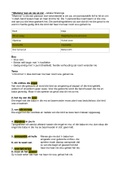
Consumer choice:
State run education in the US has failed because:
EVAL:
It has not created equal opportunity and has failed the
Gerwitz and Ball both argue that competition between
needs of disadvantaged groups.
schools benefits the middle class who can use their
It is inefficient because it fails to produce pupils with the
cultural and economic capital to gain access to more
skills needed by the economy.
desirable schools.
Private schools deliver higher quality education because
Critics argue that the real cause of low educational
unlike state schools, they are answerable to paying
standards is not state control but social inequality and
consumers – parents.
inadequate funding of state schools.
They studied 60000 pupils from low-income families from over
There is a contradiction between the New Right’s
1000 state and private schools. They found that pupils from low-
support for parental choice on the one hand and the
income families consistently do about 5% better in private than
state imposing a compulsory national curriculum in all
state schools.
schools on the other.
Thus, Chubb and Moe argue for the introduction of a market
Marxists argue that education does not impose a
system in state education that would put the control in the hands
shared national culture but imposes the culture of a
of the consumers as this would allow consumers to shape schools
dominant minority ruling class and devalues the culture
to meet their own needs and thus would improve quality and
of the working class and ethnic minorities.
efficiency.
They suggest a system in which each family would be given a
voucher to spend on buying education from a school of their
choice which would force schools to become more responsive to
parents’ wishes as the voucher would be part of the schools main
source of income.
THE NEW RIGHT:
They argue that state education takes a ‘one size fits all’ approach – imposing
uniformity and disregarding local needs. Thus, state education systems are
unresponsive and inefficient.
Their solution is the marketisation of education – creating an education market. The
competition between schools will bring greater diversity, choice and efficiency to
schools.
Consumer choice:
State run education in the US has failed because:
EVAL:
It has not created equal opportunity and has failed the
Gerwitz and Ball both argue that competition between
needs of disadvantaged groups.
schools benefits the middle class who can use their
It is inefficient because it fails to produce pupils with the
cultural and economic capital to gain access to more
skills needed by the economy.
desirable schools.
Private schools deliver higher quality education because
Critics argue that the real cause of low educational
unlike state schools, they are answerable to paying
standards is not state control but social inequality and
consumers – parents.
inadequate funding of state schools.
They studied 60000 pupils from low-income families from over
There is a contradiction between the New Right’s
1000 state and private schools. They found that pupils from low-
support for parental choice on the one hand and the
income families consistently do about 5% better in private than
state imposing a compulsory national curriculum in all
state schools.
schools on the other.
Thus, Chubb and Moe argue for the introduction of a market
Marxists argue that education does not impose a
system in state education that would put the control in the hands
shared national culture but imposes the culture of a
of the consumers as this would allow consumers to shape schools
dominant minority ruling class and devalues the culture
to meet their own needs and thus would improve quality and
of the working class and ethnic minorities.
efficiency.
They suggest a system in which each family would be given a
voucher to spend on buying education from a school of their
choice which would force schools to become more responsive to
parents’ wishes as the voucher would be part of the schools main
source of income.
THE NEW RIGHT:
They argue that state education takes a ‘one size fits all’ approach – imposing
uniformity and disregarding local needs. Thus, state education systems are
unresponsive and inefficient.
Their solution is the marketisation of education – creating an education market. The
competition between schools will bring greater diversity, choice and efficiency to
schools.