SECTION B:
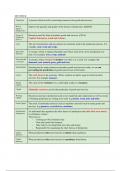
Production: A process which involves converting resources into goods and services.
How to Improve the quantity and quality of the factors of production. (QQFoP)
improve
Productivity:
Factors of Resources used by firms to produce goods and services. (CELL)
Production Capital, Enterprise, Land and Labour.
(CELL):
Land: The site of production and any natural raw materials used in the production process. For
example, coal, wood and crops.
Renewable A resource which is replaced naturally and whose stock level can be maintained over
Resource: time. For example, trees, crops, animals.
Non-renewabl A resource whose stock level declines over time as it is used. For example, oil,
e resources: diamond, coal, natural gases, gold and iron.
Sustainability: Ensuring that by using resources to produce goods and services today, we are not
preventing the production of goods and services in the future.
Labour: The work force in the economy. Where workers are paid a wage in return for their
services. For example, humans.
Human The value of the workforce or co individual worker to a b
usiness.
Capital:
Capital: Manmade resources used in the production of goods and services.
Working Resources used up in production such as raw materials and components as well as stocks
Capital: of finished goods that are waiting to be sold. E.g metals, wood, nuts and bolts.
Fixed Capital: The stock of manmade resources such as machines and tools used to make goods and
services. E.g spanners, screwdrivers, machines.
Entrepreneur An individual that organises the other factors of production and risks their own money
(Enterprise): in a business venture.
They have to:
- Coming up with a business idea
- Own and control the business
- Take risks by investing their own time and money
- Responsible for organising the other factors of production
Labour When production relies more heavily on labour than machinery.
Intensive:
Capital When production relies more heavily on machinery than labour.
Intensive:
, LEDCs More labour intensive as it is cheaper to buy labour than capital. There are also more
(Capital or people willing to have a more labour intensive job due to lower wealth levels.
Labour):
MEDCs More capital intensive as capital is more productive and MEDCs can afford to buy it, so
(Capital or they are not so labour intensive.
Labour):
Primary The production involving the extraction or farming of raw materials from the Earth.
Industry: (e.g coal mining, orchard, dairy farm)
Secondary Production involving the conversion of raw materials into finished and semi-finished
Industry: goods. (e.g oil refinery, power plants)
Tertiary The production of services in the economy. (e.g petrol station, supermarket, car market)
Industry:
De-industriali A decline in the manufacturing sector over a period of time.
sation:
LEDCs and In developing countries, people work primarily in the primary and secondary
MEDCs: industry.
In developed countries, its significantly tertiary-dominated, due to a lot of the primary
and secondary industry being carried out abroad.
Fixed Costs: A cost that does not vary with the level of output. (e.g factory rent, labour, admin,
advertising)
Variable A cost that varies with the level of output. (e.g raw materials, delivery)
Costs:
Total Cost:
Fixed Costs + Variable Costs = Total Costs
TC = FC + VC
Average
Costs:
Average costs = total cost/output
AC = TC/Q
Profit:
Profit = Total revenue - Total costs
P = TR - TC
Production: A process which involves converting resources into goods and services.
How to Improve the quantity and quality of the factors of production. (QQFoP)
improve
Productivity:
Factors of Resources used by firms to produce goods and services. (CELL)
Production Capital, Enterprise, Land and Labour.
(CELL):
Land: The site of production and any natural raw materials used in the production process. For
example, coal, wood and crops.
Renewable A resource which is replaced naturally and whose stock level can be maintained over
Resource: time. For example, trees, crops, animals.
Non-renewabl A resource whose stock level declines over time as it is used. For example, oil,
e resources: diamond, coal, natural gases, gold and iron.
Sustainability: Ensuring that by using resources to produce goods and services today, we are not
preventing the production of goods and services in the future.
Labour: The work force in the economy. Where workers are paid a wage in return for their
services. For example, humans.
Human The value of the workforce or co individual worker to a b
usiness.
Capital:
Capital: Manmade resources used in the production of goods and services.
Working Resources used up in production such as raw materials and components as well as stocks
Capital: of finished goods that are waiting to be sold. E.g metals, wood, nuts and bolts.
Fixed Capital: The stock of manmade resources such as machines and tools used to make goods and
services. E.g spanners, screwdrivers, machines.
Entrepreneur An individual that organises the other factors of production and risks their own money
(Enterprise): in a business venture.
They have to:
- Coming up with a business idea
- Own and control the business
- Take risks by investing their own time and money
- Responsible for organising the other factors of production
Labour When production relies more heavily on labour than machinery.
Intensive:
Capital When production relies more heavily on machinery than labour.
Intensive:
, LEDCs More labour intensive as it is cheaper to buy labour than capital. There are also more
(Capital or people willing to have a more labour intensive job due to lower wealth levels.
Labour):
MEDCs More capital intensive as capital is more productive and MEDCs can afford to buy it, so
(Capital or they are not so labour intensive.
Labour):
Primary The production involving the extraction or farming of raw materials from the Earth.
Industry: (e.g coal mining, orchard, dairy farm)
Secondary Production involving the conversion of raw materials into finished and semi-finished
Industry: goods. (e.g oil refinery, power plants)
Tertiary The production of services in the economy. (e.g petrol station, supermarket, car market)
Industry:
De-industriali A decline in the manufacturing sector over a period of time.
sation:
LEDCs and In developing countries, people work primarily in the primary and secondary
MEDCs: industry.
In developed countries, its significantly tertiary-dominated, due to a lot of the primary
and secondary industry being carried out abroad.
Fixed Costs: A cost that does not vary with the level of output. (e.g factory rent, labour, admin,
advertising)
Variable A cost that varies with the level of output. (e.g raw materials, delivery)
Costs:
Total Cost:
Fixed Costs + Variable Costs = Total Costs
TC = FC + VC
Average
Costs:
Average costs = total cost/output
AC = TC/Q
Profit:
Profit = Total revenue - Total costs
P = TR - TC