

Unit 8- Aim C
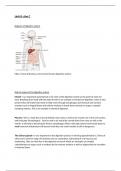
Diagram of digestive system
https://www.britannica.com/science/human-digestive-system
Role of organs of the digestive system
Mouth- Is an important opening that is the start of the digestive system as the point of entry for
food. Breaking down food with the help of teeth is an example of mechanical digestion. Saliva is also
present that will make food moist to help move through oesophagus and stomach and contains
enzymes such as lingual lipase and salivary amylase to break down starches to sugars, example
including maltose. This is an example of chemical digestion.
Pharynx- This is a tube that is found behind nasal cavity as well as the mouth, but in front of trachea
and food pipe (Oesophagus). Food as well as air would be carried down from nose as well as the
mouth. It will help in directing the food to oesophagus which is the pipe where food travels down to
reach stomach and pharynx will ensure food does not reach trachea as this is dangerous.
The Salivary glands- Is very important in the digestion process in forming approximately 1.5 litres of
saliva and is vital for range of functions such as mastication, lubricating of oral mucosa and
swallowing. They are vital also in the digestion of starch which are examples of complex
carbohydrates to sugars such as maltose by the enzyme amylase as well as triglycerides by secretion
of enzyme lipase.
Diagram of digestive system
https://www.britannica.com/science/human-digestive-system
Role of organs of the digestive system
Mouth- Is an important opening that is the start of the digestive system as the point of entry for
food. Breaking down food with the help of teeth is an example of mechanical digestion. Saliva is also
present that will make food moist to help move through oesophagus and stomach and contains
enzymes such as lingual lipase and salivary amylase to break down starches to sugars, example
including maltose. This is an example of chemical digestion.
Pharynx- This is a tube that is found behind nasal cavity as well as the mouth, but in front of trachea
and food pipe (Oesophagus). Food as well as air would be carried down from nose as well as the
mouth. It will help in directing the food to oesophagus which is the pipe where food travels down to
reach stomach and pharynx will ensure food does not reach trachea as this is dangerous.
The Salivary glands- Is very important in the digestion process in forming approximately 1.5 litres of
saliva and is vital for range of functions such as mastication, lubricating of oral mucosa and
swallowing. They are vital also in the digestion of starch which are examples of complex
carbohydrates to sugars such as maltose by the enzyme amylase as well as triglycerides by secretion
of enzyme lipase.


