

100% satisfaction guarantee Immediately available after payment Both online and in PDF No strings attached 4.2 TrustPilot
logo-home
Interview

Persuasive Writing methods and explanations with examples

Rating
-
Sold
-
Pages
5
Uploaded on
19-09-2023
Written in
2023/2024

Persuasive Writing Techniques and examples Rhetorical questions A rhetorical question is a question that does not require an answer. It is used to encourage the audience to think or to imply a correct answer. Some sentence starters: How could you (we) possibly believe …? Do you really think…? Do you want to be part of…? Could your conscience cope with…? Is it really worth…? Repetition Repetition is when a writer or speaker repeats words or phrases so that they stick in the minds of their audience. One of the most famous examples of this technique being used is the ‘I have a dream’ speech given by Martin Luther King, Jr. King gave this speech at the March on Washington on August 23, 1963. Emotive language Emotive language is when words are used that encourage people to feel a strong emotion, such as: sad, angry, delighted, sympathetic or guilty. It is a deliberate choice of words to elicit emotion in the reader. Example: Non-emotive version- Mr Smith was attacked by Mr Jones for two minutes. Emotive version- For what seemed a lifetime, Mr Smith was subjected to a vicious, cowardly assault by the unemployed, steroid-pumped monster. Exaggeration When information is given that is ‘over the top’. This is intended to make the situation sound better or worse than it actually is. This should be avoided in your own writing as it is rarely a convincing strategy. Example: *That was the easiest question ever asked. *Doctors are working 160 hours every week. *Chloe has two million pairs of shoes in her closet. Facts and statistics When truthful evidence and detail is given to support a point. Facts and statistics will help to make an argument seem more credible and valid. Note:You must always give your source when quoting facts or statistics. Example: A survey of year 10 students at McKinnon Secondary College on March 15, 2022 found that 88% of students believed that English was the best subject. Groups of three When three adjectives, or phrases, are used to emphasise a point. Examples: *The lockers were smelly, dirty and crowded. *The situation was dangerous, illegal and violent. *It is ridiculous, ill-informed and irresponsible to proceed. Personal pronouns Using words such as ‘we’, ‘you’, ‘our’ and ‘us’ to encourage your audience to think you are talking specifically to them. This encourages people to feel involved in what you are arguing. Examples: * You know that this is a problem that we must fix. * It is our responsibility to create a better future for our children. alliteration Repeating the consonant sounds at the beginning of words to make them stand out. Example: *A caustic, culture caused by consumers. *Health, happiness and hope for the New Year!

Show more Read less
Institution
Module


Whoops! We can’t load your doc right now. Try again or contact support.

Written for

Institution
Secondary school
Module
School year
8

Document information

Uploaded on
September 19, 2023
Number of pages
5
Written in
2023/2024
Type
Interview
Company
Unknown
Person
Unknown

Subjects

Content preview

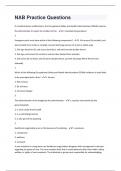
Persuasive Writing
Techniques and
examples
1. Rhetorical questions
A rhetorical question is a question that
does not require an answer. It is used to
encourage the audience to think or to
imply a correct answer.

Some sentence starters:

How could you (we) possibly believe …?

Do you really think…?

Do you want to be part of…?

Could your conscience cope with…?

, Is it really worth…?

2. Repetition
Repetition is when a writer or speaker
repeats words or phrases so that they
stick in the minds of their audience.

One of the most famous examples of this
technique being used is the ‘I have a
dream’ speech given by Martin Luther
King, Jr.

King gave this speech at the March on
Washington on August 23, 1963.

3. Emotive language
Emotive language is when words are used
that encourage people to feel a strong
emotion, such as: sad, angry, delighted,
sympathetic or guilty. It is a deliberate
choice of words to elicit emotion in the
reader.

Example:

Non-emotive version- Mr Smith was
attacked by Mr Jones for two minutes.

Emotive version- For what seemed a
$8.29
Get access to the full document:

100% satisfaction guarantee
Immediately available after payment
Both online and in PDF
No strings attached

Get to know the seller
Seller avatar
zombiemind51

Get to know the seller

Seller avatar
zombiemind51
Follow You need to be logged in order to follow users or courses
Sold
0
Member since
2 year
Number of followers
0
Documents
6
Last sold
-

0.0

0 reviews

5
0
4
0
3
0
2
0
1
0

Recently viewed by you

Why students choose Stuvia

Created by fellow students, verified by reviews

Quality you can trust: written by students who passed their exams and reviewed by others who've used these revision notes.

Didn't get what you expected? Choose another document

No problem! You can straightaway pick a different document that better suits what you're after.

Pay as you like, start learning straight away

No subscription, no commitments. Pay the way you're used to via credit card and download your PDF document instantly.

Student with book image

“Bought, downloaded, and smashed it. It really can be that simple.”

Alisha Student

Frequently asked questions
