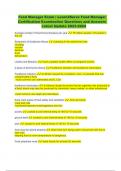
Learn2Serve Food Manager Certification Exam Questions and Answers - Latest Update | 100% Verified
Learn2Serve Food Manager Certification Exam Questions and Answers - Latest Update | 100% Verified. foodborne intoxication an illness caused by toxins that an organism has produced in a food; toxins may also be produced by chemicals, heavy metals, or other substances -most common are staph and clostridium three main areas of food safety and sanitation -time and temp -heat and cold -handwashing/ware-washing(plates and etc) poultry cooked to and internal temp of 165 for 15 seconds ground beef cooked to and internal temp of 155 for 15 seconds pork cooked to and internal temp of 145 for 15 seconds food must be stored properly when food isn't being used it should be held hot or kept cold keeping food at room temperature is dangerous Food preparers must wash hands for at least 20 seconds High Risk Populations Young children the elderly people with compromised immune systems Sources of contamination food handlers food contact surfaces packaging materials soil contaminated water air ingredients pests food handlers should follow proper personal hygiene - a speck of dirt can contain over a million bacteria food-contact surfaces should be cleaned every 4 hours -old food on surfaces can attract pests such as roaches, mice and rats packaging materials should be kept 6 inches off the ground dirty soil all produce must be washed well -crops that grow low in the soil have a higher likelihood of contamination water must be drinkable as bacteria and parasites can live in water -dirty water can have microorganisms such as E. Coli, salmonella, vibrio, shigella, and giardia food contaminants biological physical chemical cross contamination biological hazards bacteria, viruses, parasites, fungi bacteria food must be out of danger zone (41°-135°) -cannot be in danger zone for more than 4 hours accounts for more than 90% of foodborne illnesses doubles every 20 minutes toxins cannot be killed with heat or cold as bacteria multiplies, they produce waste products -waste products may look and feel like slime spores forms when bacteria changes forms that are very resistant to heat and dry conditions E. Coli Found in human intestines and other warm-blooded animals. It can contaminate food and water. -Symptoms include fever, diarrhea, stomach cramps, and vomitting salmonella Found especially in poultry and eggs, including their shells, in human intestines, and in domestic and wild animals. Salmonella can also be found in pets, roaches, and rodents -1 in 20,000 eggs can be contaminated Clostridium botulinum (botulism) form spores and can grow without oxygen, making it a type of anaerobic bacteria found in the soil, lakes, human intestines, fish, swollen cans, vacuum packed foods, and smoked meats. -symptoms include dizziness, headache, and dryness in the nose and throat due to respiratory failure Modified Atmosphere Packaging (MAP) A process whereby foods are placed in containers and air is removed from the package - foods must be kept frozen or under 41° listeria Found anywhere but especially in lunch and deli meats. They are naturally found in soil and water, and also found in animal feed and in the intestines of humans and animals -can still grow in temperatures under 41° -up to 70% of refrigerators in the US contain this bacteria Shigella Found in the human intestines. result of not washing hands after using the bathroom and then touching ready- to-eat foods -symptoms include fever nausea, diarrhea, vomiting and stomach cramps Staphylococcus Aureus (Staph) It is found on the skin, nose, and mouth of 50%- 70% of all people. It is easily transmitted by sneezing, coughing, scratching skin, and touching facial hair. heat cannot kill the toxins produced by this bacteria -symptoms can appear 30 minutes after ingesting the toxins, it can induce vomiting, cramps, nausea, and diarrhea Bacillus Cereus Found in soil where vegetables and grains are grown. It forms spores and can be found on cooked rice that has been improperly cooled or held at improper temperatures. -symptoms include nausea, vomiting, and diarrhea vibrio Commonly found in raw, under processed, improperly handled, and contaminated fish and shellfish (clams, oysters, crabs, shrimp, and lobster). requires salt to grow, more common in the summer months -symptoms include chills and fevers, vomiting, and a skin infection that looks reddish and is warm to the touch Conditions For Bacterial Growth FATTOM Food - food that is high in protein such as milk, meat, fish, eggs, etc. Acid - adequate pH (4.6 - 7.0), they do not like very acidic foods Temperature - 41°F to 135°F (5ºC to 60°C) Time - time to reproduce (at least 4 hours) Oxygen - aerobic (requires oxygen), anaerobic (does not require oxygen) Moisture - foods with plenty of water (Aw .85 or greater) Aw = Water activity Time and Temperature Control for Safety Food (TCS) Food items that require temperature control because they are capable of supporting growth of pathogenic microorganisms or toxin formation. pH = Food Acidity and Alkalinity Bacteria will grow best when food is slightly acid, neutral, or slightly alkaline, and contains enough water for its growth. concern zone 4.6ph-7.0ph Viruses They are 100 times smaller than bacteria, and can only reproduce in living cells Hepatitis A This virus typically affects the liver Caused by poor personal hygiene and improper washing of hands. -symptoms include a lack of an appetite, abdominal pain or cramping, frequent diarrhea, and a yellowing of the skin or whites of the eyes (a condition known as jaundice.) The symptoms can appear in 14 days-6 weeks Norwalk/Norovirus It lives in the human intestinal tract. The virus is commonly transmitted through a fecal-oral route or vomit-oral route.
Written for
- Institution
- Food Manager
- Course
- Food Manager
Document information
- Uploaded on
- September 16, 2023
- Number of pages
- 10
- Written in
- 2023/2024
- Type
- Exam (elaborations)
- Contains
- Questions & answers
Subjects
- food manager
- verified
- latest update
- 2023
- 2024
-
learn2serve food manager certification exam
-
food manager exam questions and answers

Also available in package deal