
1.
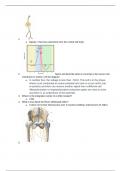
a. Bipolar, it has two extensions from the central cell body
2. Name and describe what is occurring in the neuron cell
membrane in section 4 of the diagram
a. In number four, the voltage is less than -70mV. This cell is in the phase
where it just conducted an action potential and now is at rest until it can
re-polarize and then can recieve another signal from a different cell.
Afterpolorization or hyperpolarization potassium gates are slow to close
and there is an undershoot of the potential.
3. Where is the integration center of a reflex located?
a. CNS
4. What is true about the flexor withdrawal reflex?
a. It does not involve interneurons and It involves inhibitory interneurons (F. B&C)
5.
, a. Lateral femoral cutaneous
b. Femoral nerve
c. Saphenous
6. Which of the following is most likely a symptom of ALS?
a. Impaired ability to swallow
7. What is the purpose of the blood-brain barrier? Describe its maintenance from a cellular
level.
a. The blood-brain barrier is a diffusion barrier which prevents most particles from
entering the central nervous system tissue, keeping the brain and spinal cord
separate from general blood circulation. The blood-brain barrier is formed by the
relatively impermeable brain capillaries, due to the glial cells astrocytes.
Maintenance of the blood-brain-barrier is important to provide a stable chemical
environment for the nervous system.
8. A patient damaged the radial nerve. What action is most likely limited?
a. Wrist extension
9. What is muscle tone and how is it maintained?
a. Muscle tone is maintained by the cerebellum, and is how much a muscle remains
partially contracted while at rest
10. A patient has a CVA in the area indicated by the red x in the figure, below. What type of
blindness is the patient most likely to incur?
a. C. Bilateral left visual field blindness, The right optic tract
is damaged, all sensory info from the left visual fields
travel together after the optic chiasm to the right side of
the brain.
11.
1. Cranial nerve CNII (Facial)
2. Malleus
3. Cochlea
4. Tympanic membrane
5. Incus
a. Bipolar, it has two extensions from the central cell body
2. Name and describe what is occurring in the neuron cell
membrane in section 4 of the diagram
a. In number four, the voltage is less than -70mV. This cell is in the phase
where it just conducted an action potential and now is at rest until it can
re-polarize and then can recieve another signal from a different cell.
Afterpolorization or hyperpolarization potassium gates are slow to close
and there is an undershoot of the potential.
3. Where is the integration center of a reflex located?
a. CNS
4. What is true about the flexor withdrawal reflex?
a. It does not involve interneurons and It involves inhibitory interneurons (F. B&C)
5.
, a. Lateral femoral cutaneous
b. Femoral nerve
c. Saphenous
6. Which of the following is most likely a symptom of ALS?
a. Impaired ability to swallow
7. What is the purpose of the blood-brain barrier? Describe its maintenance from a cellular
level.
a. The blood-brain barrier is a diffusion barrier which prevents most particles from
entering the central nervous system tissue, keeping the brain and spinal cord
separate from general blood circulation. The blood-brain barrier is formed by the
relatively impermeable brain capillaries, due to the glial cells astrocytes.
Maintenance of the blood-brain-barrier is important to provide a stable chemical
environment for the nervous system.
8. A patient damaged the radial nerve. What action is most likely limited?
a. Wrist extension
9. What is muscle tone and how is it maintained?
a. Muscle tone is maintained by the cerebellum, and is how much a muscle remains
partially contracted while at rest
10. A patient has a CVA in the area indicated by the red x in the figure, below. What type of
blindness is the patient most likely to incur?
a. C. Bilateral left visual field blindness, The right optic tract
is damaged, all sensory info from the left visual fields
travel together after the optic chiasm to the right side of
the brain.
11.
1. Cranial nerve CNII (Facial)
2. Malleus
3. Cochlea
4. Tympanic membrane
5. Incus


