Salt marshes
What are salt marshes?
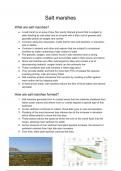
● A salt marsh is an area of low, flat, poorly drained ground that is subject to
daily flooding by salt water and is covered with a thick mat of grasses and
grasslike plants as sedges and rushes
● Common along low seacoasts, inside barrier bars and beaches, in estuaries,
and on deltas
● Common in deserts and other arid regions that are subject to occasional
overflow by water containing a high content of salts
● The grasses, sedges, and rushes found in salt marshes have a strong
tolerance to saline conditions and accumulate salts in their leaves and stems
● Since salt marshes are often submerged by tides and contain a lot of
decomposing material, oxygen levels can be extremely low
● These conditions give salt marshes a rotten-egg odour
● They provide shelter and food for more than 75% of coastal fish species
including shrimp, crab and many finfish
● Salt marshes protect shorelines from erosion by creating a buffer against
wave action and by trapping soils
● In flood-prone areas, salt marshes reduce the flow of flood waters and absorb
rainwater
How are salt marshes formed?
1. Salt marshes generally form in coastal areas that are relatively sheltered from
harsh ocean waves and where rivers or creeks deposit a special type of fine
sediment
2. As the sediment continues to collect, these flats grow in size and elevation
3. Flooding of the area becomes less intense due to the increase in elevation,
which allows plants to move into the area
4. These plants reduce the speed at which the river or the creek flows into the
ocean, allowing more sediment to settle
5. As the amounts of river sediment and plant species increase, the amount of
sediment retained from high tide also increases
6. Over time, other plant species colonize the area
What are salt marshes?
● A salt marsh is an area of low, flat, poorly drained ground that is subject to
daily flooding by salt water and is covered with a thick mat of grasses and
grasslike plants as sedges and rushes
● Common along low seacoasts, inside barrier bars and beaches, in estuaries,
and on deltas
● Common in deserts and other arid regions that are subject to occasional
overflow by water containing a high content of salts
● The grasses, sedges, and rushes found in salt marshes have a strong
tolerance to saline conditions and accumulate salts in their leaves and stems
● Since salt marshes are often submerged by tides and contain a lot of
decomposing material, oxygen levels can be extremely low
● These conditions give salt marshes a rotten-egg odour
● They provide shelter and food for more than 75% of coastal fish species
including shrimp, crab and many finfish
● Salt marshes protect shorelines from erosion by creating a buffer against
wave action and by trapping soils
● In flood-prone areas, salt marshes reduce the flow of flood waters and absorb
rainwater
How are salt marshes formed?
1. Salt marshes generally form in coastal areas that are relatively sheltered from
harsh ocean waves and where rivers or creeks deposit a special type of fine
sediment
2. As the sediment continues to collect, these flats grow in size and elevation
3. Flooding of the area becomes less intense due to the increase in elevation,
which allows plants to move into the area
4. These plants reduce the speed at which the river or the creek flows into the
ocean, allowing more sediment to settle
5. As the amounts of river sediment and plant species increase, the amount of
sediment retained from high tide also increases
6. Over time, other plant species colonize the area