
To what extent is the U.S. Criminal Justice System discriminatory towards the poor?
Introduction
The United States Criminal Justice System is one of the many systems across the globe designed to enforce the
law, ensure public safety, and deliver justice. It is comprised of private agencies, government bureaus and
overarching policies that work in unison to maintain order in the community1. The cases within the system begin
with the law enforcement officials, who investigate the crime and gather the relevant evidence to identify and
use against the alleged perpetrator, followed by the court system, which then weighs the evidence in order to
determine if the defendant is guilty. If conviction follows, the correction system will impose a suitable
punishment, most predominately incarceration, to correct the defendant’s behaviour2.
However, in recent years, incarceration in
America has increased significantly, with almost
2 million people being held in various institutes
within the System in 2022. The fact that
America is not just one criminal justice system,
but compromised of thousands of federal, state,
local and tribal systems, poses an increasingly
high risk of overcriminalisation3.
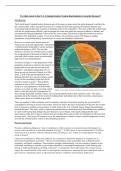
As shown in Figure 1 of the proportions of the
population in prison in America, the majority of
people held in local jails are not convicted
members3, with figures stating that 67% of
those are not yet convicted. Indeed, in a 2010
study, 2/3rds of the prison population were
disproportionately low-income citizens, unable
to pay for the exceedingly high bail, and so
forced to remain in prison3. This problem
continues to rise in 2022, causing most of
America’s vast population to be held within
prisons, even when not fully convicted, which
Figure 1: Pie chart showing number of people incarcerated in 2022.
leads to more dire post-jail consequences for
these already financially instable citizens who are being unfairly held to their economic crises. This raises
questions about the integrity of the system for holding these individuals due to their economic circumstances
which causes them to be unable to post bail4.
There are number of other problems, such as monetary sanctions, the policies used by the system and the
consequences of being involved in the system, which can lead to the mass incarceration of the poor due to their
lack of resources, resulting in the question: to what extent is the U.S. Criminal Justice System discriminatory
towards the poor? This essay seeks to explore the potential factors listed previously that influence this problem 5.
It is also worth noting that perhaps the poor themselves are to blame, with reports stating that the mass
incarceration of the poor is due to criminal activity resultant from need in order for individuals to alleviate their
poverty crisis6. This essay will ensure to cover the stated factors in detail to reach a justified judgement on how
severely the criminal justice system is discriminating the poor.
Poverty and Crime
Poverty is defined as being in a “state or condition in which a person or community lacks the financial re-
sources and essentials for a minimum standard of living,” 7. In 2021 alone, it was estimated that 37.9 million
Americans live in poverty, with the official poverty rate being 11.6% 8. Often, it is found that poverty and
crime is related 6.
Crime can be defined as “behaviour, either by act or omission, defined by statutory or common law as
deserving of punishment or penalty” 9. The act of committing a crime is primarily due to difficult social,
economic, and family conditions. The economic struggle, predominantly, can have negative impacts on the
individual, including an inability to gain higher education, a meaningful employment, stable housing and
having to suffer the prejudices of living in poverty 10. Consequently, these individuals who commit crimes
expect the overall benefits of the crime to outweigh the consequences, meaning that poor individuals seek to
gain more by committing crimes to alleviate their adverse conditions and lead more stable lives 6.
Introduction
The United States Criminal Justice System is one of the many systems across the globe designed to enforce the
law, ensure public safety, and deliver justice. It is comprised of private agencies, government bureaus and
overarching policies that work in unison to maintain order in the community1. The cases within the system begin
with the law enforcement officials, who investigate the crime and gather the relevant evidence to identify and
use against the alleged perpetrator, followed by the court system, which then weighs the evidence in order to
determine if the defendant is guilty. If conviction follows, the correction system will impose a suitable
punishment, most predominately incarceration, to correct the defendant’s behaviour2.
However, in recent years, incarceration in
America has increased significantly, with almost
2 million people being held in various institutes
within the System in 2022. The fact that
America is not just one criminal justice system,
but compromised of thousands of federal, state,
local and tribal systems, poses an increasingly
high risk of overcriminalisation3.
As shown in Figure 1 of the proportions of the
population in prison in America, the majority of
people held in local jails are not convicted
members3, with figures stating that 67% of
those are not yet convicted. Indeed, in a 2010
study, 2/3rds of the prison population were
disproportionately low-income citizens, unable
to pay for the exceedingly high bail, and so
forced to remain in prison3. This problem
continues to rise in 2022, causing most of
America’s vast population to be held within
prisons, even when not fully convicted, which
Figure 1: Pie chart showing number of people incarcerated in 2022.
leads to more dire post-jail consequences for
these already financially instable citizens who are being unfairly held to their economic crises. This raises
questions about the integrity of the system for holding these individuals due to their economic circumstances
which causes them to be unable to post bail4.
There are number of other problems, such as monetary sanctions, the policies used by the system and the
consequences of being involved in the system, which can lead to the mass incarceration of the poor due to their
lack of resources, resulting in the question: to what extent is the U.S. Criminal Justice System discriminatory
towards the poor? This essay seeks to explore the potential factors listed previously that influence this problem 5.
It is also worth noting that perhaps the poor themselves are to blame, with reports stating that the mass
incarceration of the poor is due to criminal activity resultant from need in order for individuals to alleviate their
poverty crisis6. This essay will ensure to cover the stated factors in detail to reach a justified judgement on how
severely the criminal justice system is discriminating the poor.
Poverty and Crime
Poverty is defined as being in a “state or condition in which a person or community lacks the financial re-
sources and essentials for a minimum standard of living,” 7. In 2021 alone, it was estimated that 37.9 million
Americans live in poverty, with the official poverty rate being 11.6% 8. Often, it is found that poverty and
crime is related 6.
Crime can be defined as “behaviour, either by act or omission, defined by statutory or common law as
deserving of punishment or penalty” 9. The act of committing a crime is primarily due to difficult social,
economic, and family conditions. The economic struggle, predominantly, can have negative impacts on the
individual, including an inability to gain higher education, a meaningful employment, stable housing and
having to suffer the prejudices of living in poverty 10. Consequently, these individuals who commit crimes
expect the overall benefits of the crime to outweigh the consequences, meaning that poor individuals seek to
gain more by committing crimes to alleviate their adverse conditions and lead more stable lives 6.




