Pediatric CCRN
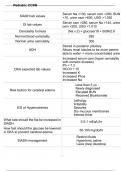
SIADH lab values DI lab values Osmolality formula Normal blood osmolality Normal urine osmolality ADH DKA expected lab values Risk factors for cerebral edema S/S of Hypernatremia What rate should the Na be increased in SIADH How fast should the glucose be lowered in DKA to prevent cerebral edema SIADH management Serum Na 130, serum osm 280, BUN 10, urine osm 600, USG 1.030 Serum osm 285, serum Na 145, urine osm 200, USG 1.010 (Na x 2) + glucose/18 + BUN/2.8 280 300 Stored in posterior pituitary Allows renal tubules to be more perme- able to water - more concentrated urine Increased serum osm (hyper osmolality with osmotic diuresis) Ph 7.3 HCO3 15 Increased K Increased Phos Increased Na Less than 5 yo Newly diagnosed Elevated BUN Received Bicarbonate Lethargy Irritability Seizures Dry mucous membranes Intense thirst 0.5-1 mEq/L/hr 50-100 mg/do/hr Restrict fluids Hypertonic saline Lasix (loop diuretics) Pediatric CCRN 2 / 2 DI management What does insulin stimulate Hypoglycemia S/S S/S of hyponatremia S/s hyperglycemia DKA triad S/S SIADH S/S DI Lab results with acute renal failure Replace fluid deficit and ongoing losses ADH replacement: synthetic vasopressin or DDVAP Glycogenesis (formation of glycogen) Protein synthesis Formation of adipose Anxiety, tachycardia, diaphoresis, hy- potonia, seizures, tremors, decreased LOC, hungry, dizzy, grumpy, headache Altered LOC abd cramping Diarrhea Hypoactive reflexes Extreme thirst, blurred vision, hunger, nausea, drowsiness, dry skin Hyperglycemia Ketosis Acidosis ^ADH, ^fluid retention, ^BP, decreased UOP, decreased NA, edema Low BP, ^Na, excessive UOP, low spec grav, thirty, hypovolemic Metabolic acidosis, ^anion gap, ^K, ^mag, ^phos
Written for
- Institution
- Pediatric CCRN
- Course
- Pediatric CCRN
Document information
- Uploaded on
- September 6, 2023
- Number of pages
- 2
- Written in
- 2023/2024
- Type
- Exam (elaborations)
- Contains
- Questions & answers
Subjects

Also available in package deal