Developments in Christian Thought
3.5 Christian moral principles
Approaches to morality in Christianity
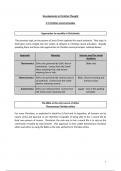
The previous topic on the person of Jesus Christ explored his moral authority. That topic in
itself gives some insight into the variety of debates in Christian moral principles. Broadly
speaking there are three main approaches to Christian moral principles, outlined below:
Approach Meaning Sources used for moral
decisions
Theonomous Ethics are governed by God’s law or Bible only
commands. Comes from the Greek
theos meaning God, and nomos
meaning law or rule.
Heteronomous Ethics are governed by several sources Bible, Church teaching and
of authority. Comes from the Greek human reason
heteros meaning several.
Autonomous Ethics are self-governed. Comes from Agape - love is the guiding
the Greek autos meaning self. principle.
The Bible as the only source of ethics
Theonomous Christian ethics
For many Christians, as explained in detail by St Paul and St Augustine, all humans are by
nature sinful and ignorant so are therefore incapable of being able to live a moral life by
their own powers of reason. Therefore, the only way to live a moral life is to rely on the
commands revealed by God himself. This approach is then called theonomous Christian
ethics and refers to using the Bible as the only authority for Christian ethics.
1
, Key terms:
Biblicism - the belief that the Bible is the revealed word of God and that the writers of the
Bible were directly inspired by God. This may also be referred to as ‘fundamentalism’
(although this term has been associated with negative connotations so ‘biblicism’ is often
preferred).
Propositional revelation - the idea that God reveals himself in truth statements. To say that
the Bible is an example of propositional revelation is to say that the Bible is a series of truth
statements.
Those who hold a biblicist view will often quote St Paul’s teaching in the Second letter to
Timothy:
“All scripture is inspired by God, and is useful for teaching, for reproof, for correction, for
training in righteousness.”
2 Timothy 3:16
This approach is based on the idea that the Bible is propositional revelation: it is a set of
truth statements revealing God’s message to the world. If the Bible is a set of truth
statements, then it makes logical sense to follow the moral teaching directly in order to live
a moral life. The Bible is the source of truth because God is its author - the prophets and
writers were divinely inspired by God to write the different parts of the Bible. This point of
view sees the Bible as infallible. If there is a problem with understanding the Bible, the
problem lies with us and not the Biblical text.
Key term:
Covenant - in the Bible, God’s special promises and agreement made with humans which
requires special behaviour from them.
Those who favour a theonomous approach to Christian ethics understand the theological
context that life is lived as a covenant with God. In the Old Testament, the covenant
establishes the idea that ethics are both social and personal - morality is based on how we
behave and how we interact with others. The Ten Commandments (Exodus 20:1-17) make
this perfectly clear - ‘Believe in one God’ is a moral command alongside ‘honour your
mother and father’. The prophets such as Amos and Isaiah focus on social justice (for
example, how to treat the poor) as ways of committing to God’s covenant. In the New
Testament, Jesus’ Sermon on the Mount (Matthew 5-7), often considered the most
important example of Jesus’ moral teaching, makes it clear that the covenant is not only
about keeping the commandments of the Old Testament but also the inner laws of love,
2
3.5 Christian moral principles
Approaches to morality in Christianity
The previous topic on the person of Jesus Christ explored his moral authority. That topic in
itself gives some insight into the variety of debates in Christian moral principles. Broadly
speaking there are three main approaches to Christian moral principles, outlined below:
Approach Meaning Sources used for moral
decisions
Theonomous Ethics are governed by God’s law or Bible only
commands. Comes from the Greek
theos meaning God, and nomos
meaning law or rule.
Heteronomous Ethics are governed by several sources Bible, Church teaching and
of authority. Comes from the Greek human reason
heteros meaning several.
Autonomous Ethics are self-governed. Comes from Agape - love is the guiding
the Greek autos meaning self. principle.
The Bible as the only source of ethics
Theonomous Christian ethics
For many Christians, as explained in detail by St Paul and St Augustine, all humans are by
nature sinful and ignorant so are therefore incapable of being able to live a moral life by
their own powers of reason. Therefore, the only way to live a moral life is to rely on the
commands revealed by God himself. This approach is then called theonomous Christian
ethics and refers to using the Bible as the only authority for Christian ethics.
1
, Key terms:
Biblicism - the belief that the Bible is the revealed word of God and that the writers of the
Bible were directly inspired by God. This may also be referred to as ‘fundamentalism’
(although this term has been associated with negative connotations so ‘biblicism’ is often
preferred).
Propositional revelation - the idea that God reveals himself in truth statements. To say that
the Bible is an example of propositional revelation is to say that the Bible is a series of truth
statements.
Those who hold a biblicist view will often quote St Paul’s teaching in the Second letter to
Timothy:
“All scripture is inspired by God, and is useful for teaching, for reproof, for correction, for
training in righteousness.”
2 Timothy 3:16
This approach is based on the idea that the Bible is propositional revelation: it is a set of
truth statements revealing God’s message to the world. If the Bible is a set of truth
statements, then it makes logical sense to follow the moral teaching directly in order to live
a moral life. The Bible is the source of truth because God is its author - the prophets and
writers were divinely inspired by God to write the different parts of the Bible. This point of
view sees the Bible as infallible. If there is a problem with understanding the Bible, the
problem lies with us and not the Biblical text.
Key term:
Covenant - in the Bible, God’s special promises and agreement made with humans which
requires special behaviour from them.
Those who favour a theonomous approach to Christian ethics understand the theological
context that life is lived as a covenant with God. In the Old Testament, the covenant
establishes the idea that ethics are both social and personal - morality is based on how we
behave and how we interact with others. The Ten Commandments (Exodus 20:1-17) make
this perfectly clear - ‘Believe in one God’ is a moral command alongside ‘honour your
mother and father’. The prophets such as Amos and Isaiah focus on social justice (for
example, how to treat the poor) as ways of committing to God’s covenant. In the New
Testament, Jesus’ Sermon on the Mount (Matthew 5-7), often considered the most
important example of Jesus’ moral teaching, makes it clear that the covenant is not only
about keeping the commandments of the Old Testament but also the inner laws of love,
2